

Here’s What to do in Thessaloniki for 3 Days (2026) - The Best Spots to see and eat!
When it comes to exploring little known spots like Thessaloniki, people sometimes prefer visiting over a long weekend to get a taste of the city. So here’s what to do in Thessaloniki for 3 days. You’ll find free things to do in Thessaloniki, the best places to visit and eat and also what to do in Thessaloniki for 2 days
Nestled on the shores of the awe-inspiring Thermaic Gulf, Thessaloniki is the cultural capital of Greece.
Its ancient roots and modern vibe blend together seamlessly, offering a captivating mix of history, culture, and urban energy that makes it a must-visit destination in Europe.
The city is teeming with historical and architectural marvels, an unchallenged traditional food scene and an unending nightlife, which makes it the perfect spot for young and old alike.
The city’s streets are alive with music, art, and cultural events, creating a vibrant tapestry of experiences that offers something for everyone.
The Nymph of the Thermaic Gulf, as the city is called, is a place of endless beauty and wonder and has captured the hearts of many, with its rich history, diverse culture, and stunning seaside location.
Here is a 3-day Thessaloniki itinerary for those of you asking us what to do in Thessaloniki for 3 days.
PLANNING YOUR THESSALONIKI ITINERARY| THE ESSENTIALS
Thessaloniki tours worth checking out
- Vergina and Pella Day Trip
- Half-Day Sailing Cruise to Shipwreck Bay
- Bus Trip to Dion & Mt Olympus National Park
Where to stay in Thessaloniki

Here’s what to do in Thessaloniki for 3 Days
Day 1- Can also be used as a one day in Thessaloniki itinerary
Your Thessaloniki itinerary for the first day should begin with local sightseeing due to the city’s historical connection with the Macedonian empire.
One day in Thessaloniki is incomplete without a visit to the city’s major attractions, which showcases its rich history of the intermingling of various cultures such as Turkish, Roman, Jewish and Greek.
So, if you are questioning what to see in Thessaloniki, read on to find out!
White Tower
Considered the symbol of Thessaloniki, the White Tower is an iconic monument.
Built during the Ottoman period in the late 15th century, the tower was colloquially known as the ‘Tower of Blood’ as it was the scene of mass executions.
After the capture of the city by the Greeks in 1912, the Tower was painted white, symbolizing a new era of peace and rebirth.
The Tower is now a museum that showcases the rich history of Thessaloniki and features exhibits on its multicultural past and offers panoramic views of the city.
DETAILS
Address: Thessaloniki 546 21, Greece
Timings: 8:30 am–3:30 pm
Price: 2 Euros for senior citizens and students and 3 Euros for others
The Rotunda of Galerius
A UNESCO World Heritage Site, the Rotunda was built by the Roman Emperor Galerius in the early 4th Century AD as his mausoleum and was one of the earliest Christian monuments in the Eastern Roman Empire.
During the Ottoman occupation, it was converted into a mosque and it now serves as a Greek Orthodox church.
It features outstanding complex mosaics, which are considered masterpieces of early Christian art.
DETAILS
The Rotunda of Galerius
Address: Platia Agiou Georgiou Rotonta 5, Thessaloniki 546 35, Greece
Timings: 8:30 am–3:30 pm
Price: 6 Euros

Archeological Museum of Thessaloniki
Amongst the largest in Greece, the Archeological Museum of Thessaloniki must be on your list of Thessaloniki things to do!
The museum has some stunning exhibits right from pre-historic lives in Macedonia to the medieval rule of the Romans and is the perfect spot for history buffs.
The museum also offers an option for visitors to admire the most prominent artefacts in an hour!
DETAILS
Archeological Museum of Thessaloniki
Address: Manoli Andronikou 6, Thessaloniki 546 21, Greece
Timings: 8:00 am-8:00 pm
Price: 4 Euros from November 1st until March 31st, 8 Euros for other months
Church of Agios Dimitrios
Your next spot would be the Church, which is a UNESCO World Heritage Site and is one of the free things to do in Thessaloniki, dedicated to its patron Saint, Agios Dimitrios, who is said to have been martyred during the persecution of Christians by Roman Emperor Galerius.
The Church is an excellent example of Byzantine architecture and art, featuring intricate mosaics, frescoes, and marble carvings.
DETAILS
Address: 83, Agiou Dimitriou St., 54633 Thessaloniki
Timings: 6:00 am – 8:00 pm
Price: Free
Ano Poli
End your first day of 3 days in Thessaloniki with a visit to the Old Town of Thessaloniki which is located on a hill and has narrow streets, colourful houses and offers panoramic views of the entire city.
The Town is surrounded by historic fortifications and is teeming with architectural marvels and offers many unusual things to do in Thessaloniki, which are a must visit such as:
-
Vlatodon Monastery & Church of Osios David (both UNESCO World Heritage Sites)
-
Ataturk Museum (Thessaloniki was the birthplace of Mustafa Kemal Ataturk, the founder of modern-day Turkey!)
-
Byzantine Walls (a reminder of the city’s cultural link with the Byzantine Empire)
Make sure that you head to the viewpoint at the top of the hill to take in the breath-taking panorama of the city, the sunset and the Aegean Sea.
Try picking up some souvenirs to make your trip memorable from one of the many shops. And, after a long day of exploring, who would not want to fill up on those hunger pangs?


Places to Stay in Thessaloniki
Ano Poli is the best place to stay in Thessaloniki as the Old Town is steeped in history and culture.
Due to the constrained space of the Old Town, there are not many hotels but the town has many colourful apartments where you can stay and enjoy your trip
The Old Town View apartment has a massive balcony offering stunning views of the Town as well as the sea.
The Liberty Home is surrounded by cafes and eateries along with a balcony to soak in the many views of the city.
For those of you wishing for a luxurious stay, Thessaloniki city centre is the apt destination, with its many fancy accommodations. The Electra Palace is a 5-star flagship hotel located in the historic Aristotleus Square and is perched by the sea, offering guests a chance to take a swim.
The Capsis Boutique Hotel is a budget-friendly hotel located right in the centre of the city. It was built in 1860 and has elegant rooms and suites with wooden floors, Persian carpets, paintings, and one-of-a-kind antiques.
What to do in Thessaloniki for 3 Days – Day 2
Can also be used as a 2 days in Thessaloniki itinerary
A Thessaloniki itinerary for your day 2 should include a visit to the Gods – a Day Trip to Mount Olympus, the home of Zeus!
If you are planning to spend 2 days in Thessaloniki, a day trip to the legendary Mount Olympus, considered the home of ancient Greek Gods, is a must.
To reach Olympus, you have to first reach the town of Litochoro, around 90 kilometres away from Thessaloniki, which is located at the base of the mountain.
Make sure that you leave early in the morning so that you have plenty of time to explore.

How to reach Litochoro?
You can reach Litochoro either by bus, train or by taxi.
Buses are available daily throughout the day and take around 1 hour and 15 minutes to reach Litochoro. You can check the timetable and prices here.
There are multiple trains running between Thessaloniki and Litochoro at intervals of one to two hours, which take around 55 minutes to reach their destination. Have a look at the timetable here.
A drive or private taxi to Litochoro is an equally easy option, giving you a chance to explore the lush green landscape.
On arriving at Litochoro, you can either park your vehicle at the public parking or directly head towards Prionia, which is the highest and the last road on Mount Olympus accessible by car.
Things to do on Mount Olympus
With its stunning landscape and rich flora and fauna, there are a lot of things which you can do on Mount Olympus, which should be included on your 3 days in Thessaloniki itinerary if possible.
Hike to the Enipeas Gorge in the Olympus National Park
The Olympus National Park surrounds the mountain and has many trail options ranging from easy to difficult to outright dangerous for all you hiking enthusiasts.
Mind you, for those thinking of ascending Mount Olympus, the hike takes around 2 days and is not for the amateurs! One of the most stunning attractions around the Park which you can enjoy on your short trip is the Enipeas Gorge hike.
With crystal clear waters and the imposing mountain slopes and wooden bridges, mesmerize yourself with these sights.
Note that this area was selected by the Greek Gods themselves as their residence!
Visit the Dion Archeological Park & Musem
Located at the foot of Mount Olympus, the Archeological Park houses the ruins of the ancient city of Dion, which was a cultural, spiritual and religious hub in the Kingdom of Macedonia.
Walk along the cobbled pathways of this ancient city and explore the various artefacts such as the Roman bath complex, a theatre, a sanctuary dedicated to the worship of Zeus and many early Christian churches.
Next, head to the museum located in the adjacent park which houses sculptures from the Hellenistic and Roman era along with mosaics, frescoes and paintings offering a fascinating glimpse of ancient Christianity.
Alternatively, for those of you wanting a hassle-free experience, take a guided tour of Mount Olympus and the Archaeological Park, which will leave you free to explore!
DETAILS
Dion Archeological Park & Musem
Address: Τ.Κ. 60100, Dion (Prefecture of Pieria)
Timings: 8:30 am–3:30 pm (Tuesday closed)
Price: 8 Euros / 4 Euros from 1 November to 31 March every year

Places to eat near Mount Olympus
Μεζέ Μεζέ (Meze Meze) is undoubtedly one of the most famous eateries in Litochoro and is renowned for its Gyros, which is a Greek version of the Turkish shwarma, and many local options.
The Gastrodromio En Olimpo, also located in Litochoro, is another choice for those wanting to sip on fine wines while gorging on their favourite dishes.
Overall, this restaurant will ensure that you have a ‘gastronomical’ experience.
Weekend trips can sometimes be hectic so make sure you pick exactly what you’d like to do from the above suggestions if you’re in Thessaloniki for 2 days.
Here’s what to do in Thessaloniki for 3 Days – Day 3
Thessaloniki itinerary for Day 3 – you get to choose – day in or day out?
After returning from your short but eventful trip to Mount Olympus, you can choose to decide how you want your final day in Thessaloniki to be.
If you want to enjoy your last day calmly, stroll out into Thessaloniki and explore a bit more.
Option 1: Step out to see more of Thessaloniki
Exploring the lesser-known attractions of Thessaloniki
If you are still thinking about what to do in Thessaloniki for 3 days on the third day of your trip, think no more. Go Market hopping.
One of the most notable features of the beautiful city of Thessaloniki is its vibrant markets that embody the essence of its cultural and culinary heritage. Want to carry a souvenir back home? This is the place for it.
Market hopping is one of the free things you can do in Thessaloniki and where you can find options for the best food in Thessaloniki!
-
Modiano is the city’s largest indoor market and offers a wide range of fresh produces, along with a variety of tastefully decorated taverns with choices of mouth-savouring Mezedekia, which are traditional Greek finger foods.
So, be prepared to be gobsmacked with the aromas of fresh coffee beans and bakeries as you stroll out into this buzzing market!
-
Next, head to the open-air Kapani Market, which is the oldest market in Thessaloniki and offers a more traditional touch. Do you want to bring a unique souvenir home with you? This is where you can buy a traditional copper “briki” (small coffee pot) to make Greek coffee!
Make sure that you visit the Stou Mistou café, which offers traditional Greek foods such as Dolmades and dishes made from freshly sourced produce!

Include wine-tasting on your Thessaloniki itinerary
Oenophiles have another chance to rejoice if you plan a weekend in Thessaloniki.
Visit the Ktima Gerovassiliou, a famous producer of high-quality Greek wines from the grapes produced in the privately-owned vineyard. Take a guided tour of the vineyard, wine production, bottling and ageing.
Oh, and did I mention their famed Wine Museum? Immerse yourself in the ancient history of winemaking.
DETAILS
Ktima Gerovassiliou
Address: Ktima Gerovassiliou, Epanomi 575 00, Greece
Timings: Monday/Thursday/Friday: 10:00 am-4:00 pm. / Wednesday: 1:00 pm to 7:00 pm / Saturday & Sunday: 11:00 am-5:00 pm [Tuesday closed]
Price: Depends upon the tour and activities
Don’t forget to include the best beaches on your Thessaloniki itinerary
Nestled along the azure waters of the Aegean Sea, the beaches of Thessaloniki are a true gem of the Mediterranean and are the best Thessaloniki Greece attractions.
Peraia Beach is a popular spot for locals and tourists alike, with its soft golden sands and crystal-clear waters.
The beach is a hotspot for windsurfing and kitesurfing, and the stunning sunsets create a spectacular backdrop for a romantic evening stroll.
Epanomi Beach is a hidden gem, surrounded by nature and untouched landscapes and is perfect for those seeking a bit of solitude and tranquillity, with its serene and pristine ambience.

Include sailing on your Thessaloniki itinerary
Beyond the magnificent monuments and bustling streets of Thessaloniki lies a different kind of magic, one that can only be experienced on the sparkling waters of the Thermaic Gulf – Sailing!
With its inviting azure blue waters and warm Mediterranean climate, the Gulf offers endless possibilities for exploration and adventure.
Imagine feeling the wind in your hair, the salty spray on your skin, and the thrill of the open water as you navigate the coast, with the backdrop of the majestic Mount Olympus in the distance.
The Thessaloniki Yacht Club is a great place to start your sailing adventure, with knowledgeable instructors, top-of-the-line equipment, and a friendly community of sailing enthusiasts.
If you prefer a more intimate experience, private yacht rentals offer the perfect opportunity to explore the Gulf at your own pace.
You can also book this popular Half-Day Sailing Cruise to Shipwreck Bay to focus just on the experience and not worry about the preparations.

Option 2 for Day 3 on what to do in Thessaloniki for 3 days
Day Trip to Pella and Vergina
If the adventure buff in you wants to head out into the Greek countryside one more time, a day trip to the nearby locations of Pella & Vergina must be on your list.
Trip to Pella
Located around 45 km from Thessaloniki, Pella, the jewel of the Macedonian Empire and the birthplace of Alexnder the Great was a city that boasted grand palaces, sprawling public spaces, and an intricate network of waterways that spoke to the ingenuity and advanced engineering skills of its inhabitants.
As you explore Pella, you’ll be struck by the magnificence of its ancient.
The city’s main attraction is the Archaeological site of Pella, where you can walk through the remains of the ancient city, once a bustling metropolis of over 60,000 people!
You can marvel at the sprawling palaces, the intricate mosaics, and the grand public buildings that still stand as a testament to the city’s former glory.
The Archeological Museum of Pella, is the main cultural hub of this historical place and houses many exhibitions giving a perspective of the lives of early Macedonians and is the perfect culmination of the visit to Pella
Some of the other charming spots which you can cover near Pella are:
-
Edessa Waterfalls, a wonder located around 30 kilometres from Pella is one of the most magnificent sights of Greece and showcases its natural landscape!
For those who want to experience the waterfall up close, you can take a boat ride on the river that feeds the falls.
-
Pozar Thermal baths, are a hidden gem, offering visitors a chance to soak in the healing waters of the natural springs and experience the therapeutic benefits of its mineral-rich waters.
Take a dip in this natural wonder if you wish to escape the hustle and bustle of everyday life and reconnect with nature and your inner self!
You can also consider taking this Pozar Thermal Baths and Edessa Day Trip from Thessaloniki for a smooth experience to Pozar without worrying about logistics, though you may need to head back to Thessaloniki.

Trip to Vergina
Vergina is around 54 kilometres from Pella and has stories to tell, tales that speak of the ancient city of Macedon, the first capital of the Kingdom of Macedon, and the final resting place of the great king, Philip II, father of Alexander the Great.
It houses the Archeological site of Aigai.
Read on to find some spots which you must cover if you visit this ancient town:
-
Museum of the Royal Tombs of Aigai, which contain stunning artefacts and treasures from the Royal Tombs.
-
The Royal Palace, where generations of Macedonian kings held court and embarked on their journey of conquest, which became the later Macedonian empire!
-
The Theatre of Ancient Aigai, located just adjacent to the Royal Palace built in the second half of the 4th Century BC.
Vergina’s charm isn’t just limited to its historical landmarks; it extends to the town’s traditional architecture and the warmth of its people.
You can stroll through the cobblestone streets, savouring local cuisine, and soaking in the unique ambience.
Since you will be on the clock, we suggest you take this guided tour to Vergina & Pella to cover both Pella and Vergina smoothly!
What is the best time to visit Thessaloniki?
May to October is the best time to visit Thessaloniki as the Mediterranean climate is at its perfect, and when there are many festivities around.
If you want to experience warm and sunny weather, visit Thessaloniki between the months of May to August, when the temperatures vary between 25°-30° / 13°-19°. July and August are the hottest months and witness high crowds.
September and October generally witness cooler weather with temperatures around 25° / 15°. October witnesses a dip in temperatures but is still pleasant enough to enjoy the festivities and sights offered by the city.
How to get to Thessaloniki?
For those coming from afar, Thessaloniki is easily accessible by air as the Thessaloniki Airport “Makedonia” connects the city with major domestic as well as international destinations and is a gateway to the Nymph of the Thermaic Gulf!
You can either choose directly take a flight to Thessaloniki or to fly down from Athens.
Buses to Thessaloniki airport and the city centre are the easiest way for you to reach the city and run throughout the day and night. You can check the timetable here.
The Athens to Thessaloniki ferry is another delightful option to reach the city, however, note that the trip can take around 24-26 hours.
But time flies as the ferry glides through the calm waters of the Aegean Sea, and you are treated to breathtaking views of the islands that dot the horizon, their sandy beaches and rocky shores bathed in the golden light of the rising sun.
The boat tour Thessaloniki can cost somewhere between 20 Euros and 93 Euros, depending upon which ferry you choose.
Regardless of which option you choose, the ferry is an experience not to be missed!


Places to eat in Thessaloniki
Thinking about what to do in Thessaloniki for 3 days? Here is the answer: EAT!
Considered Greece’s de-facto food city, Thessaloniki is famed worldwide for its many unique dishes such as Bougatsa or Koulouri for breakfast, Soutzoukakia and Souvlaki for lunch or dinner and Trigona Panoramatos or Tsoureki for dessert.
Head to Bantis to gorge on the bougatsa for breakfast and wash it down with the famous Frappe coffee.
After a long day of sightseeing, Nea Diagonios is the spot for you to chow down on souvlaki, authentic Greek cuisine and some of the best food in Thessaloniki.
To satisfy your post-meal dessert craving, head to Trigona Elenidi and feel your mouth melt on the crispy golden Trigona Panoramatos, which phyllo triangles soaked in syrup and filled with the richest and creamy custard, or to Terkenlis to have a bite of their famed Tsoureki bread.
How many days to spend in Thessaloniki?
5 days is an ideal amount of time for you to completely explore Thessaloniki, as the city is famous not only for its local attractions but also for the many Macedonian monuments situated near the city.
However, 3 days is enough for you to cover all the major spots in and around this beautiful city. So, get your bohemian on!
if you are spending a week in Greece, then consider following this Greece 7 days itinerary for all the fun activities.
Is Thessaloniki worth visiting?
Whether you’re interested in history, culture, food, or simply experiencing the unique atmosphere of a Greek city, Thessaloniki offers a travel experience that will stay with you long after you’ve left its shores and is definitely worth visiting!

What to do in Thessaloniki for 3 days? – FAQs
-
What is Thessaloniki Greece known for?
Thessaoloniki is known for its rich history, vibrant culture and a magnificent location along the shores of the sparkling crystal waters of the Aegean.
Considered to be the cultural capital of Greece, it has something to offer for every kind of tourist.
-
Is Thessaloniki a walkable city?
Yes, Thessaloniki is a paradise for people who like to walk! Wanting the sun on your face and the sea on the side as you walk? Walk along the Nea Paralia, a famous waterfront in the city.
Prefer the sights of the city to the sea? Stroll through the backstreets of Ano Poli as you soak in the sights of the town.
-
Is Thessaloniki good for shopping?
If the one unusual thing which the people of Thessaloniki are renowned for, its their sense of style. Shopaholics will not be disappointed as they can immerse themselves in the many shopping options which Thessaloniki offers, from modern brands to boutique to ancient Macedonian clothing.
-
Is Thessaloniki cheaper than Athens?
Yes. If you want to experience Greek culture without spending too much, Thessaloniki is much cheaper than Athens. With budget-friendly accommodations and varied options of cheap traditional Greek cuisine, you can explore freely without worrying about money.

PIN FOR LATER!


EXPLORE MORE OF GREECE
Nothing found.
Some of the links on this post are affiliate links. These do not cost you extra to use, but will help provide Continent Hop with a small commission if/when you purchase through them, to recover some of the costs of running this website and providing free content to help you plan your travel. I appreciate your support!

A Holy Land Pilgrimage to Israel (2026) - All Details and Info

Apprx. Reading Time: 6 minutes
Currently, the world could do with hope. Hope that stems from faith. Belief.
While religion may be on the decline (Sometimes for good, I think), my recent visit to Israel proved that the ones that still do believe, believe with all they’ve got. Even if you’re a festive Christian like me, there’s something about the fervor in the air in Israel, which makes you think not just about life; the path you’ve chosen, the good (or bad) you’ve done but also takes you on a journey through history and culture.
The three biggest religions have their holiest places in Jerusalem – all located within an area of 1 km of each other.
Christians, Jews, and Muslims – all praying, crying and thanking the Lord. While I also visited the Dome of the Rock and the Western Wall, I spent some time trying to figure out the political situation and trying to sample the local culture and food too, but the most was spent on visiting all the religious places I could.
For many of you that do not believe in religion, these places are still definitely worth a visit because they’re brimming with history and stories.
For the ones that do, here’s a list of the must visit Biblical places in Israel.
West Bank – Bethlehem
The Church of the Nativity
Luke 2: 1 – 14
“And the angel said to them, “Be not afraid; for behold, I bring you good news of a great joy which will come to all the people; For to you is born this day in the city of David a Savior, who is Christ the Lord. And this will be a sign for you: you will find a babe wrapped in swaddling cloths and lying in a manger.”
Jesus was born in Bethlehem and raised in Nazareth. The Church, a World Heritage site, has withstood centuries of destruction making it one of the oldest in the world.

holy land pilgrimage
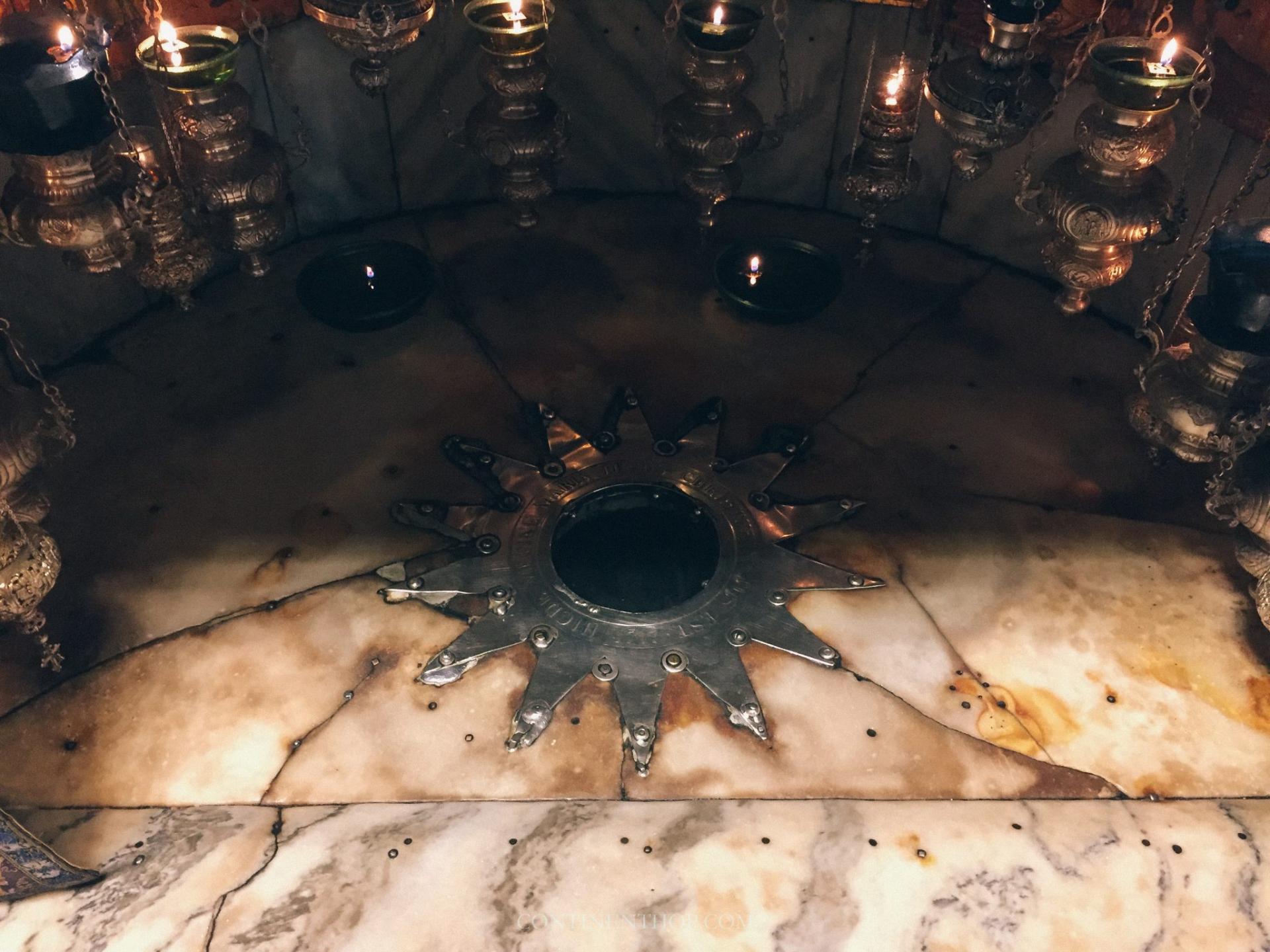
We entered through a tiny entrance enough to just let one person pass at a time, to bow and show humility. We visited just before the Grotto was to be opened for visitors. Mass was underway and was being presided over by Greek Orthodox priests. I was mildly surprised when at Communion, a huge loaf of bread was blessed and divided. Visitors were not permitted till the ceremony was complete. We sat on the stairs that lead to the entrance and heard lively conversations between Roman Catholic, Armenian and Greek Orthodox priests who share custody of the Church while they swept and cleaned the place before it was opened for visitors.
holy land pilgrimage
A Silver Star in the floor marked the spot where Christ is believed to have been born in the Grotto of the Nativity. The intricate carvings on the altar inside the Church, built by the Greek Orthodox are beautiful. Do not miss the original mosaic floor.
I’ve been to many tours around the world and had the pleasure of speaking t many guides, but Ashraf who shared his knowledge with us on this tour, was one of the best!Honestly though, Abraham hostels has the best of the lot. Ask for him when you book your tour with them!
The best time to visit is early morning about 9.00.
Additional locations: The fields in the neighboring village of Bayt Sahur are believed to be the site of the angel’s visitation to the shepherd’s announcing the birth of Christ.
Nazareth
Basilica of the Annunciation
The Church has two levels – the lower level has a Grotto – The Cave of the Annunciation believed to be the home of Mary where the angel Gabriel announced to Her that she would be the mother of Christ.
Inside the courtyard are mosaics depicting the Virgin Mary donated from various countries. From the interior, the conical dome takes inspiration from the Madonna lily that signifies Mary’s purity. When we visited, Mass was being conducted on the upper level in Chaldean, from the Aramaic family – known almost from the beginning of human history and thought to be used by Christ himself.
St. Joseph’s Church
The Church is located a quick 2 minute walk away from the Basilica of the Annunciation. Stained glass windows depicting various Biblical scenes adorn the top level. Beneath the Church was a crypt which contained a grille through which we peeked into a cave, believed to be St. Joseph’s carpentry workshop and his home. Some stone formations were still intact.
Church of the Multiplication of the Loaves and Fishes at Tabgha
Matthew 14: 17 – 21
“They said to him, “We have only five loaves here and two fish.” And he said, “Bring them here to me.” Then he ordered the crowds to sit down on the grass; and taking the five loaves and the two fish he looked up to heaven, and blessed, and broke and gave the loaves to the disciples, and the disciples gave them to the crowds. And they all ate and were satisfied. And they took up twelve baskets full of the broken pieces left over. And those who ate were about five thousand men, besides women and children.”

holy land pilgrimage
The location where Jesus performed the miracle of multiplying Bread and Fish and feeding 5000 people. The Church, although on the route of almost every Holy Land tour, is quite peaceful and has beautiful views of the Sea of Galilee.
I wandered off by myself and took a seat in one of the pews, pondering about the life of Christ. I then strolled around marveling at the main highlight of the Church – a reconstruction of the original mosaic floor depicting flora and fauna in that century. Beneath the altar is believed to be the original stone on which the meal was served and adjacent to it is a mosaic of loaves and fish.
Yardenit – The Baptismal site at the River Jordan
Mark 1:9-11
“In those days Jesus came from Nazareth of Galilee and was baptized by John in the Jordan. And when he came up out of the water, immediately He saw the heavens open and the Spirit descending upon him like a dove, and a voice came from heaven; “Thou art my beloved Son, with thee I am well pleased.”
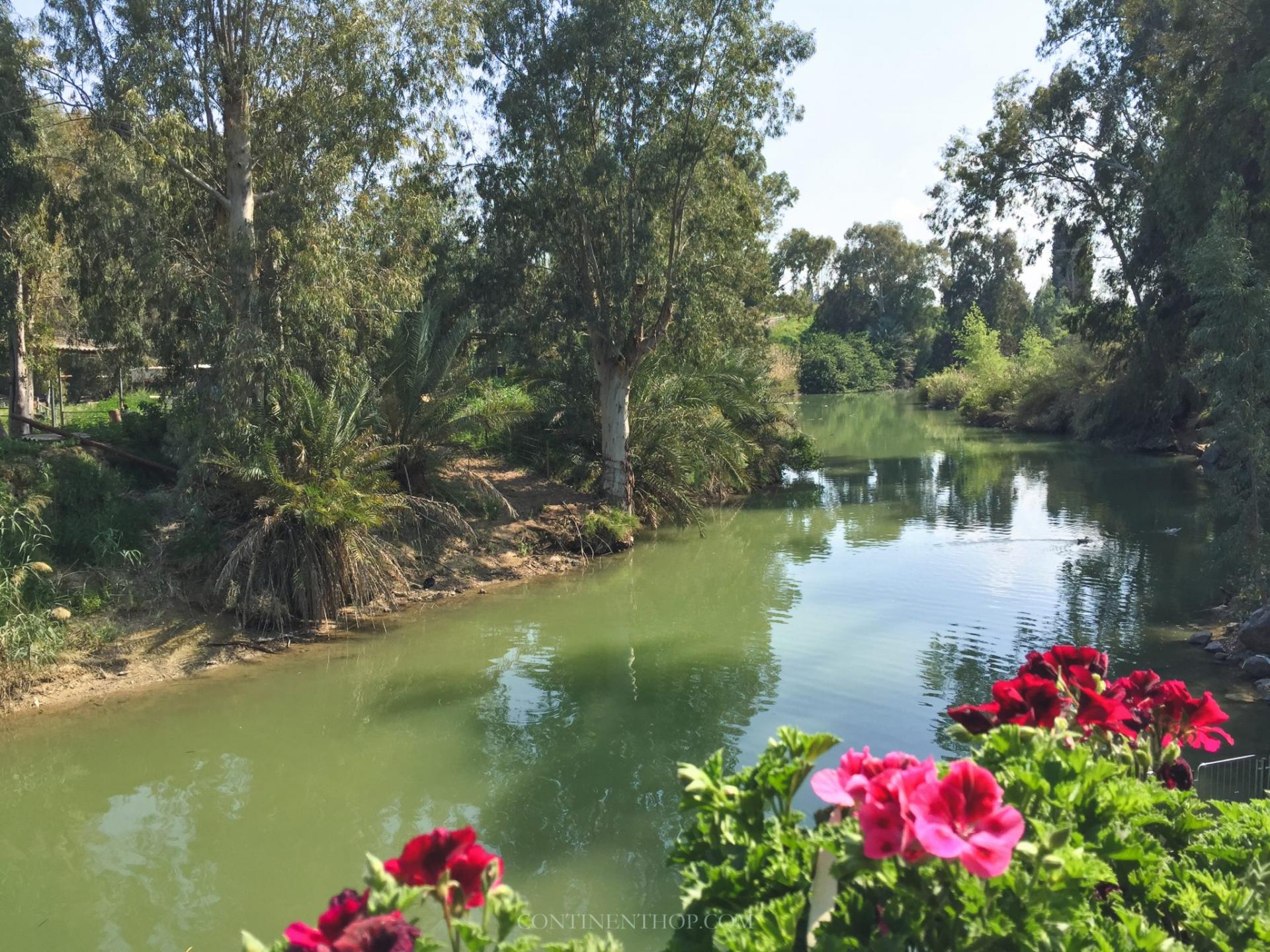
Green – that’s the first word that popped into my mind when I entered Yardenit. The atmosphere reverberated with the sound of Hymns as people dressed in white prepared to get baptized in the very place Jesus was baptized by John the Baptist and the Spirit descended on Him, in the River Jordan.
holy land pilgrimage
The verses above are inscribed on ceramic in more than 85 languages and run along the ‘Wall of New Life’ adjacent to the Baptismal Pools.
Travelers can buy or rent white robes, take a shower, change and buy refreshments at the Visitor’s Center located adjacent to the river.
Cost: $10 for rent or $25 for purchasing a Baptismal Kit. You’re not allowed to enter a pool without wearing the white robes provided and wearing a swimsuit underneath (preferably opt for a dark colored one, as the robes get almost transparent when wet). More details here.
Capharnaum – Capernaum National Park
Matthew 4:13
“And leaving Nazareth, He came and dwelt in Capernaum, which is by the sea…”
Jesus chose his disciples and performed many miracles here in Capernaum, also known as ‘The Town of Jesus’. Within the park, A Church now stands on the upper level; the lower level contains a glass floor through which you can view the ruins, believed to be the house of Peter, located underneath.
The remnants of a synagogue where Jesus preached also stand nearby. A little ahead lies a small sanctuary leading to the Sea of Galilee. It was very peaceful here as the crowds were concentrated near the Church. In the Sea of Galilee was a small boat with a lone fisherman waiting patiently trying to catch some fish and it dawned on me that I was watching the very place where Jesus did the same with his disciples.
Cost: Entry is free of Charge.
Additional Locations
Cana
The village where Jesus was said to have turned water into wine at a wedding. The Greek Orthodox Church of St. George was built on the site of this miracle.
Church of the Transfiguration at Mount Tabor
The site of Jesus’ Transfiguration where the prophets Moses and Elijah appeared next to him, and he spoke with them.
Mary’s well
The place believed to be where Mary used to bathe young Jesus. The waters of the spring here are said to have healing properties.
Church of the Beatitudes
The location on the Mount of Beatitudes where Jesus preached the Sermon on the Mount.
A lot of the locations are in proximity to the Sea of Galilee and provide fabulous views.
The Jesus Trail is another option for the ones who love outdoors, to walk/hike on a trail from Nazareth to Capernaum. The route begins in Nazareth and passes through important sites such as Cana, Tabgha, Mount of the Beatitudes and ends in Capernaum.
Jerusalem
Via Dolorosa
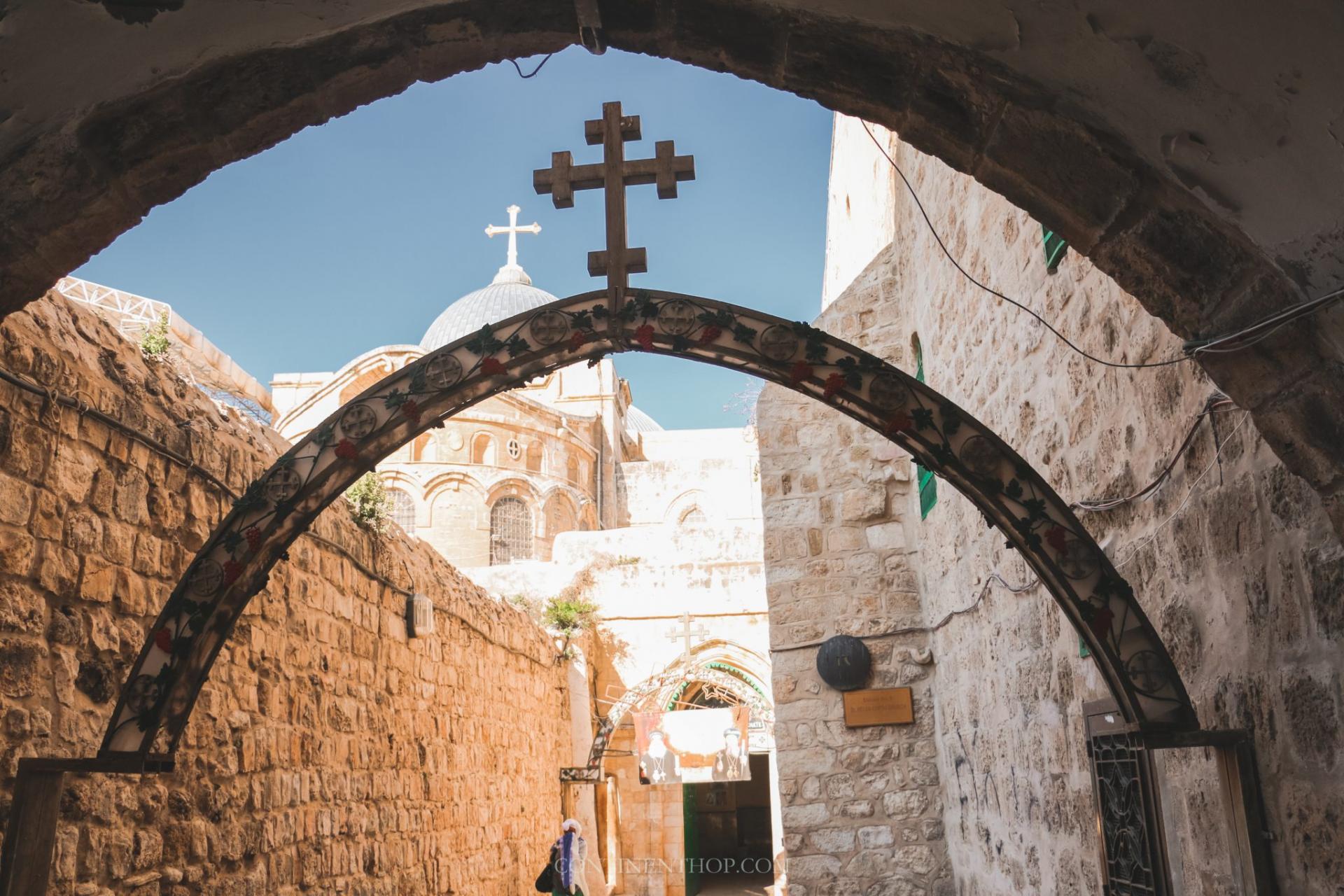
The Way of the Cross which ends at the Church of the Holy Sepulchre in Jerusalem. You’d probably need a map to figure out the whole route but the locals are very helpful and pointed us in the right direction. They even advised us to start in the opposite direction if we didn’t mind as there had been a few local scuffles where the Via Dolorosa actually started, the Lions Gate. Wrought iron symbols mark the locations, and they’re easy to find.
holy land pilgrimage
I got up early morning and took a walk around, trying to recall all the Stations of the Cross and imagining how it would have been when it was actually happening!⠀The pain, agony and the suffering….all for the people, many of whom betrayed Him. It made me realize we need to do good, not for others but to be at peace with yourself.
Church of the Holy Sepulchre
The Church of the Holy Sepulchre is unlike any other Church you’ve ever been before.
And this isn’t because it is believed to be the site of the Golgotha or that Jesus was crucified here or because he was buried and resurrected here. It is because silence isn’t a virtue here. People here express their emotions, talk, feel overwhelmed and it isn’t just Christians that do so. People from all religions pay a visit to the holiest of all shrines in Christianity. You can touch the rock believed to be on which Jesus was crucified on the top level. The anointing stone is present just as you enter the Church believed to be on which Jesus was anointed before His burial.
The Aedicule present on the other side of the Church, contains His tomb, and there’s usually a big queue lined up to pay respect. Best to arrive early morning.
It was a very emotional moment for me and I spent about 2 hours in the Church, visiting thrice during my stay.
On the Mount of Olives….
Garden of Gethsemane & The Church of all Nations
Luke 22: 44-45
“And being in agony He prayed more earnestly: and his sweat was as it were great drops of blood falling down to the ground.
And when he rose up from prayer and was come to his disciples, he found them sleeping for sorrow…”
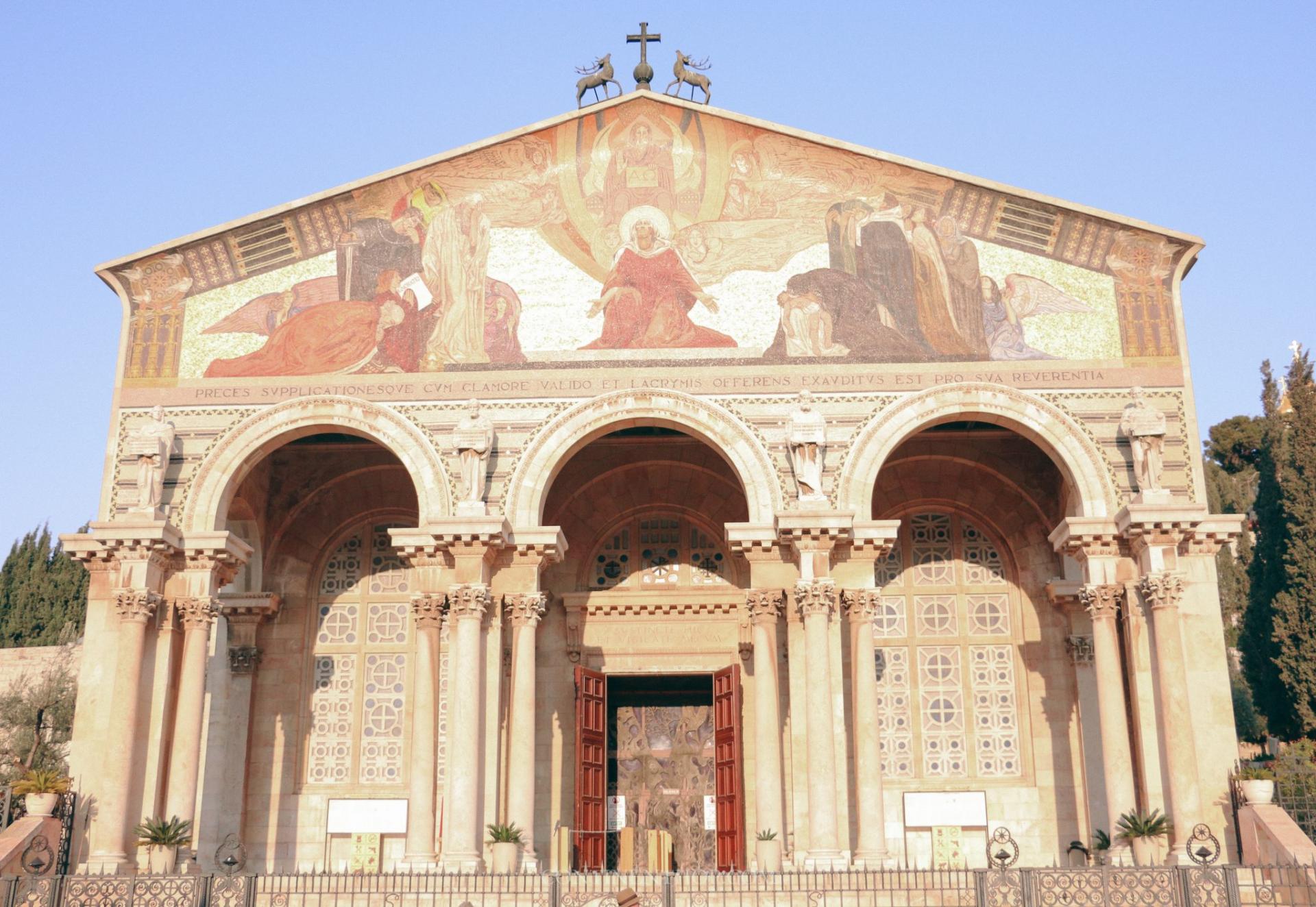
The Church of all Nations which stands next to the Garden of Gethsemane marks the place believed to be where Jesus prayed to the Heavenly Father the night before He was crucified. Even with a huge number of pilgrims and tourists visiting the location, it is the perfect place to pray and meditate.
holy land pilgrimage
Our guide mentioned to us that the olive trees present in the garden are the oldest known to humankind and no, he wasn’t kidding neither was he trying to add drama to the story!
Olive trees can grow back from their roots even when they have been chopped down, so if the main tree you see in the garden was the exact one that Jesus prayed beneath remains a mystery to this day!
Pater Noster Church
Luke 11:2-4
“He said to them, When you pray, say: Father, hallowed be your name, your kingdom come. Give us each day our daily bread. Forgive us our sins, for we also forgive everyone who sins against us. And lead us not into temptation.”
The Pater Noster Church which stands next to the Church of the Eleona (Olive Grove) contains a grotto believed to be the location where Jesus taught the Lord’s Prayer to His disciples. The ‘Our Father’ is inscribed in more than 100 languages here including Chaldean – believed to be one of the languages Jesus spoke. I happened to find one in Konkani and was overjoyed.
They keep adding to the plaques if new languages are brought to their notice.
Chapel of the Ascension
Believed to be the location where Jesus ascended into heaven forty days after His resurrection. The quirky history about this Chapel is that due to abandonment by worshipers and locals over time, unknown to the inhabitants the Chapel was converted to a Mosque!
Later after being discovered again, as a gesture of goodwill, a larger complex was created, and a Mosque was built within it which is now used for prayer. The Chapel also contains a stone with a footprint imprinted on it, believed to be that of Christ before He ascended into heaven.
Additional Locations
Garden Tomb
Believed by the Protestant Christians to be the site of the burial and resurrection of Christ
Church of St. John the Baptist
The birth-place of St. John the Baptist who baptized Jesus
Tomb of the Virgin Mary
Believed to be the burial place of Mother Mary
The Russian Orthodox Basilica of Saint Mary Magdalene
A Church dedicated to Mary Magdalene, who was the first to see Christ after His resurrection
The Cenacle- the Room of the Last Supper
The ‘Upper Room’ believed to the place where Jesus had His last supper with His disciples
The people visiting Israel do so with a lot of excitement – to visit the land where Jesus lived, The Prophet Mohammad ascended to heaven and where the Holy Wall stands, or just to wander around trying to take all the culture in. The people living there feel truly blessed to do so.
It is impossible to visit and not feel the energy pulsating in the air.
No matter why you choose to visit, you will definitely leave with a happy mix of feelings, some you may have never felt before!
PIN FOR LATER!
PRACTICAL DETAILS
Holy Land Pilgrimage
-
Most of the places have free entry, however it is best to go on a guided tour to learn more about the history
-
It is definitely very much safe to travel to Bethlehem and the West Bank
-
Do carry your passport when traveling to some places that have check-points
-
The best times to capture pictures are early morning
-
Carry a scarf to cover your shoulders when necessary and wear modest clothing

2 days in Hanoi Itinerary - Getting a Better Taste of Hanoi! (2026)
Hanoi is a delightful city and while you can happily spend a week here and stay busy, you should spend at least 2 days in Hanoi. There’s street food and shopping to enjoy in addition to the hustle and bustle! Here’s a detailed 2 days in Hanoi itinerary to help you plan better and get a good taste of Hanoi!
I head out to find a Banh Mi – it’s the Vietnamese word for bread but a Banh Mi is actually a baguette.
It is also the word synonymous with a sub-sandwich specific to Vietnam, one that is tasty, fresh and full of delightful goodness. Perfect to start my 2nd day in Hanoi.
Chomping on it, on the way to Cafe Trung for my fixed dose of egg coffee, I take a picture with a colorful mural as the background, something that’s popped up overnight.
I spent one day in Hanoi stuffing myself with delicious street food, taking a walk around the West Lake and Tran Quoc pagoda and getting a glimpse into the night life here.
Day 2 of my 2 days in Hanoi, Vietnam was to be more spaced out and spontaneous.
That being said, there were numerous options to pick! I decided to interact more with the locals and buy directly from them aka spent most of the day shopping with a little touch of history.

However, I’ve detailed all the options here for you to pick what you’d like.
You could also skip spending an entire day here and head off to Halong Bay if you like; the options are endless.
I, however, decided to head to Pho Gia Truyen Bat Dan again, for some steaming Pho and explore more of the city!
Getting a visa for Vietnam
If you’re planning to visit Vietnam, the first thing you will need is a visa.
Citizens from most countries are required to have one and the quickest way to get a visa is to get it in advance, online.
To apply for a visa, you will need a passport that is valid for at least 30 days and bookings sorted for flights/ferries and stay. Please check if you require to get one, before applying.
A 2 days in Hanoi itinerary
Here’s what to do in Hanoi in 2 days
Day 1 of your 2 days in Hanoi itinerary
8 AM
Start the day with Pho at Pho Gia Truyen Bat Dan
Breakfast needs to be hearty and Vietnam, just like many other Asian destinations makes sure there are numerous options for a filling meal, mostly served fresh and hot.
As soon as I stepped out of the hotel, I was surrounded by appetizing smells wafting through the air and people slurping through their bowls of Pho.
The Pho in Vietnam (and especially in Hanoi) is unforgettable and something you should not miss out on! I made sure I had a little everyday although it was difficult as there were so many dishes to pick from.
Pho Bo (Beef Pho) or Pho Ga (Chicken Pho) are the 2 main types of Pho available at most stalls. Pho Bo is a ‘must-try’ on your 2 days in Hanoi itinerary.
The intense broth is made from stock by simmering bones and meat, with flavorful spices, onion and ginger. Once done meat is thinly sliced and served in the Pho.
Irrespective of whether you pick Pho or Bun (thin noodles used in the soup) will be served with fresh coriander, mint, thinly cut chili peppers, lemon and chopped onion.
Pho Gia Truyen Bat Dan has been around since the 1960s and sells only Pho Bo. Make sure to try the Pho at different spots as each one has a secret recipe!
DETAILS
Address: 49 Bat Dan, Cua Dong, Hoan Kiem, Ha Noi, Vietnam
Timings: 6 AM – 10 AM, 6 PM – 8.30 PM
Approximate price: Starts from VND 35,000 per bowl


Then get some egg coffee
Egg coffee is exactly what it sounds. Due to a shortage of milk caused by the first Indochina war, Nguyen, the owner of Cafe Giang, who was bartending at the Sofitel Legend Metropole Hotel at this time, used eggs as a substitute for milk.
Robusta coffee is famous in Vietnam and is mostly used to make the egg coffee.
The coffee is topped with creamy, whipped egg and is quite a nice experience! I had two to finish off breakfast and then went on a hunt for the train that sped inches away from houses in Hanoi!
You can also try the egg coffee at Cafe Dinh.
Both spots are located at an 8-10 minute walk from Pho Bat Dan and are good to get a taste of the cafe culture on your 2 day Hanoi itinerary.
DETAILS
Cafe Giang
Address: 39 Nguyen Huu Huan, Hang Bac, Hoan Kiem, Ha Noi, Vietnam
Timings: 7 AM – 10 PM
Approximate price: About VND 25,000 per cup
Website can be found here
—————
Cafe Dinh
Address: 13 Dinh Tien Hoang, Hang Trong, Hoan Kiem, Ha Noi, Vietnam
Timings: 7 AM – 9.30 PM

9.30 AM
Watch the train speed inches away from houses
When I lived in Mumbai, (and maybe people from other metro’s can identify too) it was common to find apartments located really close to the train station.
However, this location takes it a little further.
If these houses were to have a patio, it would be on the train track, that’s how close these houses are squashed next to each other.
I wouldn’t advise finding this location, just to click pictures but to see how the locals live their day to day lives.
Make sure to buy a beer at one of the mini-stores by the train track to support them. You’ll also find the timings mentioned at most of these stores. If not, the locals usually retreat to their houses when the train is to pass by.
The train track is located about 3 kilometers from Cafe Giang. The walk is about 30 minutes and is a good way to get to see Hanoi. Hiring a taxi costs about £2.5 one way. Grab Taxi is the most convenient to use via their app.
DETAILS
Anywhere where the train track passes through Hanoi. However, this may be used as a location in Google Maps
Address: Hanoi train track cafe, So 47 Ngo 224 Le Duan, Kham Thien, Dong Da, Ha Noi, 100000, Vietnam
Timings: 10.30 AM – 8 PM

11 AM
Take a walk through the Old Quarters of Hanoi
When Hanoi was made capital for the very first time, various hawkers and craftsmen gathered around the capital to sell their wares, leading to a concentration of traders on certain streets in the old quarters of the city.
Once you’ve seen how locals live by the railway tracks, start walking towards the old quarters to explore this area better.
Saint Joseph’s Cathedral – Also called Hanoi Cathedral, it is the oldest Church in Hanoi, built in the Neo-Gothic style with stained glass windows and tall arches.
The courtyard has gigantic metallic paintings from the life of Christ adorning the walls.
The Cathedral is also a hub of many cafes and restaurants making it a great spot to relax for an hour or so and people watch!
DETAILS
Address: 40 Nha Chung, Hang Trong, Hoan Kiem, Ha Noi, Vietnam
Timings: Monday – Saturday 8 AM – 11 AM, 2 PM – 5 PM, Sundays 7 AM – 10.30 AM, 3 PM – 9 PM
Cost: Free
Website can be found here
Temple of Literature – One of the best places to visit in Hanoi, you’ll see three pathways, once you enter through the main gate.
If you look up you’ll notice the big bronze bell at the top of the arch in the center, indicating it was reserved for the monarch.
The temple of literature is just a 15 minute walk from the Prison Memorial, has 5 courtyards, a temple and small lake full of Koi fish. It is worth a visit as it brings a sense of calm from the hustle and bustle of the city.
Also called Van Mieu, the Temple of Literature/Temple of Culture which is a Confucius temple and hosts Vietnam’s first national university. You’ll find the Temple of Literature featured on the back of the 100,000 VND banknote!


DETAILS
Address: 58 Quoc Tu Giam, Van Mieu, Dong Da, Ha Noi 100000, Vietnam
Timings: April to October – 7.30 AM – 5:30 PM, October to April 8 AM – 5 PM
Cost: VND 30,000 adults, VND 15,000 students
One Pillar Pagoda – The One Pillar Pagoda is a small Buddhist temple that sits in the architecture complex of the Ho Chi Minh Mausoleum.
It represents a blossoming lotus flower from the waters and has a statue of Quan Am, the Goddess of Mercy as legend claims that the Emperor built the pagoda in gratitude to the Goddess and the Bodhisattva Avalokiteshvara; as they helped him become a father.
Dressing appropriately from head to toe is advised if you’d like to pay a visit. Shorts aren’t allowed.
DETAILS
Address: Chua Mot Cot, Doi Can, Ba Dinh, Ha Noi 100000, Vietnam
Timings: Open everyday 7 AM – 6 PM
Cost: Free
Ho Chi Minh Mausoleum – One of the busiest touristic sites in Hanoi, the mausoleum is the resting place of the Emperor Ho Chi Minh.
Located in front of the Ba Dinh Square, the mausoleum is where the former president of Vietnam, Ho Chi Minh is laid to rest. It was him that led Vietnam to victory against the French and helped devised strategies and lead the war against the U.S. during the AMerican War.
His body is embalmed and put on display at the mausoleum.
Best time to visit is early morning when the queues are smaller.
Also located within the complex are the Presidential Palace, the Ho Chi Minh stilt house and the One pillar pagoda. It is worth walking past these attractions if you’re short on time and spending only 2 days in Hanoi, Vietnam.
DETAILS
Address: 2 Hung Vuong, Dien Ban, Ba Dinh, Ha Noi 100000, Vietnam
Timings: Tuesdays, Wednesdays and Thursdays 7.30 AM – 10.30 AM, Saturdays and Sundays 7.30 AM – 11 AM, Closed Mondays and Fridays. Closed for a few months every year when the remains are sent for maintenance
Cost: VND 40,000

Dong Xuan Market – The market was the last stop on our walking tour of Hanoi through the old quarters.
It is the largest indoor market in Hanoi and a greta buy to buy keepsakes, upholstery and souvenirs. You can bargain here however be mindful of how interested you are in the item before you start, just like in the Marrakech souks.
The old quarters have shops, temples, pagodas, traditional food stalls in addition to interesting architecture, greta cafes and bars. You can easily spend more than 2-3 hours here. Adjust according to your preference.
I’d decided to spend more time at the markets on the 2nd day so I just took a quick walk here on the 1st.
If you’re more of a slow traveler, you can spend your whole one day in Hanoi exploring only this area.
DETAILS
Address: Dong Xuan, Hoan Kiem, Hanoi 100000, Vietnam
Timings: Open every day 6 AM – 6 PM

2.30 PM
Lunch at Bun Cha Hang Quat
Bun Cha was made famous when Anthony Bourdain and Barack Obama had this dish in Hanoi. While the restaurant where they had it is located on the outskirts of the city, the one at Hang Quat is equally popular and worth a try.
Slices of grilled pork belly are served in a steaming, tasty broth served with thin rice noodles and accompaniments similar to ones served with Pho.
Like Pho, you will find Bun Cha almost everywhere. Try it with some crispy spring rolls if you’re really hungry!
DETAILS
Address: 74 Hang Quat, Hang Gai, Hoan Kiem, Ha Noi, Vietnam
Timings: Open everyday 10.30 AM – 2 PM
Location can be found here
4 PM
West Lake and Tran Quoc pagoda
If you’re looking to get more out of your 2 days in Hanoi, hire a taxi to take you to West Lake. Hoan Kiem lake is a good location to catch the sunset and end the first day of your 2 days in Hanoi itinerary with some quiet!
Tran Quoc Pagoda, the oldest pagoda in Vietnam sits on the east side of the lake. The pagoda, (also called ‘Khai Quoc’) has many small temples located inside and it’s quite peaceful and picturesque here.
After this you could head off for dinner or if you’d like to do more, catch a water puppet show. Ideal to do if you have kids!
DETAILS
Address: Thanh Nien, Yen Phu, Tay Ho, Ha Noi 100000, Vietnam
Timings: 8 AM – 4 PM every day
Cost: Free

5.30 PM
A Walk around Hoan Kiem Lake and Ngoc Son temple
Hoan Kiem (Lake of the Restored Sword) is where you’ll find most locals every morning and evening and it is one of the best things to do in Hanoi.
You could even start your itinerary here by visiting the lake before your bowl of Pho!
The turtle temple (Thap Rùa), is located in the center of the lake. You’ll occasionally find large endangered soft-shell turtles lying around here. Over the lake is the Red Huc (Morning sunlight) bridge which connects the temple to the Ngoc Son (Jade Mountain) temple located over Jade island.
The temple busy during the day but is lit up at night, making it magical!
During weekends the area is prohibited from traffic so the area is full of children playing, hawkers selling their wares and artists performing.
DETAILS
Address: Dinh Tien Hoang, Hang Trong, Hoan Kiem, Ha Noi 100000, Vietnam
Timings: 8 AM – 6 PM
Cost: VND 30,000 to cross the bridge to visit the temple
6.30 PM / 8 PM
Thang Long Water Puppet Theatre
Attend a water puppet show conducted entirely over water at the theater located right next to Hoan Kiem lake if you’re keen to watch a traditional performance by the local artists.
The show starts off with the orchestra played using local Vietnamese instruments. The puppet show then follows, which narrates a legend that covers local activities like farming, fishing and herding buffaloes.
The puppeteers conduct the whole show by using large underwater rods from behind a screen.
DETAILS
Address: 57b Dinh Tien Hoang Street, Hoan Kiem District, Hanoi – Vietnam
Timings: 4 shows daily, 3 PM, 4.10 PM, 5.20 PM, 6.30 PM, 8 PM. More details can be found here
Cost: Tickets start VND 100,000

9 PM
Dinner at Cha Ca Va Long / Cha Ca Thang Long
This Northern Vietnamese speciality was one of my favourite dishes in Vietnam. It is one that I haven’t found anywhere else in the world so it is a must-try if you like seafood!
Cha Ca or pan-fried fish is a Northern Vietnamese specialty that was one of my favorites while in Vietnam. Chunks of lightly seasoned, semi-grilled fish marinated in turmeric are placed on a pan on your table while you fry it yourself!
Accompaniments like peanuts, chopped coriander are also provided making it a super tempting meal.
Cha Ca Va Long is a century old making it one of the oldest eateries in Hanoi!
DETAILS
Address: 21 – 31 Duong Thanh, Cua Dong, Hoan Kiem, Ha Noi, Vietnam
Timings: Open everyday 10 AM – 9.30 PM
More info can be found here

10.30 PM
Fresh beer at Bia Hoi junction
The abundance of nightlife is one of the perks of having a city break. Hanoi is another city that doesn’t sleep and hence you will find many bars, pubs and a bustling nightlife here, which will keep you highly entertained.
Little Hanoi is a great spot to grab dinner on a busy street and mingle with locals and tourists.
You’ll also find the freshest beer in Hanoi Bia Hoi (Vietnamese draught beer) at Bia Hoi junction, to be had immediately by sitting on the tiny stools on the side!
Quantities are limited and once over, the vendors call it a day!
Bia Hoi junction is located at the corner of Ta Hien and Luong Ngoc Quyen streets in the Hanoi Old Quarter. There are also many nightclubs you’ll find in the old quarter but unfortunately, I can’t recommend any.
Once you’re happy with the time spent here, it’s time to call it a night and get some rest for your day 2 in Hanoi!

Day 2 of your Two days in Hanoi Itinerary
8 AM
Thang Long Imperial Citadel
After grabbing breakfast and egg coffee again (if you’re a big fan of this unique coffee like me!), you can start your day by visiting Thang Long Imperial Citadel.
The Imperial Citadel of Thang Long, a UNESCO world heritage site, has historical importance due to its old palaces, excavated sites and artefacts. A display room has mock-ups of the Citadel and artefacts that can help you know about the ancient culture in Vietnam and other Southeast Asian countries.
Remember to collect a map from the visitor’s information centre at the entrance so that you know which route to take and do not miss out on anything as this is a vast complex with many buildings.
A fascinating place to see here is the Bunker D67, the underground war bunker built in 1967. This bunker was the headquarters of the North Vietnamese Armed forces during the war against American invaders. The underground bunker is in a building that looks ordinary from the outside but is soundproof and has a layer of sand on the roof for protection from shrapnel.
DETAILS
Address: 19C Hoang Dieu, Dien Ban, Ba Dinh, Ha Noi 100000, Vietnam
Timings: 8 AM – 5 PM from Tuesday to Sunday. Closed on Mondays
Cost: VND 30,000, free for children aged 15 or below (VND 15,000 for students or Vietnamese citizens above 60)
More info and updated ticket prices here

9.30 AM
Vietnam Military Museum
If you’re looking to start the day late pick either the Citadel or this, depending on preferences. If you visited the Citadel, your next stop should be the Vietnam Military history museum or the Army Museum, a few metres away from the Citadel’s complex.
This museum has a collection of war relics, weapons, soldiers’ accounts and propaganda videos from wars against China, the United States and France.
The highlights of the museum are, in fact, outside the museum – the flag tower and aeroplanes. Climb up the Flag Tower in the museum’s complex to get a picturesque view of the city. The tower was built in 1812 and remains undamaged despite the wars. The Vietnamese flag has flown at this tower’s top since October 1954.
Tourists love the museum due to its display of captured American aeroplanes and the wreckage of an American B-52 bomber used to bomb Hanoi in December 1972.
If you are looking to save money, you should see some of the exhibits through the outside glass displays. Many tourists who visit through tours see the museum only from outside.
DETAILS
Address: 28A Dien Bien Phu, Dien Bien Phu, Dien Ban, Ba Dinh, Hanoi
Timings: 8 AM – 11.30 AM, 1 PM – 4.30 PM on all days except Monday and Friday. Closed on Mondays and Fridays
Cost: VND 40,000 for foreigners, VND 20,000 for Vietnamese visitors, VND 30,000 for a camera (15% discount for children under the age of 15, elderly and students)

10.30 AM
Presidential Palace and Ho Chi Minh Stilt House
The Presidential Palace is a beautiful three-storeyed yellow building built in a French architectural style surrounded by lush gardens, a carp pond and a boulevard.
This building, built by 1906, was constructed to create an official residence for Vietnam’s revered leader, Ho Chi Minh. Minh, however, preferred to live in the simple, traditional stilt house that you can visit within the palace’s compound.
The palace is only used for political gatherings now, and tourists cannot enter the palace. You can only see the colonial building from the garden, for which you would have to pay an entrance fee of 25000 VND.
You can, though, enjoy the tranquil gardens and their surrounds – Mango street (a street lined with mango trees), the orchard and the carp pond. Behind Mango street lies Minh’s traditional house that has simple, wooden interiors. This house is open for visitors to enter.
DETAILS
Address: So 2 Hung Vuong, Ngoc Ho, Ba Dinh, Hanoi – 118708
Timings: 8 AM – 11.30 AM, 1 PM – 4.30 PM on all days except Monday and Friday. Closed on Mondays and Fridays
Cost: VND 25,000

11.30 AM
Quan Thanh Temple/Hanoi Botanical Garden
Quan Thanh Temple, located at the edge of Tru Bach lake, is one of the four ‘sacred temples’ built to protect the city from evil spirits. The other three sacred temples are – Kim Liem (South), Bach Ma (East) and Than Linh Lang (West).
Quan Thanh, a Taoist temple built in the eleventh century to honour ‘Tran Vo’, the ‘God of the North’, is known for its four metres tall bronze statue of Tran Vu. The temple is also known for its kanji poems and art carved on its doors and beams.
Alternatively, you can also visit the Hanoi Botanical Garden nearby, though whether this timing is right to spend time in a garden would depend on the season.
It’s a good idea to skip this if you happen to be in Hanoi during the hot, humid summer season when temperatures are in the range of 25-30°C or even higher. The garden is only 700 metres away from the presidential palace.
DETAILS
Quan Thanh Temple
Address: Thanh Nien, Quan Thanh, Ba Dinh, Hanoi – 118810
Timings: 8 AM – 5 PM, on all days
Cost: Approx. VND 10,000
Hanoi Botanical Garden
Address: 3 Hoang Hoa Tham, Ngoc Ho, Ba Dinh, Hanoi
Timings: 5.30 AM – 10 PM, on all days
Cost: Approx. VND 2,000

1 PM
Lunch at Pho Cuon Huong Mai
Serving some of the best Pho Cuon (Beef Pho wrapped in rice noodles) in the city, Pho Cuon Huong Mai is about a 10 minute walk from Quan Thanh.
Fried beef, served on Pho ‘pillows’ is another dish you could try here that’s a customer favourite. The place is clean and budget-friendly, but don’t expect great service.
DETAILS
Hanoi Botanical Garden
Address: 25 Ngũ Xã, Trúc Bạch, Ba Đình, Hanoi, Vietnam
Timings: 9 AM – 11 PM, all days
2 PM
Shopping or Museums
Post lunch, you can choose to visit any of the museums in the city. Alternatively, you can choose to shop in the different markets in Hanoi’s local markets, a shopping haven for affordable silk, clothes, leather goods, clothes and handicrafts.
OPTION 1: Shopping
Hang Gai street – Old quarters
Silk Street or Hang Gai street is in the Old Quarter area. Visit this market for fashionable, good quality silk, home furnishing and traditional Vietnamese clothes. You can also get tailor-made clothes in as little as 24 hours here!
When in Hanoi, one must explore the local markets, bargain hard and buy local.
You can find exquisite, unique local goods this way. But if you are looking for branded products, you can visit malls such as Lotte Center Hanoi/Trang Tien Street/ Hang Da Market.
Trang Tien Street, located at the beginning of the French Quarter, is the place you should head to if you are looking for luxury and international designer brands.
If you are willing to travel some distance, you can also go to Van Phuc Silk village, about 11 km away, southwest of the city.
This village is not only popular amongst tourists but also exports its silk products across the world. You can find reasonably priced silk clothes, souvenirs, and handicrafts here.


OPTION 2: Museums
Hanoi is a treat for history buffs. If you are one, there are a plethora of museums you can visit. If you want to see all of them, one afternoon is possibly not enough for all of them, and you should consider planning a more extended stay in the city.
Here are a few of the museums that you can visit in Hanoi –
-
Vietnam Museum of Ethnology
This museum documents the history and culture of the different ethnic groups of Vietnam. The museum’s outdoor area also has replicas of traditional Vietnamese homes with exhibits through which tourists can know more about the lifestyle and culture of these ethnic groups.
DETAILS
Address: 34 Chau Long, Truc Bach, Ba Dinh, Hanoi – 100000
Timings: 8.30 AM: 5.30 PM from Tuesday to Sunday. Closed on Mondays
Cost: VND 40,000; 50,000 VND for a camera (Discount for students or people aged above 60, free for children under 6)

-
Vietnamese Women’s Museum
The Vietnamese Women’s Museum, run by the Women’s Union of Vietnam, highlights women’s contribution to Vietnam’s history and culture. The museum has more than 25,000 items, artefacts and photos that chronicle women’s lives and their contribution to the military, economy, and family.
DETAILS
Address: 36 Ly Thuong Kiet, Hang Bai, Hoan Kiem, Hanoi
Timings: 8 AM: 5 PM, Monday – Sunday
Cost : VND 40,000 (VND 20,000 for students; VND 10,000 for children). Website can be found here
-
Hanoi Police Museum
This museum takes visitors through a chronological history of the country’s police force from the time they made efforts to expel the French in 1946 to their modern-day stories of fighting cybercrime and drugs. Exhibits here include uniforms, weapons, motorcycles, photographs, newspaper articles and various other artefacts.
DETAILS
Address: 67 Ly Thuong Kiet, Tran Hung Dao, Hoan Kiem, Hanoi
Timings: 8 AM: 4.30 PM from Tuesday to Sunday. Closed on Mondays
Cost: Free admission

6 PM
Lotte Observation Deck
The Lotte Observation Deck is the best place to get a panoramic view of the city. The deck is on the 65th floor of the Lotte Center building, which also has shops, restaurants, a gym, spa, hypermarket, and the five-star Lotte Hotel.
The prices vary depending on the time of the day. It is cheaper to visit in the evening than during the day. I suggest visiting the deck in the evening as this is an excellent spot to watch the sunset.
There are four different zones here – Attraction Zone, Welcome Zone, Experience Zone and Romantic Zone.
The most enjoyable (or challenging – for those who have a fear of heights) part of the visit here is walking on the Sky Walk, a glass-bottomed floor where you take off your shoes and walk right into clouds/night sky – depending on the time you visit.
DETAILS
Address: 54 Lieu Giai, Cong Vi, Ngoc Canh Ba Dinh, Hanoi – 117000
Timings: 9 AM – 12 PM (Ticket counter closes at 11 PM)
Cost: Ticket prices vary on the time of the day and age of the visitor. Details available here – http://observationdeck.lottecenter.com.vn/en/ticket. Discounts available during ongoing promotions, and if you book online
8 PM
Dinner
The Lotte Observation Deck has a few cafes that offer affordable options. Alternatively, the Lotte Center has some great restaurants that you can visit after spending enough time at the deck.
If you want to have a late dinner, you could also enjoy the food at the small, local eateries in the Old quarters night market.

9.30 PM
Old quarters night market
If your second day in Hanoi happens to be a Friday/Saturday/Sunday, spend the night at the night market in the Old quarters.
The streets come alive due to the colourful lights illuminating the streets, live cultural performances, and tourists who come here.
You can buy souvenirs, handicrafts, leather handbags, clothing (but you must know how to bargain to be able to get a good deal!) or grab some local dishes or beer at one of the stalls here. Be careful of your belongings, as pickpocketing is rampant here.
If you are in Hanoi on a weekday other than Friday, you can visit the Opera House at this time.
Hanoi opera house, situated close to Hong Kiem Lake, was built over ten years by the French colonial rulers over 1901-1911. The building’s eclectic renaissance architecture resembles the Opera House (Palais Garnier) in Paris. You can also watch a play, attend a concert or listen to opera here.
The Opera House is worth the visit to admire its architecture. If you plan to watch a play or listen to opera – these may begin earlier in the evening, and it’s best to check the website, book tickets in advance and plan your day accordingly.
DETAILS
Old quarters night market
Address: 8 Hang Dao, Hoan Kiem, Hanoi Vietnam
Timings: 8 PM – 11 PM only on Friday, Saturday and Sunday
Hanoi Opera House
Address: 01 Trang Tien, Phan Chu Trinh, Hoan Kiem, Ha Noi 100000, Vietnam
Timings: 8 AM – 11 AM on all days
Entry Fees: 400,000 VND (50 % discount for student)
Tickets for performances: VND 300,000 – 1,000,000 (Ticket price varies for different performances)

If you don’t like spending time in bustling, noisy cities, you can also plan a day trip for the second day to either of these places – Perfume Pagoda, Duong Lam ancient village, Ba Vi National park, Ninh Binh village and the nearby Van Long nature reserve.
Here’s some info for Ninh Binh village, which is my recommendation!
Ninh Binh city, about 95 km from Hanoi, is a must-visit if you love nature. Ninh Binh is the province’s name, which consists of many small villages and the city’s name, which is the capital of the province. Situated in the Red River delta, this city is a delight with its lush greenery, limestone cliffs and temples.
This region has the Trang An Landscape Complex, a UNESCO cultural heritage site and a spectacular landscape of limestone peaks and caves amidst the valley, renowned for its limestone peaks similar to Halong Bay and boat tours.
If you visit Ninh Binh, do not miss the Van Long Nature Reserve, a wetland reserve, half an hour away from the city. Van Long, home to the endemic Delacour langurs, is known for its scenic views and is popular with birdwatchers.

Vietnam is a massive destination and irrespective of whether you choose to travel and see more of it or spend a few days in Hanoi, it’ll leave you asking for more.
It isn’t just the food though, the warm friendly locals, the atmosphere…there’s something about the place that’ll definitely make you come back!
HOW DANGEROUS IS HANOI?
Hanoi is considered safe for tourists. However, petty crimes like pickpocketing, bag snatching, and taxi scams occur frequently. Here are a few ways you can be cautious –
-
Take metered cabs from reliable companies or apps such as Uber/Grab. Rigging taxi meters, adding extra 0s to rickshaw fares, taking longer routes, taking tourists to the wrong hotel from the airport have been reported in the city.
-
Pre-book the hotel you’ll head to from the airport and carry the address. Unsuspecting tourists have been scammed by local cab drivers at the airport who offer to take them to a ‘budget hotel.’
-
Be wary of locals who offer food or drinks together, especially at Hoan Kiem Lake or Old quarters. Locals who work in nexus with the bars have tried scamming tourists of money in this way.
-
Practice caution while walking around the streets since pickpocketing or bags being snatched by people riding on a bike is often reported.
HOW MUCH MONEY DO YOU NEED PER DAY IN HANOI?
If you choose to go to the places suggested in this itinerary, it’ll cost you around £40 / VND1349400 for a day. This does not include lunch, dinner, and accommodation costs.
A budget hotel in Hanoi will cost you £13 for a day, or a four-star-one would cost you 36-37£ per day.
WHAT IS THE BEST TIME TO VISIT HANOI
Since the country is huge, temperatures and weather varies greatly across the country. In northern Vietnam it can get quite cold in the mountainous regions with intermittent showers. In the cities the weather is mostly humid.
The best time to visit Ha Noi is Spring from February to April and autumn from October to November.
HOW TO GET AROUND HANOI
Many attractions and markets in Hanoi are situated very close to each other to the extent that you can reach them by walking on foot.
In some parts of the city, like the Old quarters or near the Imperial Citadel of Hue, you can also take a ride in a cyclo. This bicycle rickshaw can seat two people, which the driver pedals through the streets.
HIRING A CAR/BIKE/SCOOTER
I wouldn’t suggest hiring a car as you’re bound to get stuck in traffic most of the times. The lanes in Hanoi are very narrow which leads to traffic jam most of the times.
Ask at your hotel for some good prices. You might get a chauffeur as part of the price which will be more convenient.
You can also rent a bike or scooter for as little as about £5 a day.
TAXI
Taxi’s are easily available in Hanoi and you need to discuss the price before you get in to a taxi if you hire one off the street. I’d highly recommend Grab Taxis as they have an app and are priced reasonably.
Motorcycle taxis, also known as Xe Oms, are also a cheap option.
PUBLIC TRANSPORT
It is difficult to get public transport easily in Hanoi and since I didn’t use it myself and got around the city by walking, unfortunately I can’t recommend any services.
WHERE TO STAY IN HANOI
HOTELS
Anywhere close to the old quarters is convenient as most of the attractions in Hanoi are located within walking distance in the old quarters.
I stayed at Church boutique hotel, 49 Hang Trong and it was a good location with equally good amenities.
PIN FOR LATER!


EXPLORE MORE READY-TO-GO ITINERARIES
Nothing found.
Some of the links on this post are affiliate links. These do not cost you extra to use, but will help provide Continent Hop with a small commission if/when you purchase through them, to recover some of the costs of running this website and providing free content to help you plan your travel. I appreciate your support!

Agritourism in Siena - Eating our Way Through Siena (2026)
Agritourism or agriturismo in Siena (Tuscany or Toscana) is quite popular in Italy. If this is something you’re visiting the region for, here’s a two day itinerary for Siena which contains the foods and products in Seina to try and things to do in Siena in a day too.
They say some of the most memorable trips you’ll have will be the ones you didn’t plan for. I agree and also believe that the company you have on your trip matters a lot too.
As a content creator, my work sometimes involves joining a group of other creators to promote destinations. However, this time when I went on an agritourism tour to Siena in Tuscany, Italy, I was surprised to be the only content creator in a small group of award-winning journalists, one who had also been a presenter on BBC.
Located in the center of Tuscany, the historic center of Siena is a UNESCO world heritage site in the Chianti region.
In Siena or most of Italy, where agritourism is very popular, it is about farm stays, regional dishes, and seasonal food in a rural setting. However, it also does involve buying products directly from farms or places where it’s produced, picking fruit and feeding animals.
The next couple of days were some of the best times I spent in the rolling hills of Tuscany with Linda, Anna and Rupert, experiencing how some local products in Siena and Tuscany are made and trying some of the best foods on offer.
I’d tried agritourism before in Fife, Scotland and Graz but never on this scale. Here’s a quick guide for first-timers who’d like to taste a small bit of Siena!
PLANNING YOUR SEINA TRIP | THE ESSENTIALS
Tours in Seina worth checking out
Where to stay in Seina
Experiencing agritourism in Siena via the products and activities
A two day itinerary for Siena
Renowned all over the world for its wine production, Chianti isn’t a geographic location hence it is difficult to pinpoint the exact location. Chianti is an area between Florence and Siena where Chianti wine is produced. However, wine isn’t the only product that Chianti is famous for. This agritourism itinerary lists some tasty products to try when you’re visiting Siena and where to get them too. There are also some factory visits involved where you can see products being made and have the first taste!
Day 1
A PANINO AT THE CAFES IN TOWN
Start the day off by enjoying some amazing views of Siena if you’re staying at an elevation. I was staying in a charming B&B in the old town called I Terzi Di Siena and it had the best views of the city.
Then if you like a heavy breakfast before starting the day, head to the old town to try a delicious Panino, at one of the many lovely cafes, made from Prosciutto Toscano PDO or Tuscan ham. Salumeria Il Cencio serves some of the best Panini in town and if you’ve already had breakfast, then it’s a good stop to have a mid-morning snack while exploring the city.
Prosciutto Toscano DOP is made in a highly controlled environment and starts with humanely raising the pigs in the surrounding Tuscan hills. We were taken through the process at the Salumificio Viani where the meat is seasoned by hand. The seasoning contains not just salt but also local spices like pepper, juniper and garlic.
They are then placed in cold storage for curing. Once this step is complete, the meat is then taken out for the ‘hot phase’ which involves smearing it with pork fat, salt, pepper and rice paste (which is gluten free) to protect it from drying too much.
The Viani ham is then cured again in special rooms with controlled temperature and humidity for at least 12 months. The ham has an earthy aroma due to the spices and tastes intense. Once stamped with the official seal, it is ready to be sold.
Once you’re finished with coffee, it’s time to see what Siena has on offer.
P.S. If you’d like to purchase or try some more varieties from the Viani brand, I’d suggest trying their boar Mortadella, Finocchiona (typical of Tuscany, characterized by the use of fennel) and Soppressata.
DETAILS
Salumeria Il Cencio
Address: Piazza del Campo Presso Parri 70/71, 53100, Siena, Italy
Timings: 10.00 AM to 1.00 AM

If you’re looking for the full agritourism package, situated a little away from the city is Agriturismo Manciano where you can stay on a farm, where some of the rooms were used to dry grapes for making Vinsanto. Almost all of them have views of the surrounding hills and the breakfasts here are legendary and have home-made cakes, bread, tomatoes, cucumber from the garden, and fruit salad too!
Grapes, vegetables and olives are grown on the farms here and wine is made in-house which is served to the guests on arrival. While I did not get a chance to visit on this trip, I do highly recommend it!
Here are some more great cafes in town
— Torrefazione Fiorella is stated to be the best cafes in town. They also serve Italian croissants, Panini (some with prosciutto), sweet treats and cold coffee when it is hot outside.
Address: Via di Città, 13, 53100 Siena SI, Italy. Open every day 7 AM – 7 PM
— Bar Pasticceria Nannini is a tradition for the locals as the cafe is owned by one of the oldest families in Siena and they serve not just the best coffee but also traditional sweets from Siena like panforte, panpepato and ricciarelli.
Address: Via Banchi di Sopra, 24, 53100 Siena SI, Italy. Open every day 7:30 AM – 10 PM


9:30 AM – Explore Siena
You can probably walk from one end of Siena to another in a couple of hours. This compact city has many students and not a horde of visitors unless you count the ones passing through on/from their way to Florence/Firenze.
This makes it a nice little surprise for people who never thought of visiting it. Even if you have just a couple of hours here, you can see quite a fair bit of the city.
Since our focus is on agritourism, I’m going to list a few attractions you can visit/see if you’d like to do something different. If you’d prefer a guided walking tour I would recommend this one.
PIAZZA DEL CAMPO
Fish-bone-patterned red bricks make Piazza Del Campo, that sits at the heart of Siena. Shell-shaped and unmissable, it is one of the biggest medieval squares in the world. It’s a place where locals and visitors gather for festivities, political events and for relaxing and where cars aren’t permitted.
The square used to be used as a marketplace and is divided into ten sections by 9 lines that represent the rule of the Nine who ruled Siena.
The Palio horse race takes place every year here on July 2 and August 16.
A copy of the beautiful Fonte Gaia sits opposite to the Palazzo Pubblico (town hall). The original is located in the Museum complex of Santa Maria Della Scala. The Palazzo Pubblico also houses the Civic museum.
The Civic Museum contains some interesting ‘good and bad government’ frescoes used often in political textbooks.
—— DETAILS: Piazza Del Campo: Il Campo, 53100 Siena SI, Italy. Open 24 hours. Civic Museum & Palazzo Pubblico: Open 10 AM – 6.15 PM. Tickets cost €7.50 ——


CLIMB TO THE TOP OF THE TORRE DEL MANGIA
The ‘tower of the eater’ located next to the Palazzo Pubblico, gets its name from its first bell-ringer who was nicknamed “Mangiaguadagni“ aka ‘earning-eater’ as he spent all his money eating in the taverns in Siena.
400 steps take you to the top of the huge tower which is the same height as the Siena Cathedral to signify that religion and state hold equal power. The tower provides amazing 360 degree views of the city, if you’re not staying at a height as I did. You can see almost the whole city and even some of the hills in Tuscany.
—— DETAILS: Il Campo, 53100 Siena SI, Italy. Open 10 AM-7 PM. Ticket price €8, combined with the Civic museum, €13 ——
PIAZZA DEL DUOMO : SIENA CATHEDRAL AND BIBLIOTECA PICCOLOMINI
The piazza is where you’ll find the Siena Cathedral and the Biblioteca Piccolomini.
With a black and white facade, the Siena Cathedral also called Cathedral of Saint Mary of the Assumption or the Duomo of Santa Maria Assunta is built in the Romanesque-Gothic style. The Church dedicated to the Assumption houses signed works by Donatello, Pinturicchio and Michelangelo.
The Piccolomini Library, dedicated to Pope Pius II, is located inside the Church. The library too contains frescoes, mostly in gold, painted by Pinturicchio and his apprentices. The best ones are on the ceiling! Only choral books are contained in the library.
—— DETAILS: Piazza del Duomo, 8, 53100 Siena SI, Italy Open 10.30 AM-5 PM. Sundays 1 PM-5 PM ——

THE MUSEUM COMPLEX OF SANTA MARIA DELLA SCALA
Located opposite the Siena cathedral, this former hospital now houses a museum spread over 4 floors and is massive. Parts of it are still undergoing restoration.
If you love culture and history and are a fan of museums, I’d suggest dedicating a good chunk of your time and possibly skip other attractions, if you only have only a day or a half to spend in Siena.
—— DETAILS: Piazza Duomo 1, Siena, Italy. Ticket price: €9, concessions €7. Timings can be found here ——
In addition to the attractions and activities mentioned above you can also visit the Baptistery (behind the Cathedral), the public palace of Siena, The Church of San Domenico, Battistero di San Giovanni and the Museo dell’Opera del Duomo.
If it’s overwhelming, its exciting just to get lost in the many alleys in Siena and take a tour through the historic center of Siena and enjoy the numerous shops and restaurants. The city is divided into contradas aka districts, with each having its own history and legend. You can spot the symbol of each contrade (caterpillar on a rose, owl, etc.) by checking the sides of buildings.
If you’re looking to see more of Tuscany, a guided day trip that covers Pisa as well can be found here.
2:00 PM – Lunch at Bar dell’Orso in Monteriggioni
There’s an amazing variety of cafes and restaurants in Siena that you can have lunch at, that should keep you busy for a couple of days. However, if you’re looking to see what’s on offer outside Siena, the Monteriggioni Castle is an excellent option.
Located about 30 minutes from town, it can be a pleasing half a day trip away from the city.
Before proceeding to the castle, if you haven’t eaten in Siena, I’d suggest getting lunch at Bar dell’Orso, sat opposite to the castle parking area. The tiramisu here is the best I’ve ever had and the variety of home-made pasta and pici’s will leave you full, yet hungry for more!
DETAILS
Address: Via Cassia Nord, 23, 53035 Località La Colonna, Monteriggioni SI, Italy
Timings: Monday – Sunday, 5 AM – 12 AM. Additional details can be found here
IF YOU TRAVEL FOR FOOD, HERE’S A POST ON TAPAS IN SANTANDER THAT YOU MIGHT LIKE!


3:30 PM – A visit to the main sights in Monteriggioni square
If you’ve had lunch at Bar dell’Orso, once done, take the road behind the parking area and follow it to enter the small village via the Franca (Romea) Gate that apparently faces Rome.
Monteriggioni Castle (Castello di Monteriggioni) sits in the Monteriggioni comune in Siena in the center of the main Piazza Di Roma. One of the most important walled castles in the area, avid readers of classic books will have heard of Monteriggioni in Dante Alighieri’s most famous work, The Divine Comedy or ‘Commedia’.
In the old times, the piazza was used to grow essential vegetables and store water, that would come in handy during a siege.
The walls are partially walk-able and provide stunning views of the Tuscan countryside with its rolling hills. There are a total of 14 towers and 2 gates, the other gate being the Florentine gate that faces Florence. Part of the wall faces the tourist park of the Via Francigena, the pilgrims’ road that connects Camino to Rome.
Just next to the castle is the Church of Santa Maria Assunta. The Roman-Gothic style Church was built at the same time as the Castle and is very compact and has a lovely ‘woody’ old smell.
There’s also a small museum called ‘Monteriggioni in Arme’, which provides a brief history of the area and where children can dress up in costumes.
In July, the small region celebrates the festival of Medieval Monteriggioni, with locals dressed in period costumes and storytellers, acrobats etc. filling the square trying to recreate a day in the life of the castle. A fun thing to do is exchange your Euros for some medieval coins to buy traditional food and drinks inside the castle.
If you’re dependent on public transport and would rather like a guided tour, here’s one that covers Monteriggioni.
DETAILS
Address: Via I° Maggio, 8-10, 53035 Monteriggioni SI, Italy
Timings: Monday – Sunday, 5 AM – 12 AM. Additional details can be found here


5:00 PM – Dievole Winery
An agritourism itinerary can’t be complete without a visit to a vineyard in Tuscany. About 20 minutes away from Monteriggioni, is Dievole, a winery with sustainable wine production.
Boating of a 1000 year-old history, it also has a resort and wine tours. 158 hectares of vast green vineyards, with fossils present in the soil, are based right next to the winery.
Dievole (‘Dio vuole’) which means ‘God wants’ is part of the Chianti Classico DOCG wine region and runs on the DOP principle of respecting the land, its history and that natural life-cycle not just of the vines but also the soil.
Unrefined concrete vats that use organic yeast are used for the vinification process and the wine is then matured in untoasted French oak barrels. What thus gets created is the Chianti Classico 2013, one of the many wines produced here that is ruby-red, fresh and complex with beautiful aromas, aromas that are integral to almost all of the products in Tuscany.
It’s a blend of 80% Sangiovese and 20% of other grapes, including natives such as Canaiolo and Ciliegiolo, as well as international varieties including Cabernet Sauvignon and Merlot. The wine is aged for at least 12 months.
While white wine is what I like best, what did excite me is the olive oil tasting on offer, something I’d never heard of or tried before.
One of the oils was naturally spicy as the olives attain this flavor by trying to protect themselves against the sun and weather. 4 local olive cultivars: Frantoio, Leccino, Moraiolo and Correggiolo with a maximum of the 20% of other varieties are what make the extra virgin olive oil, Chianti DOP.
The Frantoio is the slightly spicy and fruity oil. The others were bitter, delicate with fruity notes.
The tasting took about an hour and had 4 oils on offer. For me, it was the best bit of the tour!
If you’re looking for a pleasant surprise, try the Chianti olive oil with some ice-cream, it goes really well together!
If you’d rather visit a winery and head to the outskirts of Siena to make it a day-trip, the wineries in Montepulciano are worth a visit!
DETAILS
Address: Località Dievole, 6 Cantina, 53019 Castelnuovo Berardenga SI, Italy
Timings: Monday – Sunday, 10 AM – 7 PM. Additional details can be found here


7:00 PM – Back to Siena and dinner at Osteria Babazuf
A Michelin guide restaurant, the Babazuf is a simple Italian Osteria with emphasis on the local dishes and wine. One can easily notice the locals queuing up for a meal which goes to prove that you can expect nothing but a traditional meal here.
The Babazuf has excellent ingredients and some great local dishes on the menu such as a rabbit, sausage and pistachio terrine, butter pasta with truffles, octopus with mashed potatoes and green sauce and the humble pici to name a few. I had buttery pappardelle, cooked al dente and topped with a generous helping of locally sourced truffle.
The servers have good knowledge about pairing the meal with the right wine and the atmosphere is lively. Budget friendly and located in the heart of Siena, it is a must visit.
Take a walk around town after dinner is over as Siena is beautiful at night and very romantic too!
Another option for dinner is the La Compagnia dei Vinattieri where the highlight is its huge wine list with a focus on wines produced in the Chianti region.
DETAILS
Address: Via Pantaneto, 85/87, 53100 Siena SI, Italy
Timings: Tuesday – Sunday, 12.30 PM – 3 PM and 7 PM – 12 AM. Closed Mondays. The menu can be found here
Day 2
More Siena agritourism options
10:00 AM – A visit to Caseificio Sociale Manciano for their Pecorino Toscano cheese
A little further away from Siena, in the region of Manciano is the Caseificio Sociale Manciano where the famous Pecorino sheep cheese is made. (Which is different to Parma cheese). About 200 farmers from 17 dairies from the Maremma area supply milk to the factory which is of very high quality as initiatives are taken periodically for the welfare of the sheep.
Milk is pasteurized at the diaries itself and once it is brought in, the fat content, acidity and various other quality checks are carried out before the process can begin.
Rennet is added to the milk for coagulation and care needs to be taken not to add too much as it can make the cheese bitter. The curds are then cut to a uniform tiny size, ranging from a hazelnut to a grain of corn, excess whey is expelled, then put into shapes before being brined.
Ricotta cheese is produced with the residual whey. The cheese is then stored to ripen.
The aging can range from 20 days for the soft version or 4-12 months for the semi-hard version. For the ones that are left longer, workers periodically wash or brush the mold before coating it with natural substances like oil, ash or tomato sauce to protect them from contamination and further dehydration.
Once you’ve seen the process head for a cheese tasting. The younger cheese is delicate and creamier and the older ones nutty and crumbly. From the ones I tasted, my favorite was the one aged for 4 months.
If you get some Pecorino Toscano DOP cheese back, why not try this recipe for an asparagus and Pecorino tart?
DETAILS
Address: Località Piano di Cirignano, 58014 Manciano GR, Italy
Timings: Monday – Friday, 7 AM – 7 PM. Saturdays 7 AM – 1 PM Closed Sundays.
To book a visit, please use this link


1 PM – Lunch at Locanda La Vallerana
Just a 5 minute drive away is the Locanda La Vallerana, a friendly, classic Tuscan trattoria, where the food is honest in a simple setting. An authentic family-run restaurant, it serves great ham and cheese platters and an extensive range of pasta.
Some dishes on offer are the wild boar spaghetti and pigeons in casserole. The steaks are quite popular and worth a try!
DETAILS
Address: Str. Monte Forcato, 1, 58011 Capalbio GR, Italy
Timings: Wednesday – Monday 12 – 2.30 PM and 7 – 10.30 PM. Tuesdays 7 PM – 10 PM
4 PM – A cooking class at Siena’s first school of international cuisine
A fabulous way to end your day and maybe your time in Siena is with a customary cooking class. While some may call it a run of the mill activity, I had never attended one and enjoyed it very much!
On the menu for the evening was Pappa al Pomodoro, Pici and Cantuccini.
We started by making the dough for the pici and setting it aside then starting on the soup. We had some freshly made Bruschetta as nibbles. Bruschetta is a tiny round of bread sliced about a centimeter thick, is then grilled on both sides. It was then rubbed with garlic and drizzled with extra-virgin Chianti DOP olive oil.
Lella was our chef and she took us through the steps of making Pappa al Pomodoro, a thick soup made from stale bread (about 3/4 days old).
Garlic is first fried in extra-virgin olive oil with some chilies before adding the bread. Once the oil is absorbed by the bread the tomatoes, beef stock and basil leaves are added and simmered for an hour or so.
The thick soup is filling and hearty.
The dough that was put aside is now ready to be made into Pici, a local thin spaghetti-like pasta, apparently from which spaghetti originated. Tiny pieces of the dough are rolled into long thin uniform stands and then put into a pot of boiling water for not more than 3 minutes, then drained.
The pici is then mixed with the sauce, a sugo Toscano (slow-cooked beef and pork mince with vegetables and red wine), which Lella has prepared in advance as it takes about 4 hours to make.
Once the crunchy Cantuccini biscuits are ready, (which take only about 30 minutes to make), we start off with dinner and finish by having the biscuits after dipping them in a dessert wine, Vinsanto. Very unique and mouth-watering! If you’re a connoisseur of food or cooking, this is certainly a good way to end the day with your tummy full of Tuscan delights!
Address: Via Fontebranda 69 – 53100 Siena, Tuscany, Italy
Timings for the class and booking details can be found here
The more I travel, the more I realize that while popular destinations bring me a sense of achievement and joy, I’m most excited about places I’ve never heard of before and practices that I know do their bit to help the locals and nature around.
Agritourism is still in catching up and there is a something for everybody to indulge in. Siena with its history and food scene was perfect and if nature and cities are your cup of tea, have it with some cheese and prosciutto from Tuscany!


Some additional products/foods from Siena you can try
——
In addition to the extra-virgin olive oils, wines, prosciutto and cheeses mentioned above, here are some more products you can try, which are unique to Tuscany.
Cheeses other than the Pecorino Toscano DOP that are from this region are the Pecorino delle Balze Volterrane cheese and Pecorino Romano cheese DOP.
Cold cuts other than Prosciutto Toscano DOP are the Finocchiona IGP, Mortadella Bologna IGP, Colonnata lard, and Salamini italiani alla cacciatora DOP which are small Italian salamis.
CHESTNUTS AND CHESTNUT FLOUR
Mugello, Caprese Michelangelo, and Monte Amiata are some unique varieties you will find in Tuscany. You’ll also find Garfagnana and Lunigiana chestnut flours. Each variety of chestnut has a distinct flavor, aroma and shape. They are all DOP or IGP certified.
SAFFRON
Saffron from San Gimignano is pure and organic and grown in a sustainable environment.
DESSERTS
CANTUCCI – One of the items we made in our cooking class, cantucci are crispy biscuits which usually contain almonds and are had by dipping them in Vinsanto dessert wine
PANFORTE – A traditional Christmas bread made with nuts, spices, candied fruit and topped with icing sugar
RICCIARELLI – Sweet, boat-shaped pastries, crisp on the outside and moist inside, dusted with icing sugar. Ingredients include orange peel and candied citron
CAVALLUCCI – ‘Little horses’ are cookies made with flour, honey and sugar, and shaped into a round, flat biscuit
MUSHROOMS
Borgotaro mushrooms, a type of Italian porcini mushroom and one of the most valuable due to its intense subtle aroma.
HONEY
Miele (honey) della Lunigiana DOP is acacia and chestnut honey and one of the first to attain a DOP status in Italy
BEANS
Sorana beans (Fagiolo di Sorana), a type of Cannellini bean grown in the Tuscan area is grown in the province of Pistoia and taste best when boiled with garlic and some sage leaves.

WHERE IS SIENA
The medieval city of Siena is located in Tuscany, about 75 kilometers (approximately 1 hour 15 minutes) away from Florence. A UNESCO world heritage site in the middle of a vast hilly landscape between the Arbia river valley (south), the Elsa valley (north) and the Chianti hills (north-east).
HOW TO GET TO SIENA
If you’re coming from Florence, you can get here via bus or rail. Check this page for the bus details however, it’s usually the No.131 that runs between the cities and takes 1 hour 35 minutes. Catch the ‘Rapida’ bus from the Santa Maria Novella bus station in Florence.
The train between the 2 cities takes about the same time and costs about £9. Visit this website for train info and tickets
The city is surrounded by walls and Porte (portals) aka gates through which you can enter. The best way to get to Siena is by driving. However, if you’re flying, you can fly to Pisa airport and then drive to Siena, which should take about an hour and a half.
Check this page to find a parking spot and tariffs.
WHAT IS THE BEST TIME TO VISIT SIENA
As with most Mediterranean countries, I’d suggest visiting before July and after September. Summers, especially in Italy can get hot in the afternoons. I visited in June and the days were pleasantly warm with a slight chill in the evenings. However, October tends to be the best to visit Siena and almost the whole of Tuscany.
HOW TO GET AROUND SIENA
It is easy to get around Siena by walking but it’s good to hire a car if you want to drive around the Tuscan countryside and stop wherever you please.
A NOTE ABOUT PDO/DOP (PROTECTED DESIGNATION OF ORIGIN)
The PDO is an elite certification that upholds the commitment and respect of the producers for the Tuscan food tradition.
The farmers and producers who adhere to this, believe that the location of Tuscany and the natural elements, vegetation and ‘peasant’ processes passed over the generations ensure the products have a distinct taste that reminds customers of Tuscany.
When it comes to the production of ham, only if the pig is born and bred in the region of Tuscany and is certified by the farmer to be older than 9 months and having a certain weight can it be used for its meat. Different rules apply to various animals and utmost care is taken to ensure they’re healthy and sustainable practices are used.
WHERE TO FIND THE PRODUCTS
The local farmers market is held every Friday morning in the Fortezza area. Here you can find products like local wine, olive oil, honey, vegetables, Sienese cookies, herbs and cheese.
Consorzio Agrario Di Siena, in Via Giuseppe Pianigiani 9 is a local farmers co-op frequented by the locals which also stocks some of the best local products.
PIN FOR LATER!


EXPLORE TRAVEL IN EUROPE THROUGH FOOD


Some of the links on this post are affiliate links. These do not cost you extra to use, but will help provide Continent Hop with a small commission if/when you purchase through them, to recover some of the costs of running this website and providing free content to help you plan your travel. I appreciate your support!

Egypt Itinerary 8 Days (2026) : The Best Things to do in 8 Days in Egypt
If you’re planning to spend 8 days in Egypt, you need the perfect itinerary that’s a mix of history and relaxation. Look no more because here is a detailed 8 day Egypt itinerary for your 8 days Egypt tour!
Egypt is a land rich in history, mystery, and awe.
This ancient civilization, located in the northeast corner of Africa, is known for its impressive architecture, rich culture, and contributions to the arts and sciences.
The pyramids, towering structures built as tombs for the Pharaohs, are perhaps Egypt’s most iconic symbol. The Great Pyramid of Giza, one of the Seven Wonders of the Ancient World, is the most famous of these pyramids.
However, Egypt is more than just a collection of historical sites.
It is a country of warm and welcoming people, bustling markets and delectable cuisine, its rich history and vibrant present make it a land of limitless possibilities and a must-see for anyone looking for adventure and discovery.
Keep reading to plan your Egypt 8 day itinerary.
EGYPT TRIP – THE ESSENTIALS
The top-rated Egypt tours:
- Pyramids of Giza, Sphinx, Saqqara & Memphis Tour in Cairo
- Full-Day Historical Alexandria Tour
- Giftun or Orange Islands with Snorkelling & Lunch in Hurghada
Best hotels in Egypt:
- The Nile Ritz-Carlton in Cairo
- Arabella Azur Resort in Hurghada
- Helnan Royal Hotel in Alexandria

Egypt itinerary 8 days – what to see in Egypt in 8 days
In this Egypt itinerary 8 days, you will visit the vibrant city of Cairo which is home to the great pyramids of Giza, the ancient city of Alexandria, and the resort towns of Hurghada and Sharm El-Sheikh.
How to reach Egypt
The most convenient way to reach Egypt is by taking an international flight to Cairo International Airport.
Many major airlines offer direct flights to Cairo from cities around the world. Now that you have reached Cairo, it’s time to start your 8 days in Egypt, filled with discovery and culture.
Day 1 of your Egypt itinerary 8 days: Reach Cairo
Welcome to the land of Pharaohs!
Once you land in Cairo, it will take you about an hour or more to reach your hotel.
If visiting this marvellous country excites you and you don’t care about jet lag, you can visit the Museum of Egyptian Antiquities and explore the vibrant streets of Cairo.
The Egyptian Museum closes at 5:00 pm, so it could be a possibility you may not have sufficient time to explore.
Alternatively, you can explore the Khan el-Khalili market, which remains open till 10 pm, and get a fascinating glimpse into the rich heritage of Egypt. You can also opt for this Guided tour of the Egyptian Museum and the Khan el- Khalili market
Museum of Egyptian Antiquities
Located in the heart of Cairo, the Egyptian Museum is the perfect spot to visit on your first day in Egypt.
It has the most incredible collection of Egyptian treasures and artefacts, including what gave us nightmares as children, mummies!
An unmissable exhibit here is the Tutankhamun exhibit featuring artefacts from his tomb, including his iconic golden mask. You will also learn about the religion, culture, and various periods of Egyptian history, a perfect way to start this 8 day Egypt tour.
DETAILS
The Egyptian Museum of Antiquities
Address: Wasim Hasan, El-Tahrir Square, 4272083, Egypt
Timings: 9 am – 5 pm, Ticket office 8.30 am – 4.15 pm, everyday
Price: 240 Egyptian pounds ie about £7 per person
Khan el-Khalili
One of the largest and oldest markets in the Middle-east, Khan el-Khalili is an Egyptian bazaar and souk, located in the heart of Cairo.
It offers a unique and authentic shopping experience to its visitors with a wide variety of goods including jewellery, pottery, textiles, and other souvenirs.
Don’t forget to haggle and soak up the market’s vibrant atmosphere. Avoid visiting during peak prayer times on Fridays, as many shops may be closed during this time.
Don’t forget to get some good rest as on the second day of this Egypt itinerary 8 days, you will be exploring the Great Pyramids of Giza.
DETAILS
Address: El-Gamaleya, El Gamaliya, Cairo Governorate 4331302, Egypt
Timings: 9.30 am – 11 pm every day
Price: Free


Day 2 of your Egypt itinerary 8 days: Cairo
Start your day early and travel to the outskirts of the city to explore the world-famous pyramids of Giza, the Great Sphinx, the remains of the city of Memphis, and the Step Pyramids at Saqqara.
You can take a cab or book the popular Pyramids of Giza, Sphinx, Saqqara & Memphis Tour to visit all the interesting sites with a local guide.
Pyramids of Giza
One would be lying if they said visiting the mysterious pyramids of Giza wasn’t their main reason to visit Egypt.
The Pyramids of Giza consist of 3 main pyramids built for the pharaohs Khufu, Khafre, and Menkaure, amongst other smaller pyramids.
You can explore the pyramids from the inside as well as the outside, who knows, maybe you can crack the code of how these massive structures were built.
DETAILS
The Great Pyramids
Address: Al Haram, Nazlet El-Semman, Al Giza Desert, Giza Governorate 3512201, Egypt
Timings: 8 am – 5 pm every day
Price: All prices in EGP (Egyptian pounds)
Giza Pyramids 240
Entry to inside the Great Pyramid 440
Entry to inside the 2nd or the 3rd Pyramid 100
Pyramids Sound and Light Show 300
Solar Boat Museum
Located right next to the Great Pyramid of Khufu is the Solar Boat Museum displaying An ancient boat discovered buried in a pit near the Great Pyramid.
It is ornately decorated with carvings and hieroglyphics and is thought to have carried the pharaoh’s body across the Nile River to his tomb.
DETAILS
Solar Boat Museum
Address: Nazlet El-Semman, Al Haram, Giza Governorate 3512201, Egypt
Timings: 8.30 am – 4 pm every day
Price: 100 EGP for tourists

Great Sphinx
The Great Sphinx is a statue of a mythical creature with the head of a human and the body of a lion that was erected during the reign of Pharaoh Khafre of Egypt’s Fourth Dynasty.
Its magnificent size and beauty make it an unforgettable sight, and its enduring mystery continues to captivate people all over the world.
DETAILS
Address: Al Giza Desert, Giza Governorate 3512201, Egypt
Timings: 8 am – 5 pm every day
Price: 200 EGP for tourists, 100 EGP for students
Valley Temple of Khafre
Right next to the Great Sphinx, is the Valley Temple. The temple will offer you a fascinating insight into the world of pharaohs and their enduring legacy.
Check out the Granite Sarcophagus here, which was meant for the pharaoh Khadre, but was never used.
From the Giza Pyramid, you can now head to Saqqara to visit the Step Pyramid of Zoser. It will take about an hour to reach Saqqara, so plan your trip accordingly.
DETAILS
Valley Temple of Khafre
Address: Al Giza Desert, Giza Governorate 3512201, Egypt
Timings: 8 am – 6 pm every day
Price: 100 EGP for tourists
Step Pyramid of Djoser, Saqqara
Unlike the Great Pyramids, this pyramid does not have smooth sides but is stepped on the sides.
Located in the Saqqara necropolis, it was constructed during the 3rd Dynasty of the Old Kingdom period, between 2667 and 2648 BCE, and is regarded as one of Egypt’s earliest and most important examples of pyramid architecture.
Memphis
Next in this Egypt itinerary 8 days, is Memphis, an ancient city, around 30-45 minutes away from Saqqara.
Memphis was the capital of the old Kingdon of Egypt and you can explore the ruins of this UNESCO World Heritage Site.
Check out the open-air museum in Mit Rahina housing several significant historical sites, including the Temple of Ptah, Ramses II’s Colossus, and the Alabaster Sphinx.
Day 3 of your Egypt itinerary 8 days: Cairo
After a good night’s sleep, continue your Egypt itinerary 8 days by visiting the Citadel of Saladin and the Al-Azhar Mosque.
Citadel of Saladin
This massive fortress was built in the 12th century by the Muslim commander Saladin. Located in the heart of the city, on a hilltop, the citadel complex has several must-visit spots.
First head to the Alabaster Mosque of Mohammed Ali, one of the most recognizable landmarks in Cairo, credited to its distinctive white domes and minarets.
Military geeks should not miss out on the Military museum, offering a fantastic insight into Egyptian military history, and the National Police Museum.
Visit the Gawhara Palace which was once the official residence of the Egyptian royal family.
Take a walk around the fortress walls and don’t forget to click amazing photographs as the citadel offers stunning views of the city and the Nile river.
You can spend about 3-4 hours exploring the citadel and then head to the Al-Azhar Mosque, on this Egypt itinerary 8 days.
DETAILS
Address: Privet Entrance Bel Kalaa, Al Abageyah, El Khalifa, Cairo Governorate 4252360, Egypt
Timings: 8.30 am – 4.30 pm every day
Price: 200 Egyptian pounds ie about £6 per person
Al-Azhar Mosque
Al Azhar mosque was founded in 970 AD and is a significant centre of Islamic learning and scholarship.
It is known for its beautiful architecture including its main entrance featuring a massive gate and minaret. The interiors of the mosque feature beautiful tilework and calligraphy.
For the perfect end of your trip to Cairo in your 8 days in Egypt, you can take a stroll at the Khan el-Khalili market, shop for souvenirs and enjoy lip-smacking Egyptian street food.
DETAILS
Address: El-Darb El-Ahmar, Cairo Governorate 4293024, Egypt
Timings: 24 hours every day
Price: Free

Where to stay in Cairo
Cairo has great accommodation options for all budgets. For a luxury stay, The Nile Ritz-Carlton is perfect, with its spacious rooms and views of the Nile.
It is adjacent to the Egyptian Museum and less than a kilometre away from Khan El Khalili Bazaar.
Madina hostel is a great option for budget travellers, featuring dormitory and twin-sharing air-conditioned rooms and free wifi.
If you wish to stay near the Giza Plateau, Pyramids Planet Hotel is just 7.1 kilometres from the Giza pyramids. They offer comfortable rooms with free wifi and an airport shuttle.
Places to eat in Cairo
If you want to try traditional Egyptian food, Abou El Sid is a great option having several locations throughout Cairo.
It serves delectable Egyptian cuisine such as grilled meats, stews, and mezzes. The restaurant has a warm and welcoming atmosphere and is a great place to try authentic Egyptian cuisine.
Left Bank is a Zamalek restaurant, serving a variety of international cuisine. It has a lovely view of the Nile River and a welcoming atmosphere.
The menu includes dishes from Italy, France, and the United States, as well as a selection of cocktails and wines.
How to reach Alexandria from Cairo
The best way to reach Alexandria is by taking a road trip from Cairo and enjoying stunning views. It will take you about 2-3 hours to reach Alexandria. You can also take a bus or a train to the city.
Several trains run between Cairo and Alexandria daily, including express and local trains. Depending on the train you take, the journey takes about 2-3 hours.
There are a few bus companies that run daily buses between Cairo and Alexandria. Depending on traffic, the journey takes about 3-4 hours.

Day 4 of your Egypt itinerary 8 days: Alexandria
Alexandria is a lovely Egyptian city on the Mediterranean coast. It is a city rich in history and culture, and it was once the capital of Egypt during Alexander the Great’s reign.
It is a great place to explore ancient Roman civilization in Egypt. You can spend 2 days out of your 8 days in Egypt, here in this bustling metropolis.
If you prefer a day trip, you can book this Full -Day Historical Alexandria Tour, from Cairo
Bibliotheca Alexandrina
Start your day by visiting this modern tribute to the ancient library that once stood in Alexandria.
Bibliotheca Alexandrina is a must-visit for bibliophiles as it houses over 8 million books and is also a digital library. It also hosts several cultural events and has several museums, a planetarium and an art gallery.
DETAILS
Bibliotheca Alexandrina
Address: Al Azaritah WA Ash Shatebi, Bab Sharqi, Alexandria Governorate 21526, Egypt
Timings: 10 AM – 2 PM every day, except Fridays. Closed Fridays
Price: Info can be found here
Catacombs of Kom el Shoqafa
Next, you can head to the Catacombs of Kom el Shoqafa, dating back to the second century. These are ancient burial sites, considered to be one of the seven wonders of the Middle Ages.
You will observe that these catacombs are a unique blend of Egyptian and Greco-Roman influences. The hall of Caracalla is one of the most impressive features of this site, its intricate frescos will leave you in awe.
DETAILS
Catacombs of Kom el Shoqafa
Address: Ras at Tin, Alexandria Governorate, Egypt
Timings: 9 AM – 2 PM everyday, except Fridays. Closed Fridays
Price: 35 EGP
Citadel of Qaitbay
The Citadel of Qaitbay is a historic fortress built in the 15th Century, to protect Alexandria from invading forces.
It houses a 148 feet tall lighthouse, which once served as a beacon for ships navigating in the Mediterranean. The citadel serves as a museum where you can learn about its history and significance.
It has several rooms and chambers which served as storage rooms and living quarters for the soldiers. The Citadel is a must-visit if you are a history buff.
After spending a great day visiting the historical sites of Alexandria head to the Corniche, a picturesque waterfront, near the Qitabay citadel to enjoy dinner with a view of the Mediterranean.
DETAILS
Citadel of Qaitbay
Address: As Sayalah Sharq, Qesm Al Gomrok, Alexandria Governorate 5321431, Egypt
Timings: 8 AM – 5 PM every day, except Fridays. Closed Fridays
Price: EGP 70 per person

Day 5 of your 8 day Egypt itinerary: Alexandria
On day 5 of your Egypt itinerary 8 days, learn more about the History of Alexandria by visiting the Alexandria National Museum and then head to see the Pompeys pillar and Montazah Palace Gardens.
Alexandria National Museum
Housed in a historical building that was once a palace, the Alexandria National Museum is dedicated to preserving the rich history and culture of this ancient city.
You can visit various exhibits here, displaying sculptures, pottery, and other items from ancient Egypt. The museum also has a collection of mummies and statues of the Pharaonic period and also statues from the Greco-Roman period.
DETAILS
Address: 131 El-Shaheed Galal El-Desouky, Bab Sharqi WA Wabour Al Meyah, Bab Sharqi, Alexandria Governorate 5423004, Egypt
Timings: 9 AM – 4.30 PM every day, except Fridays. Closed Fridays
Price: EGP 35 per person
Serapeum of Alexandria
Visit the remains of the ancient temple of Serapeum built in the 3rd century BC. The temple complex included a main temple, smaller shrines, and a library, which was said to have contained more than 100,000 volumes of ancient texts.
Although only a few remains of the Serapeum are left, it is still worth a visit.
DETAILS
Serapeum of Alexandria
Address: Pompey’s Pillar, Al Karah WA at Toubageyah WA Kafr Al Ghates, Karmouz, Alexandria Governorate 5341142, Egypt
Timings: 9 AM – 4.30 PM every day
Price: EGP 20 per person
Pompey’s Pillar
Pompey’s Pillar is a magnificent ancient monument in Alexandria, Egypt located within the Serapheum. The pillar is made of red granite and stands about 27 metres tall.
It is thought to have been built in the 4th century AD in honour of the Roman emperor Diocletian, but it is more commonly known as Pompey’s Pillar due to a popular legend that Julius Caesar’s general Pompey was buried beneath it.
It will provide you a unique glimpse into the city’s rich history and exemplifies the enduring legacy of ancient civilizations.
You can take an evening flight from Alexandria to Hurghada to make the most of your time in your Egypt itinerary 8 days.
Where to stay in Alexandria
Alexandria has great beach-view resorts, one of them being the Helnan Royal Hotel, minutes away from the beach. The resort has luxurious rooms, a swimming pool, a pub, and a private seafront sun terrace.
Another great option is the Eastern Al Montazah Hotel, which has well-equipped rooms, a spa and an outdoor pool.
Places to eat in Alexandria
Try some traditional fuel, falafel, and shakshuka at Mohamed Ahmed, which has been serving for over 60 years.
Teatro Eskendria serves traditional Egyptian breakfast dishes such as feteer meshaltet and tagens, along with organising exhibitions and live performances.

How to reach Hurghada from Alexandria
To reach Hurghada from Alexandria, you can take a domestic flight from Borg El Arab airport, located about 45 km from Alexandria.
Several domestic airlines operate flights between Alexandria and Hurghada, and the flight time is around 1 hour. You can drive or hire a private taxi to reach Hurghada. The journey takes around 4-5 hours, depending on traffic.
Day 6 of your 8 day Egypt itinerary: Hurghada
Hurghada is a stunning coastal city in Egypt, nestled along the Red Sea’s shores.
It is a paradise for beachgoers and water sports enthusiasts alike, with crystal clear waters, coral reefs, and an abundance of marine life to discover. You can spend 2 days in Hurghada out of your 8 days in Egypt.
Boat trip to Giftun Islands
Begin your day early with a trip to the Giftun Islands, which are located just off the coast of Hurghada.
With crystal clear waters and an abundance of marine life, these islands are a popular snorkelling and diving destination. Take the Luxury Cruise Trip to Orange Bay, which includes watersports, snorkelling, and lunch.
Hurghada Marina
Once you come back from Giftun Islands, you can head to the Hurghada Marina where you will get a vast variety of cafes, restaurants, and stores.
You can shop for local handicrafts or just enjoy the views of the Red Sea. Hurghada Aquarium is a popular attraction, where you will find yourself up close and personal with a variety of fish, sharks, turtles, and other sea creatures.
If you are interested in a day trip, then check this detailed post about Hurghada to Luxor day trip.

Day 7 of your 8 day Egypt itinerary: Hurghada – flight to Sharm El Sheikh
On day 7 of your Egypt itinerary 8 days you can spend half a day exploring El Dahar Square before taking a flight to your last stop, Sharm El Sheikh. You could also opt to head to Luxor if you’d like to continue exploring Egypt more for its history and culture, here’s info on how to take a Hurghada to Luxor day trip.
El Dahar Square
El Dahar Square is a bustling market square in the heart of Hurghada’s old town, Egypt. It is a popular tourist and local destination, providing a glimpse into traditional Egyptian life and culture.
The square also houses several historic and cultural landmarks, including St. Mary’s Coptic Church, one of Hurghada’s oldest and most important churches.
El Dahar Square is a great place to experience Hurghada’s vibrant and colourful culture, in addition to shopping and dining. You can observe street performers, listen to music, and enjoy the lively atmosphere of this bustling market square.
If you want a slice of desert life, you can book an interesting VIP Quad, Sea, Camel, Safari, Stargazing & Dinner tour.
You can take an evening flight from Hurghada International Airport to Sharm El Sheikh, the last destination in this Egypt itinerary 8 days
Where to stay in Hurghada
Hurghada is known for its resorts, one of them being the Arabella Azur Resort which has a lagoon-style pool, a private beach, and a spa centre along with luxurious rooms.
Another option is The Bay Hotel, 4 kilometres from Hurghada International Airport.
The property is equipped with an outdoor swimming pool, free private parking, and air-conditioned rooms. They also provide paid airport shuttle service.
Places to eat in Hurghada
For some delicious seafood, go to Starfish Restaurant, known for its fresh and tasty fish, shrimp, and calamari. You will love the cosy and romantic atmosphere, as well as the excellent service.
El Halaka Restaurant specialises in Middle Eastern and Egyptian cuisine. Traditional dishes such as grilled meat, kofta, and stuffed grape leaves are served in a cosy and casual atmosphere
How to reach Sharm El Sheikh from Hurghada
To head to Sharm El Sheikh next, you can take a domestic flight from Hurghada International Airport. The flight takes approximately 1 hour and 15 minutes.
Alternatively, you can take a bus or hire a private car, which takes around 4-5 hours.

Day 8 of your 8 day Egypt itinerary: Sharm El-Sheikh
On the last day of your Egypt itinerary 8 days, you can explore Sharm El-Sheikh before you take your flight from Sharm El-Sheikh to your next destination
Here are some of the things you can do in this magnificent resort town:
- Sharm El Sheikh is well-known for its world-class diving sites. You can book Day Sail to White Island and Ras Mohamed, which contains some of the world’s most beautiful coral reefs and White Island to dive and snorkel to explore the underwater world and see the Red Sea’s diverse marine life
- The Sharm El Sheikh Souk, also known as the Old Market, is a vibrant and colourful bazaar that sells a variety of souvenirs, handicrafts, spices, and traditional Egyptian goods. You can stroll through the market and haggle with the vendors to find one-of-a-kind and reasonably-priced souvenirs
- Visit St. Catherine’s Monastery, located at the foot of Mount Sinai, which is one of the world’s oldest working monasteries and a UNESCO World Heritage site. It houses an ancient manuscript and artefact collection
- Sharm El Sheikh has many beautiful beaches, including Naama Bay, which is known for its clear blue waters and lively atmosphere. You can spend the day relaxing on the beach, swimming, and participating in water sports like jet skiing and parasailing
Towards the end of your Egypt itinerary 8 days, make sure to try out some authentic Egyptian dishes such as Ful and Koshari before you board your departing flight from Sharm El-Sheikh Airport.
Where to stay in Sharm El-Sheikh
Royal Savoy is a luxurious property located just 5 kilometres from Sharm el-Sheikh International Airport. It features luxurious rooms and suites, 3 swimming pools, and a beach bar.
A free private limousine airport transfer is also available on request, perfect for a 1-night stay in the city.
Another great option is Sharm Dreams Resort which features 9 pools, a casino, and a private beach, perfect for lounging by the Red Sea.
Places to eat in Sharm El-Sheikh
Here are some of the best places to eat in Sharm El-Sheikh:
Fares Seafood Restaurant, located on the beachfront promenade, is known for its fresh seafood and authentic Egyptian cuisine.
The menu includes grilled fish and shrimp, as well as traditional Moroccan dishes like tagine and kofta, with breathtaking views of the Red Sea and a laid-back atmosphere.
Il Mercato is a large outdoor shopping and dining complex that includes a variety of restaurants, cafes, and fast food chains that cater to a wide range of tastes and budgets. Hard Rock Cafe, Sbarro, and Wagamama are among the popular restaurants at Il Mercato.

Alternative itineraries for 8 days in Egypt
If you wish to explore other locations in Egypt or want to exclude the coastal regions, here are some alternative itineraries:
-
Cairo (2 days) – Alexandria (2 days) – Luxor (2 days) – Aswan (2 days)
-
Cairo (2 days) – Fayoum (2 days) – Alexandria (2 days) – Sinai Peninsula (2 days)
-
Cairo (3 days) – Dahab (2 days) – Sharm El-Sheikh (3 days)
If you want to spend a week in Egypt, then this 7 days Egypt itinerary will be helpful.
For those who want to spend a little less time in this country, you can refer to this 5 days in Egypt itinerary.
Best time to visit Egypt
The winter months of November to February are ideal for visiting Egypt because the weather is mild and comfortable, and the crowds are smaller.
The temperature is generally between 20-25°C during the day and 10-15°C at night during the peak tourist season.
If you want to visit coastal areas like Hurghada or Sharm El Sheikh, the best time to go is between March and May or September and November, when the weather is warm and sunny and the sea is calm enough for diving and snorkelling.
Do’s and don’ts for your 8 days in Egypt
If you’re planning a trip to Egypt, here are some things to remember:
-
Dress conservatively: When visiting religious sites in Egypt, it is important to dress conservatively. Avoid wearing revealing clothing and cover your shoulders and knees.
-
Respect local customs: Although Egyptians are generally friendly and welcoming, it is important to respect their customs and traditions. For example, eating with your left hand is considered impolite, so use your right hand instead.
-
Bargaining at markets is common in Egypt, particularly at local markets and souks. Don’t be afraid to haggle with vendors to get a better deal.
-
Don’t drink tap water: Because tap water in Egypt is unsafe to drink, stick to bottled water or purified water.
-
Don’t photograph people without permission: While Egyptians are generally friendly and welcoming, it’s important to obtain permission before photographing people, especially women, and children.
-
Public displays of affection, such as kissing or hugging, are not common in Egypt and may be considered inappropriate.
-
Avoid visiting religious sites during prayer times: Before visiting a mosque or other religious site, check the prayer times and avoid going during those times.

What to pack for your Egypt trip
If you’re going on an Egypt 8 day tour, you should pack for the weather and the activities you intend to do. Here are some items you should consider packing for your Egypt trip:
-
Clothing: Because Egypt has a warm and dry climate, especially during the summer months, lightweight and breathable clothing such as cotton t-shirts, pants, and dresses are recommended. To show respect for the local culture, women should pack clothing that covers their shoulders and knees. If you intend to visit religious sites, you should also bring long-sleeved shirts and pants. In the winter, a light jacket or sweater will suffice.
-
Sun Protection: Because Egypt is a sunny country, bring sunscreen with a high SPF, sunglasses, and a hat or cap to protect yourself from the sun.
-
Comfortable Footwear: Because Egypt has many historical and archaeological sites to visit, it’s best to bring comfortable and sturdy walking shoes, such as sneakers or closed-toe sandals. It is recommended that you wear closed-toe shoes if you plan to visit the desert or go on a camel ride.
-
Travel Documents: Remember to bring your passport, travel insurance, and any visas or documents required for your trip.
-
Electronics: Egypt has a 220-240V electrical system, so bring a universal adapter if you plan to bring any electronics.
-
Medications: If you take prescription medications, bring enough to last the duration of your trip. Over-the-counter medications such as pain relievers, antihistamines, and anti-diarrheal medication are also recommended.
-
Money and Credit Cards: Bring a mix of cash and credit cards, as some smaller businesses may only accept cash. Make certain that you exchange your money at a legitimate exchange bureau or bank.
-
Backpack or Daypack: It is recommended that you bring a backpack or a daypack with you on your day trips and tours to carry your belongings and essentials.
Pack lightly and bring only what you need for your trip. Egypt also has a plethora of markets and shops where you can purchase souvenirs and other necessities.


No matter how many days you spend in a country like Egypt, you will always crave more.
With this well-planned 8 days Egypt itinerary, you will have enough time to cover the best of places and also get some relaxing time to soak in the mysterious Egyptian vibes.
Itinerary for Egypt 8 days – FAQs
Is 8 days enough in Egypt?
8 days in Egypt is perfect for exploring the major tourist spots such as Cairo, Giza, Luxor and Aswan.
What month is best to visit Egypt?
November to February is the best time to visit Egypt, as the weather is moderate and comfortable.
What do you wear to the pyramids in Egypt?
While visiting Egypt, men and women both have to cover their legs below the knees, so you can’t wear shorts. While visiting religious sites, women are expected to dress conservatively and cover their shoulders. You can be free regarding clothing at the beach cities.
PIN FOR LATER!


EXPLORE MORE ITINERARIES
Nothing found.
Some of the links on this post are affiliate links. These do not cost you extra to use, but will help provide Continent Hop with a small commission if/when you purchase through them, to recover some of the costs of running this website and providing free content to help you plan your travel. I appreciate your support!

One day in Hanoi - A taste of the best bits! (2026)
While it’s never sufficient to just spend one day in a city since many visitors pass by Hanoi on their way to Halong Bay, here’s how to have the best time in just one day in Hanoi. This Hanoi itinerary covers what to do in Hanoi, a Hanoi city tour you can do by yourself and how to extend to cover 2 days in Hanoi. Have fun!
It’s my first day not only in Hanoi but in Vietnam.
It’s mid-December and the weather is balmy. Children are singing hymns at a nearby school. I hear cars and scooters beeping and it seems like I was the last to wake up. Hanoi sure is busy and everyone seems to be awake at 7 AM!
It reminds me of the hustle and bustle of India in many ways. Motorbikes are darting everywhere I look and people seem oblivious to what’s happening around them and continue with their chores.
There are at least 10 tiny restaurants within 500 meters and they all seem to be serving delicious food as there seems to be a queue at almost every one of them. You can see the steam waft into the air as people sit with their bowls on tiny plastic stools outside the restaurants enjoying their meals while chatting with the people that share their tables.

Hanoi, the capital was called Thang Long – ‘Rising/Soaring Dragon’, when it was made capital. It was then changed to Dong Do – ‘The Eastern capital’. It underwent a few more name changes before finally being called Ha Noi – ‘Between rivers’.
Hanoi is the gateway to Halong Bay. It wouldn’t be wrong to say people visit Vietnam for Halong bay, the food and the beaches but the city has a rich mix of culture and activities to suit everybody.
Even if you have to spend only one day in Hanoi, while insufficient, it still is good enough just to get a peek into what this city has to offer quite easily. Here’s a one day itinerary to ensure you have the best 24 hours in Hanoi!
If you find it overwhelming and have more time time on your hands, you can always split the activities to spend two days in Hanoi just like the Santorini itinerary shared previously.
Getting a visa for Vietnam
A visit to Vietnam cannot happen without a visa. The easiest way to do this is to apply for a Vietnam visa online. Two things are necessary before you apply for a visa for Vietnam: a passport with a validity of at least 30 days, and flight/ ferry reservations along with hotel bookings.
A visa is required for most countries. But I recommend checking if you require a visa prior to applying.
A Hanoi itinerary for one day in Hanoi
Start the day with Pho at Pho Gia Truyen Bat Dan
Like many destinations in Asia, breakfast is a ritual here. Breakfast needs to be the heaviest meal of the day and is usually served hot.
Once I stepped onto the streets, I could see people slurping their bowls of Pho. You may have had Pho almost anywhere else in the world but nothing compares to the bowl of Pho you’ll have here!
Two types of Pho are easily available in Vietnam: Pho Bo (Beef Pho) or Pho Ga (Chicken Pho). Pho Bo is a ‘must-try’ on your Hanoi one day itinerary. Thinly sliced strips of tender, blanched beef are served in a hot beef broth with fresh rice noodles.
The intense broth is made not only from the meat but also from bones, ginger, onions, and aromatic spices. Various cuts of beef are used in the Pho.
Pho or Bun, irrespective of the type of noodle you choose to have for breakfast, they’ll always be accompanied with fresh coriander, mint, thinly cut chili peppers, lemon and chopped onion.
No matter where you choose to eat, each store has its secret recipe so the Pho at each place will taste different yet delicious. Pho Gia Truyen Bat Dan has been serving Pho Bo since the 1960s.
DETAILS
Address: 49 Bat Dan, Cua Dong, Hoan Kiem, Ha Noi, Vietnam
Timings: 6 AM – 10 AM, 6 PM – 8.30 PM
Approximate price: Starts from VND 35,000 per bowl

Then proceed to get some egg coffee
I can’t start most days without coffee so the next stop after a fulfilling breakfast is for coffee. Café trung or egg coffee is typical to Vietnam and while not everybody may appreciate it, it is one of its kind.
When I was a child my mum used to give me some brandy added to a raw egg yolk whipped with sugar till it was frothy white. It always worked like a miracle and helped make the cold disappear sooner.
Little did I know that about a decade or two later, I would be having the same concoction, however with the brandy replaced with coffee!
I loved Cafe Trung not just because it brought back memories but also because it was a mix of two of my favorite things in the world – coffee and whipped egg. Robusta coffee is famous in Vietnam and is mostly used to make the egg coffee.
Cafe Giang claims to have invented Cafe Trung and is definitely the best place to have your first egg coffee.
The first Indochina war caused a milk shortage in Vietnam in 1946. Nguyen, who was working as a bartender at the Sofitel Legend Metropole Hotel at the time, replaced the milk with eggs.
Over the years, he continued to improvise his recipe. By the 1980s, the drink had become so popular that Nguyen decided to open his own cafe. The cafe is now run by his son Tri Hoa Nguyen.
You can also try it at Cafe Dinh, run by Nguyen’s daughter, which offers a different version of the egg coffee made with cocoa. Both locations are within an 8–10 minute stroll of Pho Bat Dan and are great for experiencing Hanoi’s cafe scene on your 1 day in Hanoi.
DETAILS
Cafe Giang
Address: 39 Nguyen Huu Huan, Hang Bac, Hoan Kiem, Ha Noi, Vietnam
Timings: 7 AM – 10 PM
Approximate price: About VND 25,000 per cup
The website can be found here
—————
Cafe Dinh
Address: 13 Dinh Tien Hoang, Hang Trong, Hoan Kiem, Ha Noi, Vietnam
Timings: 7 AM – 9.30 PM

Watch the train speed inches away from houses
As with quite a few Asian destinations, there will always be times where you’ll find houses squashed next to each other and sometimes even built next to railway tracks due to lack of space.
While narrowly avoiding the passing train is quite infamous in Bangkok, it has now started gaining traction in Hanoi as well.
While I would never advocate visiting this location in Hanoi only to get pictures, it is still worth a visit to get a glimpse into the local way of life here. Houses and shops are located on both sides of the railway track, inches away from the train.
The train bound for Ho Chi Minh passes through here a couple of times per day.
Make sure to keep an eye out for locals retreating inside their houses as the train slowly draws near, (and move out of harms way) to avoid the commotion created by the train.
If you’d like to catch the train passing through, make sure you check the schedule first before visiting, or if you’d rather have a relaxing one day in Hanoi, you can always wait for the train at any of the small cafe located by the tracks and have a beer or coffee.
From Cafe Giang, the train track is around 3 kilometers away with a 30 minute walk where you explore Hanoi. However, if you’re looking to save time, you could hire a taxi which would cost about £2.5 one way. You can use the convinient Grab Taxi through their app.
Anywhere where the train track passes through Hanoi. However, this may be used as a location in Google Maps
Address: Hanoi train track cafe, So 47 Ngo 224 Le Duan, Kham Thien, Dong Da, Ha Noi, 100000, Vietnam
Timings: 10.30 AM – 8 PM


Explore the Old Quarters of Hanoi
After Hanoi became the capital of Vietnam for the first time, the city became filled with a number of hawkers and craftsment wanting to sell their wares, resulting in a concentration of traders on select streets in the city’s old neighbourhoods.
If you stroll across the courtyard, you’ll notice metallic artwork from Christ’s life gracing the walls.
Start walking towards the old quarters of the city after seeing how locals have lived by the railway tracks.
Saint Joseph’s Cathedral – First start by visiting Saint Joseph’s Cathedral, named after the patron saint of Vietnam. It is the oldest Church of Hanoi and was built in the Neo-Gothic style, featuring stained glass windows and massive arches, and is also known as the Hanoi Cathedral.
As you stroll through the Cathedral’s courtyard, you’ll notice metallic artwork from Christ’s life gracing the walls.
Many cafes and restaurants are located right next to the Cathedral making it the perfect spot for people watching as it is the busiest part of the old quarters. You’ll find backpackers, locals and tourists, each engrossed in getting the best out of this vibrant city.
DETAILS
Address: 40 Nha Chung, Hang Trong, Hoan Kiem, Ha Noi, Vietnam
Timings: Monday – Saturday 8 AM – 11 AM, 2 PM – 5 PM, Sundays 7 AM – 10.30 AM, 3 PM – 9 PM
Cost: Free
The website can be found here
Hoa Lo Prison Memorial – Once done, located a couple of minutes walk from the Cathedral is the Hoa Lo Prison, also called the ‘Hanoi Hilton’ by the American prisoners of war that were kept imprisoned there.
The museum focuses on the pain and suffering mainly of the Vietnamese revolutionaries who were kept confined and later executed at this prison during French rule. The other half of the museum has information on how American pilots and prisoners of war were treated during the Vietnam War.
Only a small section of the prison is now used as the museum while most of it was demolished to make way for Hanoi towers.
Hoa Lo translates to ‘Hell’s hole’ and will invoke a feeling of anger, pain and outrage, hence be prepared when paying a visit.
DETAILS
Address: 1 Hoa Lo, Tran Hung Dao, Hoan Kiem, Ha Noi 100000, Vietnam
Timings: Open every day 8 AM – 5 PM, Lunch break 11.30 – 1.30 PM
Cost: VND 30,000
Website can be found here


Temple of Literature – Van Mieu, also known as the Temple of Literature/Temple of Culture, is about a 15-minute walk away and houses the first national university of Vietnam.
One of the best places to visit in Hanoi, once you enter through the main gate, you’ll see three pathways. The one in the center was reserved for the monarch and can be identified due to the big bronze bell at the top of the gate.
The temple has 5 courtyards and the Literature lake sits in front of the temple and is full of Koi fish. While it is one of the busiest places to visit in Hanoi, it is still worth a visit as when timed right it evokes a feeling of calm and peacefulness.
A fun fact about the Temple of Literature is that it is featured on the back of the 100,000 Vietnamese Dong banknote.
DETAILS
Address: 58 Quoc Tu Giam, Van Mieu, Dong Da, Ha Noi 100000, Vietnam
Timings: April to October – 7.30 AM – 5:30 PM, October to April 8 AM – 5 PM
Cost: VND 30,000 for adults, VND 15,000 for students
One Pillar Pagoda – On the way to the Ho Chi Minh Mausoleum, in the complex itself sits the One Pillar Pagoda is a small Buddhist temple that looks like it is supported on a single beam. Designed to look like a lotus blossom, if you’d like to pay a visit you need to be modestly dressed from head to toe.
DETAILS
Address: Chua Mot Cot, Doi Can, Ba Dinh, Ha Noi 100000, Vietnam
Timings: Open every day 7 AM – 6 PM
Cost: Free
Ho Chi Minh Mausoleum – The mausoleum is located in front of Ba Dinh Square and is where Ho Chi Minh has been laid to rest.
Ho Chi Minh, Vietnam’s president from 1945 to 1969 was the one that led Vietnam during its war of independence against the French and led the charge against the U.S. during the start of the American war.
His embalmed remains have been put on display in the mausoleum.
It gets super busy with extremely long queues to enter if not visited early morning. The change of guards happens every hour and is fun to watch.
Within the complex are the Presidential Palace, a pond, the house where Ho Chi Minh apparently lived and worked and the One pillar pagoda. If you have just one day in Hanoi, it is still worth walking past and maybe talking a break if needed in the park nearby.
DETAILS
Address: 2 Hung Vuong, Dien Ban, Ba Dinh, Ha Noi 100000, Vietnam
Timings: Tuesdays, Wednesdays and Thursdays 7.30 AM – 10.30 AM, Saturdays and Sundays 7.30 AM – 11 AM, Closed Mondays and Fridays. Closed for a few months every year when the remains are sent for maintenance
Cost: VND 40,000

Dong Xuan Market – The last stop on our tour of the Old quarters of Hanoi is the Dong Xuan Market. The largest indoor market in Hanoi, it is spread over 4 floors and is a good place to buy souvenirs and also to take a peek into what a market in Vietnam looks like.
The streets in the Old quarters were named according to the type of merchandise sold here, hence all 36 streets in the old quarters start with ‘Hang’ and are appended with the name of the item that you can find here. Hang Giay is where you’ll find paper products, Hang Dao is the silk street where you’ll find silk garments.
While there certainly will be more streets, it is still a fun way to spend the morning of your day in Hanoi. If you plan on buying souvenirs here, make sure to try your bargaining skills just like in the Marrakech souks.
The old quarter has not only streets full of merchandise but also temples, pagodas, and old merchant’s houses in addition to quirky and hip cafes, bars and art galleries scattered around.
You needn’t visit all the attractions and can pick what’s most convenient. It should take you about 2 – 5 hours to explore the area quickly.
If you choose to take your time, you may spend your entire day in Hanoi just visiting this region.
DETAILS
Address: Dong Xuan, Hoan Kiem, Hanoi 100000, Vietnam
Timings: Open every day 6 AM – 6 PM

Lunch at Bun Cha Hang Quat
Equally famous as Pho, Bun Cha is a dish that was made famous when Anthony Bourdain and Barack Obama had this when they visited Hanoi.
Grilled pork belly slices are served in a flavorful hot broth alongside thin rice noodles, dipping sauces, a plate of herbs like coriander and mint, minced garlic and sliced chilies.
Like Pho, Bun Cha can be found almost everywhere in Hanoi and the Bun Cha at Hang Quat was the closest to where we were staying and conveniently located in the old quarter.
You pass through a small alley and reach a restaurant that serves some of the best Bun Cha in the city briskly, with a plate of spring rolls if you’re really hungry.
DETAILS
Address: 74 Hang Quat, Hang Gai, Hoan Kiem, Ha Noi, Vietnam
Timings: Open everyday 10.30 AM – 2 PM
Location can be found here

West Lake and Tran Quoc Pagoda
If you’d still like to see more in just one day in Hanoi take a taxi to West Lake. While you can relax at Hoan Kiem Lake and watch the sunset there you can also choose to swap and watch the sunset at West Lake.
The oldest pagoda in Vietnam, Tran Quoc Pagoda, is located on the east bank of this lake, which is larger than Hoan Kiem. The pagoda, which was formerly known as ‘Khai Quoc’, has a number of tiny temples inside of it and provides a tranquil retreat from the city.
Located at the beginning of the street to Tran Quoc pagoda is Quan Thanh temple which is also worth a quick visit if you like architecture and history.
After a busy day wandering in Hanoi, if you’re finally tired, it’s time to head for dinner. However, if you have kids or would still like to do one more thing before the day ends then the water puppet show is next on the list.
DETAILS
Address: Thanh Nien, Yen Phu, Tay Ho, Ha Noi 100000, Vietnam
Timings: 8 AM – 4 PM every day
Cost: Free

A Walk around Hoan Kiem Lake and Ngoc Son temple
Hoan Kiem (Lake of the Restored Sword) is where locals flock to unwind and it is one of the best things to do in Hanoi in the evening.
You’ll find people here not only relaxing but also exercising and commuting to work if you visit in the morning. Watching a sunrise or a sunset at the lake is one of the best ways to bring your one day in Hanoi to a close.
You can even start your Hanoi day tour by visiting the lake before your bowl of Pho!
The legend of the lake is that Emperor Le Loi was rowing on the lake when the Golden Turtle God appeared and asked for his magic sword, which was lent to the emperor by the Dragon King God. The emperor returned the sword after defeating the Chinese and renamed the lake to commemorate the event.
The turtle temple (Thap Rùa), dedicated to the Turtle God, where you’ll occasionally see large endangered soft-shell turtles lying around, sits in the center of the lake but isn’t accessible.
The Red Huc (Morning Sunshine) bridge spans the lake and connects the temple to the Ngoc Son (Jade Mountain) temple, which is perched atop Jade island.
The temple is usually crowded during the day but the best time to visit it during the evening when the temple lights up and the crowds return home.
Weekends in Hoan Kiem are fun as the area is closed off to traffic, meaning there are lots of children playing games, hawkers selling crafts, and performing artists.
DETAILS
Address: Dinh Tien Hoang, Hang Trong, Hoan Kiem, Ha Noi 100000, Vietnam
Timings: 8 AM – 6 PM
Cost: VND 30,000 to cross the bridge to visit the temple
Thang Long Water Puppet Theatre
If you’re visiting Hanoi with kids, after watching the sunset over either West Lake or Hoan Kiem lake, attend a water puppet show at the theater located right next to Hoan Kiem lake.
The water puppet show starts off first with an orchestra played by using local Vietnamese instruments. This is then followed by the puppet show, a traditional art form that narrates a legend that covers some historic traditions like herding buffaloes, farming and fishing.
The entire show is conducted over water with the puppeteers handling the lacquered wood puppets which are supported by large underwater rods, from behind a screen. You’ll see characters like water faeries, dragons, fish and even a phoenix during the show.
DETAILS
Address: 57b Dinh Tien Hoang Street, Hoan Kiem District, Hanoi – Vietnam
Timings: 4 shows daily, 3 PM, 4.10 PM, 5.20 PM, 6.30 PM, 8 PM. More details can be found here
Cost: Tickets start VND 100,000


Dinner at Cha Ca Va Long / Cha Ca Thang Long
Cha Ca or pan-fried fish is a Northern Vietnamese speciality that was one of my favourites while in Vietnam.
Chunks of turmeric-marinated river fish are placed on a pan on your table along with dill and you’re asked to keep turning the fish till done.
In addition to turmeric, the fish is also seasoned with garlic, shallots, galangal and fish sauce for at least an hour and partially grilled before being brought to the table to be fried.
Fresh coriander, mint, peanuts, and finely cut chillies are given as sides and make for an exquisite, mouth-watering combination. There’s a whole street in Hanoi in the old quarters where you’ll find plenty of restaurants serving Cha Ca but the most popular is Cha Ca Va Long.
Cha Ca Va Long is one of the oldest eateries in Hanoi and has been around for more than a century!
DETAILS
Address: 21 – 31 Duong Thanh, Cua Dong, Hoan Kiem, Ha Noi, Vietnam
Timings: Open everyday 10 AM – 9.30 PM
More info can be found here

Fresh beer at Bia Hoi junction
The best part of having a city break is the abundance of nightlife in most. Hanoi comes alive every day at a few sections in town with ad-hoc short performances.
More sightseeing options include Little Hanoi not just great to grab a meal but also mingle with locals and tourists and grab some beer. There’s also the Bia Hoi junction in Hanoi where you’ll find the freshest beer in Hanoi and you can enjoy this sat on tiny stools by the road.
Bia Hoi – Vietnamese draught beer is made fresh every day and once it’s over, the vendors wrap up for the day. Bia Hoi junction is located at the corner of Ta Hien and Luong Ngoc Quyen streets in the Hanoi Old Quarter.
There are also many nightclubs you’ll find in the old quarter but unfortunately, I can’t recommend any.
A few additional things to see in Hanoi include the Opera House, Hanoi Citadel, the Long Bien bridge by French architect Gustave Eiffel (of Eiffel tower) and the weekend night market in the old quarters that takes place every Friday, Saturday and Sunday from 7 PM from Hang Dao street.
There’s also Bat Trang pottery village, Van Phuc silk village that can be done as day trips.
This Hanoi one day itinerary just gives a glimpse of what you can do in just one day in Hanoi.
Ideally, even if you’re into fast travel, I’d suggest spending at least about 3 days here as, even if you’ve covered all there is to see, the traditional food here is so delicious that you may need to revisit the same place a few times.
Pho, Cha Ca are just a few things you can eat in Hanoi and the taste is unlike elsewhere else you’ll find in the world.
If you’ve never visited Asia before, Hanoi in a day may seem scary but it’ll surely and steadily grow on you. The locals and the tasty food, beer will make sure of it!

HOW DANGEROUS IS HANOI?
It is generally safe for tourists to visit Hanoi, apart from petty crimes such as pickpocketing, bag snatching and taxi scams, which are not uncommon. But, there are a few ways you can be careful:
-
I highly recommend using metered taxis from reputable providers or apps like Uber/Grab. The city has reported multiple instances of taxi meters being rigged, extra 0’s being added to rickshaw charges, deliberately taking longer routes and taking tourists to the wrong hotels.
-
Always ensure that you have pre-booked your accommodation when you leave from the airport and keep the address handy. There have been instances where tourists have been conned by cab drivers by offering to take them to budget hotels.
-
Do not accept any food or drinks offered by the locals, especially around Hoan Kiem Lake or Old Quarters. Locals with ties to the bars have attempted to con tourists out of money in this way.
-
Be vigilant and cautious when walking around the streets of Hanoi since pickpockets and bag snatchers riding on bikes are common criminals in Hanoi.
HOW MUCH MONEY DO YOU NEED PER DAY IN HANOI?
The cost of a day’s travel to the places recommended in this itinerary is around £40 / VND1349400. The price of lunch, supper, and stay is not included.
You can stay in a four-star hotel in Hanoi for 36–37 pounds per night, or a budget hotel will set you back £13 each day.
WHERE IS HANOI?
Hanoi is located in Northern Vietnam and is the capital of Vietnam. Vietnam is bordered by China, Laos and Cambodia and has a big coastline. Hanoi or Ha Noi is the gateway to a Halong Bay cruise and it takes about 2 hours to get to the port from where cruises leave for the bay.
WHAT IS THE BEST TIME TO VISIT HANOI?
Temperatures and weather vary widely around the country due to its size. The hilly parts of northern Vietnam can get fairly cold, with sporadic showers. The weather in cities is mostly humid.
Spring, from February to April, and autumn, from October to November, is the best time to visit Ha Noi.
HOW TO GET AROUND HANOI?
Walking around Hanoi is pretty easy as most of the attractions and markets are at a walkable distance from each other. Taxis, motorcycle taxis, buses, cars, and bikes for hire are available otherwise.
You can even ride a cyclo in some parts of the city, such as the Old Quarters or close to the Imperial Citadel of Hue. Two passengers can ride in this bicycle rickshaw, which the driver cycles through the streets. Decide the fare before you take the trip because many rickshaw drivers tend to ask for more from tourists once the ride is over.
HIRING A CAR/BIKE/SCOOTER
The narrow lanes of Hanoi are prone to traffic jams most of the time, so I wouldn’t recommend hiring a car as you will easily get stuck in jams.
Like most Asian countries, the driving conditions are harsh too but if you’d still like to hire a car, it’d be easier to hire in each city and then return it before you change cities.
Inquire at your hotel about good rates. You may get a chauffeur included in the price, which would be more handy.
For as low as £5 a day, you can rent a bike or a scooter. But avoid this as driving through the busy, traffic-packed roads where rules are rarely followed can indeed be an intimidating and even dangerous task.
TAXI
Taxis are readily available in Hanoi. You can either directly hire one on the street, in which case ensure that you negotiate the price before getting in. Or, you can also use the Grab Taxis app, which I highly recommend, as the taxis are fairly priced.
Another cheap option is Motorcycle taxis, also known as Xe Oms. These motorcycles are not fitted with meters, though, so it’s a good idea to inquire about rates beforehand, again, fix, and bargain with the taxi drivers.
If you want to use taxis, motorcycle taxis, or even cyclos – an important thing to remember is to carry smaller denominations of the Vietnamese Dong to pay the decided amount in exact change since many drivers do not like giving back change. There have also been reports of drivers who extract extra money from tourists on the pretext of not having any change!
PUBLIC TRANSPORT
Since I didn’t use public transport when I visited Hanoi and instead chose to walk around the city, I am unfortunately unable to endorse any public transport options.
WHERE TO STAY IN HANOI?
HOTELS
Given that the majority of Hanoi’s attractions are in the old quarters, it is convenient to stay anywhere nearby.
The Church boutique hotel, where I stayed at 49 Hang Trong was a great place to stay with excellent amenities.
PIN FOR LATER!


EXPLORE MORE READY-TO-GO ITINERARIES
EXPLORE MORE READY-TO-GO ITINERARIES
Nothing found.
Some of the links on this post are affiliate links. These do not cost you extra to use, but will help provide Continent Hop with a small commission if/when you purchase through them, to recover some of the costs of running this website and providing free content to help you plan your travel. I appreciate your support!

Santander Spain Travel Guide (2026) - The Best Things to do in a Weekend
If you’re visiting Santander for a weekend, you need this travel guide to Santander, Spain with the best things to do! Santander has beaches, tapas and a lot of history and culture and this guide will help you get the most from your quick getaway!
I wake up, half groggy, wondering if I forgot to switch the lights off only to realize there was bright orange light streaming in, through a gap in the curtains. I got up and pulled the curtains aside to be greeted with one of the best sunrises I’ve had the pleasure of experiencing this year. It was picture perfect, with a ship and a few seagulls completing the image.
Unsure how long the setting would last, I took a quick shower and decided to jump-start my weekend in Santander by taking a walk down Playa Sardinero which I could see through the window of my hotel.
I wanted to experience the best things to do in Santander, but it was quite tricky as Santander had plenty to offer for all types of visitors. My visit was centered around food and I planned on having some of the best tapas in Santander, Spain.
However, the mountains were calling too, providing an excellent opportunity for hiking, but there were also beaches, museums and pre-historic cultural sites! Travel in Santander could be as packed as I wanted it to be, or very relaxing!
I opted for a mix of activities and in this Santander travel guide, I list all the unique things to see in Santander that I visited, so that you can pick what you feel best for yourself!

Some of the best things to do in and around Santander, Spain
Your Santander, Spain travel guide
FLIGHTS
There are direct flights to Santander from London, by Ryanair and Iberia, but these could be seasonal. The flight takes 2 hours from London. There are direct flights throughout the year from Barcelona and Madrid.
FERRY
Brittany Ferries operate a Portsmouth to Santander and a Plymouth to Santander route. You can even choose to make it a holiday with them if you wish so! They do not run daily and you may need to check the website to inquire about prices and availability.
DAY 1
8 AM
Start off by taking a walk on the beach or one of the promenades in Santander, Spain
Santander won’t charm you instantly. This city which caught fire and burned for two days in 1941, underwent a dramatic change from stone and wood structures to concrete buildings, hence you won’t find it similar to most other Spanish cities, but a stroll around the city will certainly make you grow fond of it!
It is abundant in natural beauty which you will instantly notice if you take a walk down any of the promenades or spend some time on any of the delightful beaches.
If you’re living in the city, the Paseo de Pereda or the Paseo Marítimo de Santander are quite popular. If you plan to stay somewhere close to Hotel Chiqui, where I stayed, the El Sardinero beach and Playa de Mataleñas are the beaches which you should head to.
El Sardinero is very popular for surfing too and good for beginners to learn surfing too.
OR
Stay in and enjoy a relaxing continental breakfast. Many hotels in Santander have breakfast included, so make the most of it!
9 AM
Head to Picos De Europa to get a taste of Green Spain. Stop for a festival on the way!
If you’re looking to have an active holiday, then make your way to Liébana.
The drive takes about 3 hours and is quite picturesque. As a 3-hour drive can get tiring, taking pit-stops at the historic towns of Santillana del Mare and Potes is refreshing. Both towns will transport you to medieval times and have cute little cafes and markets where you can buy local products.
The markets in Potes sell colourful earthenware and a herb, that’s used in making tea, ‘Té Del puerto‘ which helps in digestion, something I’d never come across before, so I purchased a few sprigs before continuing on our way to Liébana. If you plan on spending the entire day walking or hiking in the mountains, Potes is a good spot to collect some fruits and pack a light lunch that you can then enjoy at the top.
If you’re visiting in the month of October, the Feria Agroalimentaria “Hechu en Liébana” en Camaleño is held near Potes too, where Cocido is prepared for the community in bulk and there are many handmade and organic products for sale.
To get to Liébana, take the route via N-621 and A-8 till you get to Fuente Dé, which is where you can park cars and take the Fuente Dé Cable Car to the top.Keep an eye out for public holidays, as during these days it can get quite busy and the queues can be long to get the cable car.


1 PM
Time to try some authentic Cocido Montañés
The Picos De Europa or The ‘Picos‘ form part of the Cantabrian mountain range and are bound to impress you. The short ride in the cable car takes about 3 minutes but gets you to an altitude of 1823 metres, where the air is crisp and the landscapes breath-taking.
You can spend an entire day here, picking from one of the numerous trails or directly head to Hotel Áliva, to have some Cocido Montañés, a stew that was made in the olden days with leftover meat. Cocido Montañés is now treated as a ritual and is had in a 2 stage process where the soup with noodles is served first, followed by the stewed meat and chickpeas.
The olives, local Cantabrian cheese platter and the chorizo are other delicacies you can try and I can confidently say are very tasty.
Once you’ve had your full, you can then opt either to walk back or take a 4×4 to the bottom.The walk back is quite tedious, hence if you do not catch a ride back from the restaurant, it is near to impossible to get one later.
DETAILS
Address: Puerto de Áliva s/n, 39588 Puerto de Aliva, Spain
Opening Hours: Open by season. Usual timings 8 AM – 12 AM
Reviews: You can check reviews here

4 PM
Time to drive back to Santander and get some rest
If you’re not keen to spend an entire day, head back to Santander via the same route. Stop at Potes again if required and try some Orujo, a pomace brandy from Northen Spain. Once back in Santander, have a short siesta before heading to Canadio street to try some authentic tapas or pinchos as it’s called in Cantabria.
OR
Spend an additional couple of hours exploring more of The Picos. Start your journey back to Santander when it starts getting dark and enjoy dinner once back by sharing some tapas!


8.30 PM
Indulge in some of the best tapas in Santander
Santander’s location makes it one of the best in the country to try fresh seafood. It’s also renowned for its pinchos, which are very affordable and tasty. There’s no shortage of great restaurants in Santander serving delectable Cantabrian cuisine with some popular Spanish dishes like croquettes, fried squid and patatas bravas to name a few.
Plaza de Cañadίo is also the most favoured amongst locals to spend the evening and many tapas bars are located in the vicinity where locals are packed to the brim as it starts getting darker.
Start off your tour of the tapas bars in Santander from Plaza de Cañadίo, which is also the location for the pinchos bar of the same name. Then make your way to El Sol to have the best patatas bravas of your life!
El Sol also has outside seating, perfect for summery days. Bodega Fuente De has some of the best croquettes and jamon.
If you’re vegetarian, do not miss out on the ‘tomate’, tapas from tonin y bruma, which will be the biggest tomato you’ve ever had and probably one of the tastiest! Lovers of oysters have El Mar to be thankful for, an oyster bar that exclusively serves only oyster and little bites.
You can either then dance the night away at any of the bars or clubs at Plaza de Cañadío, Calle de Santa Lucίa or Calle Río de la Pila. Expect crowds to turn up only after 12 though. If you’ve had a long day, then time to call it a night to get some well-earned rest.

Day 2
9 AM
Take a bike ride from El Sardinero to Palacio to Peninsula de la Magdalena
Bikes are available for hire at various points around Santander. You just need your credit card to use one and then need to return it back to a bike station once done. If you would prefer talking a walk, then it’s a 30-minute walk to the Royal Palace of La Magdalena. Beautiful views guaranteed irrespective of the medium you choose.
On a clear day, you can expect to see views of Faro de Muoro and Isla de la Torre from the península. The palace now hosts various events throughout the year however you can take a tour inside and admire the paintings and architecture. You’ll be shown quirky details like a oratory that is made entirely of copper and furniture restored with Vaseline!
DETAILS
Address: Av. de la Reina Victoria, s/n, 39005 Santander, Cantabria, Spain
Tours: 1st June – 30th September, only weekends at 10 AM, 11 AM and 12 PM. The rest of the year, weekdays 11 AM, 12 PM, 1 PM, 4 PM, 5 Pm and 6 PM. Weekends, 10 AM, 11 AM and 12 PM.
Cost: 3 Euros per person
11 AM
If you’re a history buff, head to the Museo de Prehistoria y Arqueologίa de Cantabria
There are many prehistoric sites located in Santander and in the vicinity. The Museo de Prehistoria y Arqueologίa de Cantabria aka The Museum of Prehistory and Archaeology contains many relics and bones from the Paleolithic and European prehistory times. You can walk through a replica of the cave system of La Garma, and admire artefacts and ornaments created during those times.
OR
If it’s a sunny day, head to the beach! Since it was just about taking a walk the previous day, if you love the beach, spend time on the vast beaches Santander has to offer with golden sands and calm waters.
DETAILS
Address: Calle Bailén, s/n, 39004 Santander, Cantabria, Spain
Tours: Tuesday to Sunday, October 1 to April 30 from 10 AM to 2 PM and from 5 to 7.30 PM
May 1 to September 30 from 10 to 2 PM and from 5 to 8 PM
Saturdays, Sundays and holidays from 10 to 2 PM and from 5 to 8 PM
Closed every Monday of the year, January 1 and 6, December 24, 25, and December 31.
Free entry after 5 pm on Sundays
Cost: 5 Euros per person, children 2 Euros

1 PM
Admire installations at Centro Botin and have lunch
Centro Botin is a massive structure that one will easily notice if they pass Paseo de Pereda. As with any city that undergoes massive architectural change, Santanderinos were sceptical when a gigantic structure was to be built right in front of some of the buildings that had survived the fire and would obstruct their views from city to the sea.
Keeping this in mind, Renzo Piano, the celebrated Italian architect, envisioned and designed Centro Botin, that gave me the impression of a spaceship when I first laid eyes on it, however some believe it looks more like a pinball machine.
While the structure is modern, it still evokes mixed feelings from locals and visitors, however, when one steps in, one can be sure that they’ll definitely be in awe.
When I visited, an exhibition by Christina Iglesias was on display, titled ‘Interspaces’ and had structures involving latticework, corridors and labyrinths that made one take notice of their surroundings in detail.
Many distinguished artists have periodic installations on display at Centro Botin, and if you’re unsure if this is for you, the views from the rooftop terrace and the tapas with a distinct Cantabrian touch at El Muelle del Centro Botín will definitely make you spend a few hours here!
Centro Botin is something you can keep returning to, as both the installations and the menu at the cafe keep changing!
DETAILS
Address: Calle Muelle de Calderón, 39002 Santander, Cantabria, Spain
Tours: October to May, Tuesday to Sunday, 10 AM – 8 PM. June to September, Tuesday to Sunday, 10 AM – 9 PM, closed every Monday, 1st of January and 25th December
Cost: 8 Euros per person, seniors and students 4 Euros. More pricing details here


4 PM
Head to the Monte Castillo caves to see some Paleolithic art
Located on the banks of the Pas river, about 30 minutes from Santander is where the labyrinth of El Castillo caves are located in the heart of the Monte El Castillo.
The caves at El Castillo saw many civilizations come and go over the past few centuries, however as the caves were discovered only about a hundred years ago, many prehistoric paintings are still preserved in their entirety.
Our guide clearly explained what inferences were drawn about the people who may have drawn it, based on the type of limestone the figures were drawn on. The bones of birds were used for blow painting in addition to painting by hand. There were many figures of bison, goats, deer and hand impressions that we saw in addition to an eerie and stunning formation of stalactites or stalagmites in various forms.
Iron and charcoal were the substances used to draw and the calcium deposits wee used to figure out how old each painting could be. The whole experience was fascinating.
Visitors can only enter the caves with a guided tour and the tour lasts for about 45 minutes and should be on your to-do list!
DETAILS
Address: SP-6022, s/n, Puente Viesgo, Cantabria, Spain
Tours: Timings are different per season and are sparse. For the most up to date timetable please visit the website here
Cost: 3 Euros per person, children 1.5 Euros

8.30 PM
Time for some tapas again before wrapping up
After returning back to Santander take a nap if you please! Tapas time starts around 8, so once you’re hungry make your way to Casa Lita. Serving more than 300 varieties of tapas aka pinchos which are prepared fresh, daily, have your fill or head off to another tapas bar for more.
El Diluvio is located just around the corner and serves some of the best tortillas in Santander. If tortillas don’t excite you but seafood does, try the tapas with some imitation Gulas on it. Angulas, the ‘caviar of Spain’ is nothing but baby eels, but as they can sometimes be even more expensive than caviar, mock Angulas are used.
If you still have the energy to spare, continue pub hopping as Santander is a city that stays awake through the night. If you’d rather spend some time away from the crowds, you can always pick a spot on the promenade and enjoy the sounds of the sea.
Santander will surprise you in more ways than one. It is one of the most versatile, under-the-radar cities and one you should pay a visit to before the crowds do!

The capital of region of Cantabria is Santander, situated between the Basque Country to the east and Asturias to the west. It is one of the regions of Green Spain, which also includes the Basque Country, Asturias, Cantabria, and Galicia, and is rich in both history and culture.
The Cantabrian Mountains and the Bay of Biscay keep the temperatures mild and pleasant.
With average temperatures about 25 degrees being the highest and being the hottest, June to September is still the hottest and the best time to visit Santander. However, the climate is humid, and the area can expect light, sporadic rainfall, which usually subside quickly and are moderate.
The pleasant weather tends to draw crowds, making Santander busier than usual. When I went in October, Santander had a high of about 28 degrees on the first day, but thundershowers were predicted for the second day, and it rained all day, which was a little off-putting.
It was pleasant, though, and there were times during the day when it didn’t rain.The coldest months are December through February, and it may be below zero in the mountainous areas close to Liebana.
If you’re looking to get around in Northern Spain and not just Santander, this post for trains in Northern Spain might help.
While in Santander:
FROM THE AIRPORT
Finding an Uber in Santander is difficult but you can easily get a cab or taxi to reach the city center, around 6 kilometers from the airport.
The ride is pretty cheap and will cost around 10 Euros. You also have the option of taking public transport buses which leave from Santandar Airport every 30 minutes and take around 15 minutes to get to the city.
It will similarly take around 15 minutes to reach Santander’s Seve Ballesteros airport from the bus station and the buses leave 30 minutes apart. The ticket price for a single trip is 2.90 Euros. You can refer to the link here for more information about the airport.
TAXI
By taking a taxi from any of the city’s taxi stands, you can get around Santander with ease. The closest taxi stand to you will be shown if you use Google Maps and choose the taxi option.If you’re at a restaurant or at your hotel/lodging in Santander, you can also ask to pre-book cabs.
BUSES
Each bus trip in Santander costs 1.30 Euros, and the city has a good bus network. To check the many routes available, you can refer to the link here. Many bus stops feature maps that also show the route map, and some even have boards that offer information about bus arrivals.
PIN FOR LATER!

EXPLORE MORE OF SPAIN
Nothing found.
Some of the links on this post are affiliate links. These do not cost you extra to use, but will help provide Continent Hop with a small commission if/when you purchase through them, to recover some of the costs of running this website and providing free content to help you plan your travel. I appreciate your support!

How Many Days in Lucerne (2026) - Here’s How Many Days to Spend in Lucerne
How Many Days Should You Spend in Lucerne in 2026?
Three days is ideal for most travelers visiting Lucerne in 2026. This length gives you time to explore the old town, enjoy Lake Lucerne, visit the Chapel Bridge and Lion Monument, and take a full-day trip to Mount Pilatus or Mount Rigi at a relaxed pace. Only have 2 days? You can see the highlights fast, but you’ll miss the city’s slower magic. Want deeper discovery and day trips to Zurich or Interlaken? Stretching to 4 or 5 days is worth it.
Updated: July 13, 2026
Nestled in the foothills of the Swiss Alps and surrounded by stunning natural scenery, including crystal-clear lakes, lush forests, and snow-capped mountains, the city of Lucerne is truly magical!
Also known as the ‘Gateway to Central Switzerland’, Lucerne is home to some of the country’s most iconic landmarks and scenic landscapes.
There are so many things to see and do in and around this dazzling city that you may wonder how many days in Lucerne to make the most of your visit. Read on to find out!
PLANNING YOUR LUCERNE TRIP | THE ESSENTIALS
Tours in Lucerne worth checking out
- Lake Lucerne 1st Class Cruise with Gourmet Lunch
- Mt. Pilatus Cable Car, Cogwheel Train & Lake Cruise
- Classic Rigi Round Trip from Lucerne
Where to stay in Lucerne
- Luxury: Hotel Schweizerhof Luzern
- Mid-range: Hotel Central Luzern
- Budget: Hotel Felmis

How many Days in Lucerne – based off the best things to do
Lucerne is a city that deserves your time and attention. Its picturesque setting along Lake Lucerne, surrounded by the Swiss Alps, creates a backdrop that’s nothing short of wondrous! But beyond its natural beauty, Lucerne is a city that’s rich in history, culture, and charm and can be enjoyed for a few days or a week, depending on your interests and travel style.
If you are wondering how many days needed in Lucerne, the answer would be at least three days.
Spending at least three days in Lucerne will give you enough time to experience the city’s unique attractions such as the Chapel Bridge, Lion Monument, and the Swiss Transport Museum, and learn about its history.
However, if you want to experience more of Switzerland and its culture, consider spending five days in Lucerne. This will allow you to take day trips to nearby destinations, such as Mount Pilatus, and Mount Rigi along with the city of Zurich, which is just 40 minutes away.
1 / 2 / 3 days in Lucerne to cover the best spots
3 days in Lucerne are just about enough to completely explore the city itself, which offers a wealth of cultural, historical, and natural treasures. Don’t believe me? Here are the best things to do!
Since you will be exploring around the city itself, I recommend staying in Lucerne for the first 3 days. You can either head out on your own to find out things to see in Lucerne. But if you would prefer an itinerary, then here’s how you can spend your 3 days in Lucerne

Day 1
Lucerne Old Town, Chapel Bridge, Church of St. Leodegar, Lion Monument, Lucerne Promenade
Lucerne Old Town
Start your day at the charming Old Town of Lucerne and wander around the cobblestone streets of the historical city centre, observing the well-preserved medieval architecture and lively atmosphere.
On your walks, you will notice some narrow alleys and hidden courtyards which are perfect for exploring on foot. Make sure to taste a variety of Swiss and international cuisine at one of the boutique shops, cafes, and restaurants which line the streets.
In Old Town, visit the Water Tower, a 14th-century fortification that served as a prison and torture chamber in the past, and the Town Hall, an elegant Renaissance building that houses the city’s government.
The impressive Jesuit Church is also a must-see, as one of the most important examples of Baroque architecture in Switzerland.
Church of St. Leodegar
Just across the Chapel Bridge, the Church of St. Leodegar is Lucerne’s most magnificent landmark and one of the finest examples of Renaissance architecture in Switzerland. The most imposing sight of the church’s facade is two towers, which are over 75 meters tall, making them some of the tallest church towers in Switzerland!
The interior of the church is equally impressive, with ornate Baroque decorations and stunning frescoes that depict scenes from the Bible and the lives of saints.
The high altar is particularly notable, as it is made of white marble and features intricate carvings and sculptures. The Church is named after Saint Leodegar who is one of the patron saints of the city.
DETAILS
Hofkirche St. Leodegar
Address: St. Leodegarstrasse 6, 6006 Luzern, Switzerland
Timings: 7:00 a.m. to 7:00 p.m.
Price: Free
Chapel Bridge
At the heart of the Old Town is Lucerne’s most recognizable landmark, the Chapel Bridge, a covered wooden footbridge that spans the Reuss River and Europe’s oldest covered bridge!
Originally built in the 14th century as part of the city’s fortifications, the bridge has gone through several renovations over the years but still retains much of its original character.
One of the most unique features of the Chapel Bridge is its interior paintings, which depict scenes from Swiss history and biographies of the city’s patron saints, St. Leodegar and St. Maurice.

Lion Monument
In the heart of Lucerne, there lies a monument that captures the essence of bravery, sacrifice, and resilience. Carved into the face of a cliff, the Lion Monument is a stunning work of art that tells a story of heroism and loss!
As you approach the monument, you are greeted by the solemn gaze of a magnificent lion, its eyes filled with quiet strength and resolve. The lion is carved from a single piece of rock and is depicted in a state of eternal repose, its paws clutching a broken spear and shield honoring the Swiss Guards who died during the French Revolution, defending the Tuileries Palace in Paris. The lion represents the courage and sacrifice of these brave soldiers, who gave their lives to protect their principles and beliefs.
DETAILS
Address: Denkmalstrasse 4, 6002 Luzern, Switzerland
Timings: 24 Hours
Price: Free
On Day 1, you can enjoy the above places at your own leisure, covering as much of Old Town as possible. Remember, Old Town has many hidden walkways and alleyways for you to explore!
However, if you would prefer to cover these spots quickly, do check out this Luzern City Tour Private Walking Tour with Lake Cruise, which not only covers all attractions I have provided above but also makes time for a boat cruise, all in just 4 hours!
Musegg Wall
To get some incredible views of the Lucerne, the Musegg Wall has to be on your to-do list. The Wall is a historic fortification surrounding the Old Town and offers panoramic views of the Old Town and the Alps.
To explore the Musegg Wall, you can start at the Zyt Tower, which is home to the famous clock that chimes every hour. From here, you can walk along the wall to visit the other towers, including the Männli Tower, which houses a museum dedicated to the history of the wall and the city
DETAILS
Musegg Wall
Address: Auf Musegg, 6004 Luzern, Switzerland
Timings: 8:00 a.m. to 7:00 p.m.
Price: Free
Lucerne Promenade
End your first day on the picturesque Lucerne Promenade, lined with beautiful flower beds, a walkway that runs along the Reuss River in the heart of Old Town. Along the way, stop to enjoy the many cafes, restaurants, and shops that line the street, as well as take in the lively street performances and buskers that often perform.


Day 2
Boating on Lake Lucerne, Swiss Transport Museum, Richard Wagner Museum, Glacier Garden
Boating on Lake Lucerne
What better way to start your day than a boat ride on Lake Lucerne? One of the largest lakes in Switzerland, the lake is surrounded by stunning mountains, making it an ideal destination for boating and sightseeing.
There are several boat tour options available, ranging from one-hour cruises to full-day excursions. You can book tickets near the lake or online through this website.
As you glide across the crystal-clear waters of the lake, you’ll be treated to stupendous views of the surrounding mountains, including Mount Pilatus and Mount Rigi.
Some of the boats also have onboard restaurants and bars, so you can enjoy a delicious meal or a refreshing drink while taking in the stunning scenery, such as this Lake Lucerne 1st Class Cruise with Gourmet Lunch! And for those who want a more active experience, there are also options for kayaking, paddleboarding, and other water sports!
Swiss Transport Museum
Known as the Verkehrshaus der Schweiz, this fascinating museum is dedicated to all forms of transportation and is a must-visit for anyone interested in the history of transportation.
Inside the museum, visitors can learn about the history of transportation in Switzerland, including the development of the country’s railway system and the evolution of aviation, along with a vast collection of vintage cars, planes, trains, and boats with interactive displays allowing you to learn about the science behind transportation.
DETAILS
Swiss Museum of Transport
Address: Lidostrasse 5, 6006 Luzern, Switzerland
Timings: 10:00 a.m. to 6:00 p.m. all days
Price: Check here
Richard Wagner Museum
For those interested in classical music and opera, the Richard Wagner Museum offers a unique opportunity to explore the composer’s life and legacy.
The museum is housed in a villa that was once home to Wagner and his family, and it is one of the most important cultural landmarks in the city.
The highlight of the museum is the original Steinway grand piano that Wagner used to compose his famous opera, “Tristan and Isolde.”, along with many of his personal belongings
DETAILS
Address: Richard-Wagner-Weg 27, 6005 Luzern, Switzerland
Timings: Tuesday to Sunday – 11:00 a.m. to 5:00 p.m. / Monday closed
Price: Adults – 12 CHF/ Children – 5 CHF

The Glacier Garden
To get a peek into the history and geology of the area surrounding Lucerne, head to the Glacier Garden, a unique and fascinating attraction featuring glacial potholes and rock formations from the last ice age!
DETAILS
Address: Denkmalstrasse 4a, 6006 Luzern, Switzerland
Timings: 10:00 a.m. to 6:00 p.m. all days
Price: Adults – 22 CHF / Children – 12 CHFT
Day 3
Day Trip to Mount Pilatus
Whatever may be the best time to visit Lucerne, it is incomplete without a trip to the nearby Mount Pilatus!
Mount Pilatus is a majestic peak in the Swiss Alps and is easily recognizable by its distinct shape, which resembles a dragon’s pack.
The mountain is surrounded by beautiful alpine scenery, including rugged cliffs, deep valleys, and pristine lakes, and is also home to a diverse range of flora and fauna.
Reaching the summit of Mount Pilatus
There are many ways for you to reach Mount Pilatus from Lucerne and I have suggested the best ones, one from Kriens and the other from Alpachstad.
-
From Kriens: Lucerne to Kriens (by bus) – Kriens to Frakmuntegg (by gondola) – Frakmuntegg to Mount Pilatus (cable car ‘Dragon Ride’)
-
From Alpachtstad: Lucerne to Alpachstad (by train/boat/car) – Alpachstad to Mount Pilatus (by cogwheel train)
With this Lucerne: Mt. Pilatus Cable Car, Cogwheel Train & Lake Cruise, you can experience the thrill of both these ways, with all your worries of making reservations and bookings washed away! As a bonus, you also get a boat cruise over Lake Lucerne!
Info: You can also avail of the Golden Ticket & Silver Ticket package options. The Golden Ticket is the premium ticket option, which includes round-trip transportation from Lucerne to Mount Pilatus. The route goes as follows:
-
Lucerne to Alpachstad (by boat) – Alpachtsad to Pilatus (by cogwheel) – Pilatus to Frakmuntegg (by Dragon Ride Cable Car) – Frakmuntegg to Kriens (by Gondola) – Kriens to Lucerne.
Benefits of taking the Golden Ticket package include priority boarding, meaning less time waiting in line and more time enjoying the stunning views!
The Silver Ticket package is a more affordable option. The only difference is that instead of reaching Alpachstad from Lucerne by boat, you will do so by train.
The rest of the itinerary is the same as the Golden Ticket. This ticket is ideal for those who want to experience the cogwheel train ride up the mountain but prefer to make their own way to Alpnachstad.
You can book the tickets either directly at the train stations of the cable car or the cogwheel. Do keep an eye out for changes in services since the cogwheel and cable car are sometimes shut during the winter.

Things do to at Mount Pilatus
At the top of Mount Pilatus, you’ll find yourself surrounded by stunning panoramic views of the Swiss Alps, Lake Lucerne, and the surrounding landscapes!
Plenty of things await you at the top:
-
Take in the mind-numbing views from the summit from the several viewing platforms and terraces. On a clear day, you can see as far as the Black Forest in Germany and the Mont Blanc massif in France!
-
If you’re feeling adventurous, take a hike on one of the numerous hiking trails around Mount Pilatus, which range from easy to difficult, so there’s something for everyone.
-
Relax beneath the mountain at one of the restaurants or cafes for a warm relishing cup of Swiss hot chocolate, Rosti, Raclette, and Fondue. The restaurants are located at different points of the mountain, so you can take your pick based on your preferred view and atmosphere 2000 meters above the sea!
-
For a lesson on dragons and mythology, head to the Dragon’s Path, a walkway that is suspended above a cliff with panoramic views of Lake Lucerne. The walkway is not for the faint-hearted, but it’s worth it for the incredible views.
Where to stay in Lucerne
Lucerne has plenty of places and accommodations where you can plan a perfect stay. I would recommend staying either at Old Town or at Kreins if you want to stay in the shadow of Mount Pilatus!
Luxury: Hotel Schweizerhof Luzern
Located in the heart of the Old Town, this is a luxurious 5-star hotel offering stunning views of Lake Lucerne and the Alps, with elegant rooms and suites, offering a perfect choice for a lavish stay in Lucerne.
Mid-range: Hotel Central Luzern
Hotel Central Luzern is a charming 3-star hotel with comfortable rooms and a convenient location as it is just a short walk from many of the city’s top attractions, including the Chapel Bridge and the Lion Monument.
Budget: Hotel Felmis
Hotel Felmis is a charming budget hotel situated in a peaceful location and is surrounded by green fields and rolling hills. The rooms are modern and comfortable with large windows and offer stunning countryside views.
Spending beyond 3 days in Lucerne
For those thinking about how many days in Lucerne Switzerland to explore even more of the surrounding area and experience all that this beautiful region has to offer, I would recommend at least 5 days.
You can use the itineraries for day 4 and day 5 either as standalone trips or even for planning the entire 5-day trip to Lucerne.

Days 4 and 5 in Lucerne
Day 4
Day Trip to Mount Rigi
Also known as the ‘Queen of the Mountains’, Mount Rigi is a popular day trip for nature lovers and adventure seekers alike.
Reaching Mount Rigi
Again, there are multiple ways to reach Mount Rigi but I will suggest the most direct way to reach the summit.
Take a boat from Lucerne to Vitznau which will take just around an hour. Check the timetable through the official website. From Vitznau, catch the red Rigi Bahn, which is also Europe’s oldest mountain railway, to the top.
On special occasions, an old steam train will take you to Mount Rigi! You can check the timetable for the Rigi Bahn from the official website.
Alternatively, if you don’t want the hassle of making reservations, you can take this Classic Rigi Round Trip guided tour from Lucerne.
Things to do at Mount Rigi
Once you arrive at Mount Rigi, there are plenty of things to do:
-
One of the most popular options is to take a hike on one of the many trails that crisscross the mountain, offering stunning views and plenty of fresh mountain air.
-
There are also several restaurants and cafes where you can stop for a meal or a drink, and a range of other activities such as paragliding, biking, and horseback riding.
-
Do visit the Rigi Kulm Museum to get more insights into the geology, flora, and fauna of the area and the story of how the mountain developed into a tourist destination.
-
If you happen to visit in winter, choose between skiing, sledding, and snowboarding.
-
Don’t forget to take in the awesome views of Lake Lucerne, Lake Zug, and Lake Lauerz in the distance!
-
For a more unique experience, visit the Alp Chäserenholz cheese farm or enjoy some spa time at the Rigi Kaltbad.

Day 5
Day Trip to Zurich
The best time to visit Lucerne will remain incomplete without a day trip to Zurich. For those of you who are worrying about how many days in Zurich and Lucerne, you will be happy to know that a day trip to Zurich is sufficient to see most of the city.
Alternatively, you can also plan a short stay in Zurich.
How to reach Zurich from Lucerne?
To reach Zurich from Lucerne, simply take a train from Lucerne train station, which runs every 30 minutes or so and takes around 45 minutes to reach Zurich’s main station. You can book tickets on the Swiss Federal Railways official website. Try catching the earliest train so that you get more time to explore
Things to do in Zurich
Once you arrive, there are plenty of things to see and do, whether you’re interested in history, art, or just soaking up the city’s cosmopolitan atmosphere. If you prefer to explore on your own, do cover the following attractions:
-
Zurich Old Town or Altstadt with its charming cobbled streets and historic buildings such as the Fraumunster Church and Grossmunster.
-
Kunsthaus Zurich and Swiss National Museum, with its impressive collection of artworks.
-
Shopping on Bahnhofstrasse
-
Chocolate tasting at Lindt Chocolate Store
-
Boating on Lake Zurich
-
Hiking on Uetliberg mountain
I would highly recommend this Zurich: City Tour, Cruise, and Lindt Home of Chocolate visit for a more relaxed and quick experience.
After a day full of exploration, catch a late train back to Lucerne.

Best time to visit Lucerne
The best time to visit Lucerne is all year round!
Each season will allow you to explore different sides of this magnificent and ancient city; the best time to visit Lucerne would depend on your preferences and choices and offers a unique experience.
In that spirit, I have provided how Lucerne is a magical city to visit for any and every season. So, before deciding how many days to spend in Lucerne, plan your ideal time to visit this beautiful city.
Summer
If by best time to visit Lucerne, you mean the ideal time, then that would be the summer season between June and September, the peak season and the most magical!
After a chilly spring, the city is greeted by warm weather and a ray of pleasant sunshine. Temperatures are somewhere between 12 °C / 24 °C. The long day means a perfect time for exploring Lucerne’s outdoor attractions and for hiking.
Many parks and gardens of the city are in full bloom for you to have a small picnic or simply a leisurely stroll.
Mind you, summer is also the busiest season in Lucerne, so expect plenty of crowds and lines. If you plan to visit Lucerne in Summer, make sure to book your hotels and tours in advance.
Spring
After Summer, the best time to visit Lucerne is Spring, between March and May, when temperatures range between 18°C / 9 °C. Spring in Switzerland is a time of renewal and growth.
As the snow melts away, the city comes to life with vibrant colours and fresh scents! Spring is also a low season so you can have a pleasing experience unperturbed by the crowds.
Since the city sits in the lap of the Swiss Alps, you have lots of options to visit the nearby mountains to get a bird’s eye view of the surrounding panorama, while blooming flowers in the valley.
Autumn
If you want some time off from the crowds while planning how many days in Lucerne, Autumn is also one of the best time to visit Lucerne which is between mid-September to mid-October, just after the summer peak season ends.
Temperatures are not cold, just about pleasant at 14°C / 6 °C and as it starts to cool down, Lucerne transforms into a vibrant autumn wonderland.
The trees turn golden and red, and the crisp air provides the perfect atmosphere for outdoor activities such as hiking and cycling or taking a boat ride on Lake Lucerne.
Winter
Winter is off-season in Lucerne and it can get very cold. Temperatures easily go down to minus degrees until February. On the bright side, low crowds, cheap bookings, and the twinkling Christmas lights are sure to bring lots of warmth!
The city’s many Christmas markets, such as the famous Luzern Christmas Market, offer a dazzling experience with their cosy atmosphere, twinkling lights, and delicious food.
The snow-capped mountains provide the perfect backdrop for winter sports, such as skiing, snowboarding, and snowshoeing making it the best time to visit Lucerne.

Getting around Lucerne
If you are worrying about how to get around in Lucerne Switzerland on your short trip, I have you covered.
The public transport system of Lucerne is extremely efficient and includes buses and local trains. The entire city is divided into zones and you have to buy tickets for a particular zone. The zone for Lucerne city is Zone 10, so you just have to buy a ticket for this zone and you are all set, since all attractions fall within this zone, including Kreins, when you have to head to Pilatus.
Alternatively, you can also avail ride-hailing apps such as Uber, RfTaxi, and McTaxi or rent cars and bicycles.
Is 2 Days in Lucerne Enough, or Should You Stay 3?
If you want a taste of Lucerne’s old town, Chapel Bridge, Lion Monument, and maybe one museum or a short boat ride, 2 days is just sufficient, especially if you prefer a fast-paced trip. You will need to prioritize the top sights and accept that you will be skimming rather than truly soaking. For relaxed mornings, more than one museum, and a full day at Mount Pilatus or Lake Lucerne, 3 days is much better.
Three days lets you savour Lucerne’s hidden corners, try the best local eats, and fit in at least one memorable side trip. If your style is relaxed discovery rather than box-ticking, 3 days is the ideal length. Think of 2 days as the floor, and 3 days as the sweet spot.
Should You Stay in Lucerne or Choose Interlaken or Zurich Instead?
Lucerne shines as a base for classic Swiss scenery, old town ambience, and easy trips to both mountains (Pilatus, Rigi) and nearby cities. Interlaken is better if you want to focus on the Bernese Oberland’s outdoor activities and high Alps, with adventure sports at the forefront. Zurich works best if urban culture, world-class shopping, and international connections matter most to you.
The good news is that each city offers day trips to the others via fast train, so you do not necessarily have to choose just one. That said, Lucerne is the best all-rounder for a mix of lakes, history, and authentic local charm, particularly if this is your first visit to Switzerland.
How Many Days for Day Trips Versus Lucerne Itself?
Devote at least two full days to Lucerne itself for old town exploration, museums, and a lake cruise. Add a third day for Mount Pilatus or Rigi, both of which are full-day excursions that are well worth the effort. If you want Zurich, Interlaken, or Bern as day trips, budget a fourth or fifth day to do those destinations justice.
Most travellers find three days lets them see all the essentials at a comfortable pace, while four or five days gives true flexibility for mountain adventures and nearby cities. The choice really comes down to how much you want to linger versus how much of Switzerland you want to cover on this particular trip.
Key Takeaways
- Three days is the ideal length for visiting Lucerne, enough for old town, museums, Lake Lucerne, and a day trip to Mount Pilatus.
- Two days covers the highlights but is rushed, and you will likely miss Lucerne’s slower, more magical side.
- Four or five days allow for day trips to Mount Rigi, Zurich, or Interlaken without any pressure to rush.
- Lucerne is the best Swiss base for a balanced mix of lakes, mountains, and old town history.
- Add extra days for Mount Pilatus and Rigi, both deserve a full day each and are not to be skipped.
- Interlaken and Zurich are viable day-trip options from Lucerne, each reachable by efficient Swiss rail connections.
- Public transport in Lucerne is excellent, Zone 10 covers the entire city including Kriens, making it easy to get everywhere without a car.
With its stunning mountain and lake views, charming Old Town, and world-class museums, there is no shortage of things to do and see in Lucerne, a city that deserves a visit.
So, take your time to soak in the beauty of this enchanting city and create some unforgettable memories!

How many days in Lucerne – FAQs
-
Is 1 day enough in Lucerne?
1 day in Lucerne would be very hectic and you will have to rush around all the time. If you are willing to do so, squeeze in Old Town and a quick day trip to Mount Pilatus and you can just about be done!
-
Is 4 days enough in Lucerne?
4 days are just about enough the explore Lucerne in relative peace. You can also take two day trips to Mount Pilatus and Mount Rigi without having to rush around all the time.
-
Is it worth visiting Lucerne Switzerland?
Yes! It is worth it. Surrounded by mountains and lakes, Lucerne is a great destination for anyone interested in history, culture, nature, or simply looking for a relaxing and beautiful place to visit.
-
Is Interlaken a day trip from Lucerne?
Interlaken is doable as a day trip from Lucerne but it would involve quite a lot of travelling. Interlaken is around 70 kilometers away from Lucerne and the train journey takes around two hours so you would spend a significant amount of your day on the train. But, with the right planning, it may be possible!
-
Is 2 Days in Lucerne Enough, or Should You Stay 3?
If you want a taste of Lucerne’s old town, Chapel Bridge, Lion Monument and maybe one museum or a short boat ride, 2 days is just sufficient, especially if you prefer a fast-paced trip. You’ll need to prioritize top sights and accept you’ll be skimming rather than soaking. For relaxed mornings, more than one museum, and a day at Mount Pilatus or Lake Lucerne, 3 days is much better. 3 days lets you savor Lucerne’s hidden corners, try the best local eats, and fit in at least one side trip. If your style is relaxed discovery, 3 days is ideal.
PIN FOR LATER!


EXPLORE MORE OF SWITZERLAND
Nothing found.
Some of the links on this post are affiliate links. These do not cost you extra to use, but will help provide Continent Hop with a small commission if/when you purchase through them, to recover some of the costs of running this website and providing free content to help you plan your travel. I appreciate your support!

Italy in Summer (2026) - A Guide to Summer Holidays to Italy
Italy in summer is more gorgeous than most other months of the year! The sun is shining bright and the weather being perfect for a summer holiday to Italy. Read on for a detailed guide on what to do in Italy in July or all of summer!
A pleasant breeze ruffled my hair as I sat down to have a glass of wine watching rolling hills full of vineyards in Siena.
It was the stereotypical Italian experience yet it left me feeling calm and happy.
I had been to Venice, Valle di Cembra in Trentino and Alberobello in Puglia and each time I visited I felt I could keep doing this over and over again.
I found the Chianti Wineries Tour with Wine Tasting authentic, and it had the blend of history and culture.
If you’re looking to visit Italy in summer and have a memorable summer holiday in Italy, this guide breaks down places in Italy you can visit by region and what you should see and do in each. Happy planning!
PLANNING YOUR ITALY IN SUMMER TRIP | THE ESSENTIALS
Top-rated tours in Italy:
- Como, Lugano and Bellagio Exclusive Boat Cruise
- Pompeii and Mt. Vesuvius with Lunch and Wine Tasting
- La Maddalena Archipelago Full-Day Boat Tour
Best hotels in Italy:

Italy in summer – a quick guide to summer holidays to Italy
Weather and General Info: Italy is magical any time of the year. For a summer holiday in Italy, I suggest lots of planning and advance reservations. Summer in Italy months is the main high season for tourists. June, July, and August are the summer months. In August, the schools are shut, and locals too prefer staying near the mountains or sea.
Italy can get pretty hot in summer. Many cities have daytime temperatures in the range of 35-40°C. Despite this, you are likely to find tourists in most cities and will have to pay a premium in some places during this season.
Here’s a list of places to make the best out of Italy in summer
Information about the weather in summer per region:
Veneto
Venice, Veneto’s capital, has beautiful monuments such as the Basilica Di San Marco and Doge’s palace. Seeing the galleries, churches and museums will need some time and lots of planning if you are planning a summer holiday Italy.
The floating city of Italy attracts visitors all year round but more so during the summers. Summer holidays in Italy mean you’d have to plan your itinerary to be indoors during the noon when it will be hotter. While summer in Venice is less hot than in Rome or Florence, it can get quite hot and humid in Venice.
From Venice, you can also visit the colourful island of Burano. Taking a from Venice to Burano ferry and getting back to Venice after sightseeing needs only half a day.
Verona is another great city to spend summer in Italy. The city is famous for being the setting of Shakespeare’s Romeo and Juliet and concerts and plays held in summer in their majestic theatres. If you haven’t seen Lake Garda in Lombardy, you can visit the lakes’ east shore in Veneto. You can see the lake from the peaceful villages like Lasize and Bardolino, which are only 140-150 km away from Verona.
Venice is the hottest in August. The temperature can go above 35°C. Yet, summer is the most crowded season in Venice. Hotels charge a premium; gondolas are packed. Similarly, Verona is also hot and muggy, with the maximum temperatures in August.
The Dolomites are a mountain range within the Alps that run across the regions of Veneto, Trentino Alto Adige and Friuli Venezia Giulia. The Friulian Dolomites are the wildest out of the chains – they are far away from roads and difficult to access in some places.
Belluno is the gateway to the Dolomites in the Veneto region. You can stay in Belluno or Cortina d’Ampezzo, a ski resort in Belluno.
While many visit the mountains in the winter for winter skiing, summer is equally popular since it’s ideal for mountain climbing, mountain biking and hiking. The temperature is moderate, but there can be storms here in any season. If you visit from June to late August during the summer holidays in Italy, be prepared to pay higher prices as this would be the peak season.


Trentino Alto Adige
Gorgeous limestone peaks, mountainous forests and castles make up this region. Castello di Arco, Castel Toblino, Castel Tirolo and Castel Monteleone are some of the castles in the region.
Bolzano is the gateway to the Dolomites in this region. You can see a unique blend of Italian and Germanic culture in this city. The Grande Strada Della Dolomiti or the Great Dolomites Road starts from here. If you drive from Bolzano to Cortina d’Ampezzo or vice versa through this road, you can soak in the beautiful views of many major peaks of the Dolomite range.
For spending time in the Dolomites in Veneto, you can stay in Urtijei, Canazei or a ski resort in such villages.
To the south lies Trento, the capital of the region. Packed with incredible natural sights and museums, Trento is not as crowded as Rome or Florence, even in the peak season but definitely a fun place to be.
Valle Di Cembra or Cembra Valley, less than half an hour away from Trento, has scenic vineyards surrounded by mountains. Summer is the busiest season for this region as well.
Bolzano, Trento have a fairly alpine climate characterised by short summers. Daytime temperature can go up to 30°C in peak summer. This makes it better than Rome or Florence for summer holidays to Italy and is a perfect spot to include on a road trip itinerary especially if you’re thinking of a Northern Italy road trip!

Lombardy
Lombardy is one of Italy’s largest regions. Milan is a popular tourist destination of this region, known for its architectural beauty and fashion.
You can see the Duomo di Milano in Milan, known for its gothic architecture. Other such historic sites and art museums worth visiting include the II Cenacolo, Castello Sforzesco, Santa Maria Della Grezzo.
And of course, don’t miss out on strolling Via Monte Napoleone, Milan’s upscale fashion district lined with shops of all the major luxury fashion brands. If you want to check out small, independent boutiques and cheaper brands, there are many stores in Corso Buenos Aires.
While the region is well known for Milan, there’s so much more to Lombardy. There are many pristine lakes in the area – good places to cool off during your summer holidays to Italy. Lake Como, Lake Maggiore, Lake Garda, and Lake Iseo are worth visiting.
This Como, Lugano and Bellagio Exclusive Boat Cruise will be perfect if you want to cover these spectacular places in a day.
Lakeside resorts are relatively cooler – a great way to escape the scorching heat in the cities during summer in Italy. Surrounded by mountains, the lakes have stunning scenery and ample opportunity for hiking and mountain biking.
Lake Garda is the largest lake in the country, and the west shore of the region lies in Lombardy. You can visit the beautiful towns along the lakeshore. Lake Como, another famous lake, is well known for the upscale resorts and villas surrounding the lake.
Borromean islands and their beautiful parks draw most tourists to Lake Maggiore. Lake Iseo is a lesser-known lake but worth visiting for the quieter small villages surrounding the lake and the island of Monte Isola.
Milan is hot and humid in the summer. August is the hottest, and it starts raining from the end of August. Verona has the same climate as Milan.
Liguria
Liguria is known for Cinque Terre, a coastal area alongside the Italian Riviera that consists of five picturesque villages – Riomaggiore, Manarola, Corniglia, Vernazza and Monterosso. Cinque Terre has been recognised as a national park in recognition of its cultural and scenic value.
You can hike through the villages or take a local train to see the villages. Cars are not allowed inside the villages, so you’ll have to park at the entrance. Driving is tricky here as the roads are very narrow and winding and are recommended for experienced drivers only.
There are also small, independent boat tour providers if you want to see the area on a boat. You can also swim at one of the many beaches in the Cinque Terre region like many locals do during their Italy summer vacations. You can also visit the nearby towns of Levanto and Portovenere.
Due to the sea, Cinque Terre and the nearby area is comparatively cooler in July and August than other cities that get really hot. This pleasant weather draws a lot of visitors during Italy summer holidays. Expect crowds if you visit during the summer holidays Italy.

Tuscany
Tuscany is home to Florence, an entire city that’s a UNESCO world heritage site!
Florence was a significant city during the Renaissance, and the wealth of this influence led to exquisite Renaissance architecture and art in this city. Santa Maria Del Fiore, known more popularly as the Duomo, is a large church that is a prominent landmark.
Other sites popular with the visitors are the Uffizi Palace and Gallery, Leonardo Active Museum, Accademia Gallery and Piazzale Michelangelo. There’s so much to see in the city that
You’d need at least 2-3 days in Florence to visit the museums and admire the architecture and history.
If you are spending longer in Tuscany, consider visiting Lucca, Pisa and Siena. Lucca is known for the walls built around the city during the Renaissance, and Pisa is known for its iconic Leaning Tower of Pisa. Siena, a small city close to Florence, is known for its agritourism, medieval cityscape, art and food.
Summer months in Italy are not the best time to be in Florence. Florence is uncomfortably hot in July and August. The temperature usually rises to 39-40°C. It’s best to start sightseeing early in the morning to get some respite from the heat during mid-day.


Emilia Romagna
Bologna, the capital of Emilia Romagna, is less crowded than Rome, Florence or Venice if you want to be in Italy in summer. It’s an excellent place to relax, enjoy Italian food and see some cultural sights during summer Italy.
Bologna is known for porticoes or roofed arcades that cover an area of 62 km of the city! The porticoes made of brick, wood and stone cover many of the squares and pathways in the city.
You can explore parts of the city walking under the porticoes’ shade, making it a great summer Italy destination. An important monument here is the Sanctuary of the Madonna di San Luca, often used to represent Bologna in photos. The 3.8-kilometre portico leading up to the Sanctuary is the longest in the world.
Other popular sites include the Basilica di San Petronio, Basilica Santo Stefano and Archiginnasio di Bologna. During summer, Piazza Maggiore, the city’s central square, is converted into an open-air theatre. The movies showcased here attract many tourists who are in Italy in summer.
July-August is very hot and muggy in the city, with temperatures going up to 35-36°C s, and June is tolerable but still hot.
Lazio
Rome is the capital of Lazio and the country’s most visited destination. Expect crowds if you are in Italy in summer because millions visit Rome every year.
You’ve probably heard about the Colosseum and Trevi Fountain. But Rome’s list of monuments and architectural marvels is long. The Vatican Museums, St Peter’s Basilica, the Pantheon, the Sistine Chapel … You’ll need a reasonable time to see all the Roman monuments. I’d recommend at least three days in Rome.
Rome is not pleasant in summer; in fact, locals even leave the city to get to cooler climes in the country. The weather is warm in June. But the city gets incredibly hot and humid during July and August, with daytime temperatures reaching 40°C. But this is the peak season, so prices are the highest.
September is hot as well but less humid. Most of the city’s attractions are outdoors, so you’ll have to plan your itinerary to include sightseeing if you want to be here during your summer holiday Italy. You can start early and continue post 4pm until night.

Puglia
Bari, the industrial town of Puglia, is from where most tourists start their trip around the region. Puglia is worth visiting for its whitewashed port towns, beaches and delicious Italian food.
Polignano a Mare is home to Puglia’s best beaches. Lecce is known for its beautiful Baroque architecture, while Otranto has sweeping sea views. Alberobello is famous for Trulli, white huts with conical roofs. Tourists also spend time in Ostuni and Monopoli. These communes are not too far from each other, and road-tripping is common. Here’s more things to do in Monopoli.
Puglia has dry summers. July and August are the hottest. While coastal areas are comparatively cooler, temperatures range between 30-35°C during summer in Puglia. Puglia may not be as famous as Rome or Venice, but plenty of tourists who are in Italy in summer visit the region.

Campania
Naples, the capital of Campania, is known for its historic attractions and cuisine. In Naples, you can visit the Naples underground, the Royal Palace of Naples, Castle Nuovo, Ovo Castle and many more such historical sites.
Naples is also the birthplace of pizza. In 1889, a local baker named Raffaele Esposito created the first pizza ever. The city is still known for their pizza, and many eateries compete to offer the best Neapolitan pizza to tourists and locals.
You can also hike on Mount Vesuvius, an active volcano located about ten kilometres away from the city. You can also take a day trip to see the ruins in nearby Pompeii and Herculaneum, both grand archaeological sites that show the life of ancient Romans.
You can combine both the sites with this popular Pompeii and Mt. Vesuvius with Lunch and Wine Tasting tour. It ensures a hassle-free experience with round-trip transportation from Naples and skip-the-line entry to Pompeii.
Campania is an excellent destination for being in Italy in summer because of its beautiful islands – Procida, Ischia and Capri. Of these, Capri is the most well known for its designer shops, upscale resorts and celebrity visitors.
But you’d be happier on a summer holiday Italy at any of the islands as the temperature here is warm and the heat is not as intense as in the other cities. Capri is very crowded during the summer months, though, as locals throng to the island.
Naples is the hottest in August. Daytime temperature ranges in the 30-35°C range. Amalfi Coast is slightly cooler, though considerably hot in June-August.


Sicily
Sicily is a favourite for tourists who are in Italy in summer. The Mediterranean island has magnificent beaches – the best place to beat the heat on a summer holiday Italy. Scala dei Turchi, San Vito Lo Capo, Isola Bella in Taormina and Rabbit Beach, Lampedusa are some of the best beaches in Sicily.
Sicily also has architectural buildings built in the Sicilian Baroque style, such as the Cattedrale di Palermo and the Norman Palace. The Valley of Temples, an archaeological site in Agrigento, is one of the main attractions on the island.
You can also hike near Mount Etna, an active stratovolcano on the island’s east coast. You can see the lava flow caves in the area if you visit with a guide.
August is the hottest month in Sicily. Temperatures range between 30 to 35°C.
Sardinia
Sardinia has the dreamiest beaches — pristine blue water, white sand — it doesn’t get better! Even Italians swear by them.
Spiaggia Rena Bianca, Porto Istana Beach, Porto Giunco and Spiaggia di Cala Coticcio are some of the popular beaches here. You can do snorkelling, dolphin tours or kayaking in Sardinia, or hike and discover through one of the coastal trails here.
Sardinia doesn’t have many big cities. Cagliari is the biggest city here, with a few museums and churches to explore. There are also a few archaeological sites on the island – Nora, Tharros, Pula and Su Nuraxi.
Tourists love this La Maddalena Archipelago Full-Day Boat Tour for offering different water activities and covering lesser-known sites.
Sardinia is hot in June, July and August. August is the peak season for the island. Temperature can go up to 32°C and 40°C in case a heatwave hits. Expect to pay higher for accommodation, ferries and airfares in Sardinia if you are in Italy in summer.

Italy is more than just its wine and cheese although the pairing is perfect to start summer evening here!
If this doesn’t entice you to visit Italy, I’m not sure what will! There’s a reason why places like Cinque Terre, Venice and Rome get busy.. Italy definitely knows how to draw the crowds and keep them spellbound!
FAQs – Italy in summer holiday
- Is summer a good time to visit Italy?
Italy in summer can be unpleasantly hot. Many cities like Rome, Florence and Venice are sweltering and crowded in the summer. It’s not the best time to visit Italy unless you want to be by the mountains or the sea, yet it is preferred by many tourists in Europe and otherwise.
A summer holiday Italy also needs a lot of planning as this is the peak season for tourism. Accommodation and flight tickets will get super expensive unless you book in advance.
- What is Italy like in summer?
Italy in summer is lively and hot. It’s the peak season for tourism. So expect lots of other tourists unless you are in entirely offbeat destinations. It can be humid and hot or hot and dry depending on the city you visit.
- Is July a good time to visit Italy?
North and central Italy are bearable or balmy. The southern regions may be too hot for some travellers. Italy in July would be too expensive unless you have pre-planned the trip.
- How hot is Italy in the summer?
For some cities, the temperature can go as high as 35-40°C in summer. For others, the daytime temperature is as high as 30-35°C. If you want to be in Italy in summer, pre-plan your trip and itineraries.
- When is summer in Italy?
Summers in Italy are from 22nd June to 21st September.
PIN FOR LATER!


EXPLORE MORE OF ITALY
Nothing found.
Some of the links on this post are affiliate links. These do not cost you extra to use, but will help provide Continent Hop with a small commission if/when you purchase through them, to recover some of the costs of running this website and providing free content to help you plan your travel. I appreciate your support!

Where is Hot in Europe in May (2026) - Pretty Warmest Places in Europe in May
Get ready to soak in the sunshine and catch some tan because Europe will welcome you with warm and sunny weather in May. This well-curated list has some of the warmest places in Europe in May where you will find everything from a beach adventure to museum tours. Here’s where is hot in Europe in May!
Weather in Europe in May is identified by a fading winter and the continent coming alive with warmth and beauty.
As the days grow longer and the sun shines brighter, many regions of Europe enjoy mild and pleasant temperatures, making it an ideal time to explore the great outdoors.
This pleasant weather helped me enjoy Timanfaya Park, Jameos Agua & Green Cave Day Trip in Lanzarote comfortably!
The Mediterranean region is particularly delightful in May, especially because of the many May bank holiday Europe, providing a perfect climate for outdoor activities.
Check out this list of holiday destinations in May, pack your bags and get ready to explore and experience the warmth and beauty of some of the warmest places in Europe in May!
PLANNING YOUR EUROPE IN MAY TRIP | THE ESSENTIALS
Top-rated tours in Europe:
- Full-Day Gozo Jeep Tour with Lunch and Boat Ride in Malta
- La Maddalena Archipelago Full-Day Boat Tour from Sardinia
- Island Tour with Boat, Tram, & Train from the South in Mallorca
Best hotels in Europe:
- Sangallo Palace in Perugia, Italy
- Hilton Nicosia in Nicosia, Cyprus
- Princesa Yaiza Suite Hotel Resort in Lanzarote, Spain

Here’s where is hot in Europe in May / The warmest places in Europe in May
Here’s where is hot in Europe in May : Greece
Crete, Greece
The average temperature in Crete in May: 25° / 16° C
What is the weather in Crete in May? Your answer to the question where is warm in May in Europe in Greece, has to be Greece! Crete is among the warmest places in Europe in May, with the advent of summer and little to no rainfall.
You can expect lots of pleasant sunshine, meaning a perfect time to head for the beach. The temperature of the sea is around 19° C and that is why Crete has amongst the warmest beaches in Europe in May.
Though summer still hasn’t fully set in and it might get a little chilly in the evenings and night.
What are the things to do in Crete in May? Amongst the warmest Greek island in May, Crete has the perfect setting for you to sunbathe and relax on many of its pristine beaches such as the Elafonisi and Balos.
Crete also has a rich history due to its association with the ancient Minoan civilization, who have left behind impressive monuments, such as the Palace of Knossos, and artefacts which are preserved in the Heraklion Archaeological Museum.
Skip the lines with this guided tour of the Knossos Palace and immerse in Greek history.
Make sure that you take a hike through the Samaria Gorge with its stunning scenery and visit the charming towns of Chania and Rethymon.
What to pack for Crete in May? Beachwear for those moments of sunbathing and swimming, light clothes for all the walking and a warm jacket for the chilly evenings are all you need to explore Crete.
Where to stay in Crete in May? The Pavo Art Hotel is located just across Amoudara Beach and has spacious interiors with tasteful decorations. The best part? It is close to the most popular points of interest.

Antiparos, Greece
The average temperature in Antiparos in May: 24° / 18° C
What is the weather in Antiparos in May? If you think about where is hot in Europe in May, Antiparos has to be your answer.
The island has pleasant weather with sunny and little dry days and clement evenings, making the overall experience enjoyable!
What are the things to do in Antiparos in May? Antiparos is the warmest Greek island in May, meaning you can spend plenty of time on its beautiful beaches such as Soros, Sifneiko and Psaraliki beach and admire the sunset.
Stroll through Antiparos Town and immerse yourself in its white-washed alleys, whilst halting at the many eateries, and wandering around the Antiparos castle.
The island is also renowned for its many natural formations such as the Antiparos Cave and its many sea caves, along with the Despotiko island.
You can visit these spots in Greece by sailing in a traditional boat in this Round of Antiparos and Despotiko Day Cruise, which will also give you a taste of traditional Parian lunch!
What to wear in Antiparos in May? Swimwear and casual light layers are all you to explore Antiparos in peace, as it is one of the best places to visit in Europe in May!
Where to stay in Antiparos in May? The Salty Villas, Chrissipi is a modern spotless accommodation and is located around 2 kilometres from the Apantima beach, with private parking and a terrace with mesmerizing sea views.

Here’s where is hot in Europe in May : Italy
Sardinia, Italy
The average temperature in Sardinia in May: 24° / 13° C
What is the weather in Sardinia in May? Italy is one among the hottest place in Europe in May naturally making Sardinia as one of the warmest places in Europe in May, due to its Mediterranean climate, and you can expect warm and sunny weather with little to no rainfall.
The sea is also pleasant enough for a swim.
The southern part of the island is generally drier whereas the wetlands surrounding the capital, Cagliari, to the southeast have a milder climate with some humidity.
What to do in Sardinia in May? Sardinia is a famous holiday destination in May and has plenty of seaside activities.
You can choose to relax on its many untouched beaches such as the Cal dei Gabbiani, the Spiaggia di Tuerredda or Cala Biriala or take a full dayboat tour along the La Maddalena Archipelago while snorkelling or swimming!
Visit the many archaeological marvels spread around Sardinia such as the Nuraghe Su Nuraxi, Tharros & Castelsardo.
The quaint little towns of Alghero & Bosa in Italy along with Cagliari are full of sights to explore.
What to wear in Sardinia in May? Light cotton clothes, comfortable shoes and swimwear are all that you need when you visit Sardinia.
Do remember to carry sunscreen because the sun can beat down heavily during the afternoon.
Where to stay in Sardinia in May? Located on the Emerald Coast, Hotel Romazzino is perched on a sandy beach and has elegant rooms with sea views.

Umbria, Italy
The average temperature in Umbria in May: 23° / 10° C
What is the weather in Umbria in May? May is a warm and sunny month in Umbria and is right before the blazing heat of the summer sets in you can expect plenty of sunshine though temperatures drop considerably in the evenings.
Umbria can get occasional rainfall in May, though it’s light to moderate and would not disrupt any plans.
What to do in Umbria in May? Umbria is especially famous for its many picturesque medieval hill towns such as Assisi, Perugia and Spello which house many imposing and beautiful buildings such as the Basilica of San Francesco, Palazzo dei Priori, Rocca Paolina fortress, Santa Maria Maggiore Church and the Fontona Maggiore.
A must-visit would be the Casa del Cioccolato, a chocolate museum in Perugia! You can consider this short walking tour of Perugia or Assisi to explore these mesmerizing cities.
You can also explore some outdoor activities such as hiking, biking, horse riding or kayaking on Lake Trasimeno.
What to wear in Umbria in May? You only need comfortable light clothing in Umbria and a pair of good shoes for all the walking around. Do ensure that you also carry an umbrella for unpredictable showers.
Where to stay in Umbria in May? The capital Perugia is the best city to stay in Umbria, as it is the capital and some of the most famous spots are here. The Sangallo Palace is located in Perugia city centre and features tastefully furnished rooms, with a terrace offering panoramic views of the city.

Tuscany, Italy
The average temperature in Tuscany in May: 23° / 13° C
What is the weather in Tuscany in May? If you are thinking about where is hot in Europe in May, then Tuscany has to be your answer.
With a warm climate, the days are pleasant and sunny whereas the evenings are mildly cool. Mild to no rainfall is expected.
What to do in Tuscany in May? Home to dramatic rolling landscapes, Tuscany is famous for its historic city of Florence, which has to be on your list. Stroll through the historic streets of the birthplace of the renaissance and soak in the historical sights such as Duomo and the Uffizi gallery.
Take a stop at Pisa to visit the world-renowned Leaning Tower.
If you want a more relaxing experience away from the hustle-bustle of the cities, head towards the famous hill towns of Tuscany such as Anghiari, Cortona or San Gimignano which offer charming cobblestone streets, historic buildings, and stunning views of the surrounding countryside.
Or enjoy leisurely walks, bike rides, and hot air balloon rides over the Tuscan countryside, featuring rolling hills, vineyards, and olive groves, taking your breath away!
The Tuscan coast is especially renowned for its panorama and beaches, prominent among them being Viaregio and Porto Ercole.
What to wear in Tuscany in May? Tuscany is hands down the best place in Europe in May and you require only light clothes and shorts for the cities, with some warm jackets for the hill towns.
Where to stay in Tuscany in May? Florence is the most famous and popular city in Tuscany, and has to be your base.
Situated in the centre of the city, the Palazzo Bianca Cappello Residenza d’Epoca was built in the 16th century and has been beautifully restored to preserve its original charm and elegance, and offers spacious and elegantly decorated with antique furnishings and frescoed ceilings.


Here’s where is hot in Europe in May : France
Corsica, France
The average temperature in Corsica in May: 22° / 12° C
What is the weather in Corsica in May? Corsica is a fantastic place in Europe in May with lots of sunshine and a warm climate.
You can also expect moderate rainfall in this month but, aside from this, May is a sunny time of the year in Corsica.
What to do in Corsica in May? Visit its many famed beaches, particularly Calvi, Arinella & Loto which have sweeping bays of white sand and crystal-clear water and lots of options for diving and snorkelling.
Head to Ajaccio, the capital, to visit Napoleon Bonaparte’s family home and the Cathedral.
The Calanche of Piana a UNESCO World Heritage Site known for its unique red rock formations, which are sculpted into various shapes by erosion.
Take this Scandola Nature Reserve Eco-Friendly Boat Tour, which is home to some of the most scenic coastal landscapes in Europe, and a haven for endangered species, along with a stop in the secluded village of Girolata, accessible only by boat.
May is also the time for the Fiera di U Casgiu, a festival dedicated to traditional Corsican cheese held in Venaco, where you can buy cheese or participate in workshops and demonstrations on ancient cheese-making.
What to wear in Corsica in May? As one of the warmest places in Europe in May, you will only need to carry t-shirts and shorts while visiting Corsica, and an umbrella just in case it rains.
Where to stay in Corsica in May? The capital of Ajaccio has many options for you to stay. The Cala di Sole is a beautiful hotel located right on the seafront, offering views of the Gulf of Ajaccio, with beautiful rooms.

Here’s where is hot in Europe in May : Montenegro
Kotor, Montenegro
The average temperature in Kotor in May: 24° / 12° C
What is the weather in Kotor in May? Kotor is amongst the warmest holiday destinations in May, with a heap of warmth and sunshine.
Daytime temperatures are pleasant whereas nights are crispy. You can witness little showers due to the whims of the Adriatic sea.
What to do in Kotor in May? Situated in the foothills of Mt. Lovćen and nestled along the Bay of Kotor, this little town is a paradise. Wander through the maze of narrow streets, charming squares, and historic buildings of the Old Town, that date back to the medieval period, and are a fusion of Romanesque churches, Gothic palaces, and Venetian fortifications.
Visit the famed Maritime Museum featuring exhibits on the city’s maritime history or relax on the Kotor beach.
Hike to the Castle of San Gioavanni located on a hill above Kotor which offers panoramic views of the city and the bay. Mind you, the hike is not easy but the view is so worth the effort!
Take a boat tour through the Bay of Kotor and explore popular attractions such as Our Lady on the Rocks and swim in the Blue Cave.
Visit the Kotor Bazaar to explore large souvenirs under one roof and don’t forget to try the famed Montenegrin wine!
What to wear in Kotor in May? Make sure that you carry a raincoat or umbrella with your casual wear since influences of the Adriatic are unpredictable and it may rain anytime, albeit it’s pretty mild.
Where to stay in Kotor in May? Casa Del Mare Pietra is a wonderful boutique hotel located in the nearby area of Dobrota, just a few steps away from the shoreline and features a magnificent promenade with elegant rooms.

Here’s where is hot in Europe in May : Albania
The average temperature in Albania in May: 24° / 12° C
What is the weather in Albania in May? Thinking about where is hot in May in Europe – head to Albania, with a late spring having comfortable and pleasant weather, with little dry influences. The higher reaches of the country are relatively cool.
What to do in Albania in May? The capital city of Tirana is a vibrant city with a mix of modern and historic architecture. Visit Skanderbeg Square, the National History Museum, and the Ethem Bey Mosque.
Explore the ancient city of Butrint which features ruins from the Greek, Roman, Byzantine, and Venetian eras and the Berat, also known as the city of a Thousand Windows and the Kruja Castle to learn about Albanian history and culture.
Relax on the beautiful beaches of the Albanian Riviera, such as Sarande, Dhermi and Drymades or hike through the Albanian Alps to the Valbona National Park and Theth National Park. Swim through crystal clear waters of the Blue Eye.
What to wear in Albania in May? This will depend on where you are. If you plan to stay in the plains and explore the beaches and cities, light clothes and comfortable shoes are sufficient.
But if you choose to head into the Alps for some trekking, carry some warm clothes.
Where to stay in Albania? Tirana is the most suited option for a stay. Hotel Colosseo Tirana is a 4-star hotel located in the heart of Tirana and offers luxurious rooms and suites with modern amenities, with a rooftop restaurant and bar with panoramic views of the city.

Here’s where is hot in Europe in May : Malta
Gozo, Malta
The average temperature in Gozo in May is: 24° / 15° C
What is the weather in Gozo in May? The island of Malta is amongst warm places in Europe in May, whereas Gozo falls in the list of the hottest places in Europe in May, with summer in the air and lots of sunshine.
The sea temperature is also warm, around 20 °C, making it a great time to enjoy water activities.
What to do in Gozo in May? With near-perfect sea temperatures and some of the warmest beaches in Europe in May, you can do plenty of seaside activities in Gozo, such as swimming, sunbathing or snorkelling in the scenic Xlendi Bay.
Gozo is famous for its many rock arches, such as the Azure Window and the Wied il-Mielah window. Here is a complete list of things to do in Gozo.
You can choose to take full-day quad-bike or full-day jeep tours of Gozo and visit stunning natural attractions such as Qala Belvedere, Ramla Valley, Calypso cave and the quaint village of Marsalforn.
What to wear in Gozo in May? Gozo is one of the warmest places in Europe in May.
So it is sufficient to bring light and breathable clothing for the day, as well as light jackets, raincoats, and an umbrella to protect yourself from potential rain.
Where to stay in Gozo in May? Plenty of accommodations can be found in Victoria, the main city. The Duke Boutique Hotel is a 4-star hotel located in the heart of Victoria and offers stylish and modern accommodation with a rooftop pool and bar overlooking the city.

Here’s where is hot in Europe in May : Cyprus
The average temperature in Cyprus in May: 27° / 17° C
What is the weather in Cyprus in May? Where is hot in Europe in May, you ask?
Look no further and head to Cyprus , one of the warmest place in Europe in May! May is a hot month on the island with sunny days but the evenings are usually balmy and cool, with clear skies making it a perfect time to visit.
What to do in Cyprus in May? Take a stroll through the ancient ruins of Paphos, where the myths and legends of the Greek gods come alive.
Explore the medieval city of Nicosia, where the old and new worlds meet and mingle in perfect harmony. For those seeking the great outdoors, the Troodos Mountains offer hiking trails, waterfalls, and breathtaking views that are sure to leave you in awe.
For a bit of rest and relaxation, head to the beaches of Ayia Napa, where the white sand and turquoise waters beckon. Discover the island’s gastronomic delights, from traditional tavernas to trendy cafes, there’s something to please every palate.
What to wear in Cyprus in May? As one of the warmest places in Europe in May, you don’t have to pack too much.
Just some light breathable clothes and shorts with comfortable shoes and you are ready to tour Cyprus!
Where to stay in Cyprus in May? In the capital of Nicosia, the Hilton is a 5-star hotel is located in the heart of the city, offering luxurious accommodations with elegant interiors, a swimming pool, spa, fitness centre, and multiple dining options.

Warmest places in Europe in May : Spain
Lanzarote, Spain
The average temperature in Lanzarote in May: 24° / 16° C
What is the weather in Lanzarote in May? Lanzarote, a part of the Canary Islands, is one of the hottest places in Europe in May, with days being warm with the sun beating down.
Afternoons can get a little hot but the evenings are cooler and bring relief from the heat.
What to do in Lanzarote in May? Lanzarote’s volcanic landscapes are truly unique, with dark, rugged terrain, volcanic cones, and lava fields.
The Timanfaya National Park features a unique lunar landscape of volcanic formations and craters, whereas the Jameos del Agua is a stunning volcanic cave complex designed by the artist César Manrique, featuring natural swimming pools, underground lakes, and a concert hall.
The Cueva de los Verdes is a fascinating lava tunnel that stretches for 6 kilometres underground, during which you can admire the impressive stalactites and stalagmites that have formed over the years, as well as other rock formations and natural features.
Consider taking this full-day tour of Lanzarote to discover the power of the volcanoes and cover the spots I have mentioned.
Visit some of the warmest beaches in Europe in May, such as Papagayo, Playa Blanca, and Famara Beach.
What to wear in Lanzarote in May? You need only carry cotton clothes and shorts when visiting Lanzarote due to its particularly warm climate.
Where to stay in Lanzarote in May? The Princesa Yaiza Suite Hotel Resort, located in Playa Blanca, offers luxurious suites, excellent facilities, and a fantastic location right next to the beach.

Mallorca, Spain
The average temperature in Mallorca in May: 22° / 14° C
What is the weather in Mallorca in May? Is Mallorca hot in may you ask? Well, yes! With warm weather and a good deal of sunshine, Mallorca is famous for its warm climate.
The humidity hasn’t peaked yet and the evenings are just about in the mid-teens, perfect for a stroll.
What to do in Mallorca in May? Mallorca, also known as Majorca, is a haven of natural beauty, culture and leisure activities.
Hike and explore the Serra de Tramuntana, a mountain range which is a UNESCO World Heritage Site and offers stunning views of the island.
The Palma Cathedral and Bellver Castle are some of Mallorca’s iconic historical sights.
Stroll through Alcudia Old Town known for its narrow cobblestone streets, historic buildings, and Roman ruins and visit the Gothic church of Sant Jaum, Plaça de Carles V and museums.
Make sure to take a ride aboard the Soller Train, a vintage train that runs between Palma and Soller and offers a scenic ride through the Tramuntana Mountains.
And of course, there are always sandy beaches where you can relax! Head to Cala d’Or, Alcudia, and Es Trenc for a dip.
What to wear in Mallorca in May? Due to its hot climate, don’t pack too much for your trip to Mallorca. Light clothes, shorts and some good shoes for hiking and you are set!
Where to stay in Mallorca in May? Palma, the capital, is a perfect choice with a lively city atmosphere.
The Can Cera Hotel, is housed in a beautifully restored 17th-century palace and features stylish rooms and suites, a gourmet restaurant, and a rooftop terrace with views of the city.

Warmest places in Europe in May : Turkey
Istanbul, Turkey
The average temperature in Istanbul in May: 22° / 13° C
What is the weather in Istanbul in May? Turkey is one of the hottest European countries in May and Istanbul is no exception to this, with a very warm climate during the day and cool winds in the evenings. Expect loads of sunshine.
What to do in Istanbul in May? Straddling both Europe and Asia, Istanbul is a historic city, a history which you can explore as you visit the Hagia Sophia, Topkapi Palace, the Dolmabahace Palace, the Basilica Cistern, Grand Bazaar and the Galata Tower.
Or, sail along the Bosphorus Strait with this dinner cruise and enjoy the beautiful scenery of Istanbul from the water.
Oh! And make sure to experience the best of Turkish cuisine, from a savoury kebab, sweet baklava, or a refreshing cup of Turkish tea!
What to wear in Istanbul in May? As one of the warmest places in Europe in May, explore Istanbul in pieces with light clothes such as t-shirts and cotton trousers with a pair of comfortable shoes.
Where to stay in Istanbul in May? Hotel Momento is a cosy budget hotel located in the heart of Istanbul’s historic district, just a few minutes’ walk from the Blue Mosque and Hagia Sophia.

Warmest places in Europe in May : Croatia
Croatia
The average temperature of Croatia in May: 23° / 15° C
What is the weather in Croatia in May? Head to Croatia if you don’t understand where to go in Europe in May!
With a considerably warm climate and good sunshine, Croatia can witness refreshing spells of rainfall, but which won’t last long. Evenings can still get a little chilly.
What to do in Croatia in May? Explore the beautiful cities of Split, Dubrovnik and Zagreb along the Dalmatian coast which are rich in history and architecture and famed for their sparkling blue waters and sandy beaches.
Enjoy the waterfalls, lakes, and wildlife of the Plitvice Lakes National Park and the Krka National Park.
Visit the Istria region, with charming towns, beautiful beaches, and great food, exploring either the hilltop towns like Motovun and Groznjan or relaxing on the beach in Rovinj.
With over 1000 islands, you can choose to do island hopping and visit the islands of Hvar, Brac, Vis, and Korcula.
What to wear in Croatia in May? In sunny weather, can rely on a comfortable pair of T-shirts and jeans for your long walks in Croatia, but it’s important to have layers to keep you warm during the cooler evening temperatures.
Pack a reliable raincoat to prepare for any unexpected showers.
Where to stay in Croatia in May? Dubrovnik ought to be your base as you tour Croatia with a mix of everything – beaches, bars and sights. Hotel Adria is located near the beach and the Old Town and offers comfortable rooms with a sea view.

Warmest places in Europe in May : Portugal
Faro, Portugal
The average temperature in Faro in May: 23° / 14° C
What is the weather in Faro in May? The Algarve region of Portugal, comprising Faro, has lovely weather in May and is one of Europe’s sunniest destinations.
With fairly warm daytime temperatures and cool evenings, Faro is must visit if you seek a respite from the cold.
What to do in Faro in May? Faro’s historic centre is full of charming streets and buildings, including the famous Arco da Vila, a beautiful arch that leads to the old town, the Faro Cathedral and the Bishop’s Palace.
Visit the Ria Formosa Natural Park, a natural park which is one of the most beautiful places in the Algarve region, and is home to a variety of bird species and marine life
Choose to spend a day either on Faro’s main beach, Praia de Faro, or head to any of its unspoiled island beaches such as Ilha da Culatra or Ilha Barreta.
The Algarve Region is full of beautiful towns and villages, so, take a day trip to nearby cities like Lagos, Portimão, or Albufeira to explore their historic centres and beautiful beaches.
What to wear in Faro in May? Faro is one of the warmest places in Europe in May, so light clothes and some shorts are suited for the warmth.
Where to stay in Faro in May? Casa Saudade Luxury Rooms is a boutique hotel located in the heart of Faro’s historic centre and offers stylish and elegant rooms that are designed to provide guests with a luxurious and comfortable stay.

Warmest places in Europe in May : Monaco
Monaco
The average temperature in Monaco in May: 20° / 14° C
What is the weather in Monaco in May? Located on the French Riviera, Monaco is one among the best places to visit in May in Europe.
The climate is near perfect with lots of sunshine and mild warm weather which is comfortable for all outdoor activities.
What to do in Monaco in May? For the motorsport enthusiast, things can’t get better as the Formula 1 Monaco Grand Prix, one of the most famous and prestigious races in the world, takes place in late May!
Try your luck at the roulette wheel at the Monte Carlo Casino after visiting the Oceanographic Museum and the Prince’s Palace. Wander around the Old Town and soak up the atmosphere, or visit the Saint Nicholas Cathedral and the Palace Square.
You can take this Monaco Hop-on Hop-off tour bus and see all the luxuries which Monte Carlo has to offer.
What to wear in Monaco in May? Smart trendy casuals and a pair of shoes and you are set to head to Monaco!
Where to stay in Monaco in May? The capital Monte Carlo is undoubtedly one of the most famous cities in the world, and therefore should be your base.
Hotel Hermitage is a luxury hotel located in the heart of the city, and is one of the most prestigious hotels, offering elegant and luxurious accommodation.

From the sunny beaches of the Mediterranean to the exotic charm of the Canary Islands, there is no shortage of options for those seeking a relaxing and warm vacation in Europe in May.
Whether you’re looking for a romantic getaway or a fun-filled family vacation, Europe has something for everyone.
So pack your bags, book your flights, and get ready to soak up the sun and enjoy the warmest places in Europe in May!
Where is hot in Europe in May – FAQs
-
Where is the hottest places in Europe in May?
Cyprus, Greece & Italy are by far the hottest places in May Europe But, you can also head to Albania, Montenegro or Croatia which are also counted amongst the warmest places in May Europe.
-
What is the hottest country in May?
Mexico is known for its scorching weather in May, with temperatures exceeding 30° C. Often referred to as the Caribbean of Mexico, the city of Cancun has breath-taking beaches and rich cultural heritage, which includes numerous historical sites of Mayan origin.
Thailand, Indonesia and Singapore are also amongst the hottest countries in May!
-
Where in Europe is best in May?
Tuscany, Antiparos & Monaco are some of the best places to travel in May in Europe due to warm weather and a rich mixture of history, culture, tradition and food!
-
Where are the hottest places in Europe?
The hottest place in Europe would be on the Island of Malta, specifically Valletta, where the average temperature is almost always above 20° C!
PIN FOR LATER!


EXPLORE MORE OF EUROPE


Some of the links on this post are affiliate links. These do not cost you extra to use, but will help provide Continent Hop with a small commission if/when you purchase through them, to recover some of the costs of running this website and providing free content to help you plan your travel. I appreciate your support!

Penzance - Things to do That are the Best in Cornwall! (2026)
Cornwall is one of the most stunning locations in all of England, probably the U.K. It has the warmest weather at most times. It isn’t just the weather though that makes it so appealing. Numerous idyllic villages, fishing towns, coves and beaches make it one of the top places to visit in Cornwall and here are some Penzance things to do that’ll make it an excellent holiday!
It poured that day in Penzance, yet St. Michael’s Mount appeared like a castle out of a fairytale through the mist, rain and clouds.
On the pathway, we could see the marshes and kept an eye out for fossils. Occasionally a lazy crab peeked through the rocks while we made our way to the Mount.
St. Michael’s Mount is one of the most photographed locations in all of the U.K.
It is probably one of the reasons why many people are drawn to Penzance.
Marazion is located about 3 miles from Penzance which makes it one of the easiest locations to get to irrespective of whether you’re driving or using public transport.
While most of the U.K. has excellent public Cornwall doesn’t have the best connectivity which makes Penzance a great spot for those who looking to get the most out of their getaway yet not travel around much.
These Penzance things to do have a little something no matter what type of traveller you are!

Penzance things to do – for the best of Cornwall!
Where is Penzance?
Penzance is a harbour town and port in the Penwith district of Cornwall, United Kingdom. The town is sheltered by Mount Bay, a large, sweeping bay of the English Channel. Due to its location, Penzance is warmer in summer and has milder winters than the rest of the country.
How to get to Penzance?
You can reach Penzance by air, train or road.
By road: Take the motorway towards Exeter until you reach A30. Stay on this road which is signposted till you reach Penzance. If you’re travelling can take the alternative scenic route through the A39 Atlantic Highway till you reach the A30 at Riverton Cross.
The National Express runs buses from some locations in the UK to Penzance. Book tickets here.
Cornwall is a great location to explore via a motorhome. This way you can save on accommodation costs and spend more time here!
By air: To reach Penzance, you need to take a flight to Cornwall Airport Newquay and travel by road to Penzance. Penzance is about 66 km away from the airport. There are regular flights from London and Manchester.
By train: If you are travelling from London and the South, you can book tickets through the Great Western Railway. If you are travelling from Birmingham or further north, book the tickets through Cross Country.
Where to park in Penzance?
Penzance has ten car parks. The rates vary from 1 to 1.50 £ per hour to 8-10 £ per hour. Parking in the council car park is free from 4 pm to 9 am on all days.

Where to stay in Penzance
There are many small towns, villages and neighbourhoods around Penzance that you could stay at.
There are pretty cottages with sea views you could pick or for a unique experience, you could opt for glamping! Unique Hideaways has some of the most offbeat and pretty pods in Cornwall.
The Hideaway, Mount Lookout and Mount View Sunrise Safari (all pictured below) near Penzance have some of the best locations, with views of the sea, so you’re ensured privacy with sustainability and a touch of luxury too! You can rest assured you’ll be toasty in winter and feel breezy when it’s warm!
Mount View Sunrise Safari even has a hot tub for all those chilly evenings, perfect to watch the sunset with a glass of Prosecco!
Check this page for more options of places you could go glamping in Cornwall (below properties included). If you‘re looking for options where you could also take your furry friends along, you’ll find dog-friendly glamping options here. (Images courtesy Unique Hideaways)
Planning a holiday to Penzance is one of the most fun things you’ll ever do. There are many places you could stay at including Centre Parcs however there are many Centre Parcs alternative’s you could pick too.


Penzance is a historic port town in Cornwall, United Kingdom. The town has a rich history involving pirates, smugglers, an invasion, and Cornish myths about mermaids, ghosts, and giants.
The name Penzance is derived from ‘Pen Sans’ in Cornish, which means Holy Headland. It is was a reference to a chapel called St. Anthony’s, the patron saint of fishers and sailors.
Penzance has white sand beaches, postcard villages in the vicinity, sub-tropical gardens and Cornish food – enough to entice you to a weekend or more here. Penzance is also the gateway to the Scilly Isles, one of the UK’s favourite destinations.
Here’s a list of the best things to do in Penzance :
Watch a performance at the Minack Theatre
The Minack Theatre is an open-air theatre carved into a granite cliff overlooking the port with a spectacular view of the Porthcurno Bay, located 30 minutes from Penzance.
You can watch a play or performance at the theatre or explore the place. The theatre is surrounded by the Minack Gardens, a sub-tropical garden with exotic plants and flowers.
You need to book in advance to visit the Minack Theatre. The official website lists upcoming performances and events here.
DETAILS
Address: The Minack Theatre, Porthcurno, Penzance TR19 6JU
Approximate price: Adults – £7.50 – 10

Take a trip to a historic island and castle – St. Michael’s Mount
Visit the historic St Michael’s Mount castle, garden and island community off the coast of Marazion.
The site is named after Archangel Michael after fishers and sailors claimed they saw an apparition of him on the western side in 495 AD. According to local folklore, a giant named Cormoran would terrorise residents from nearby villages, steal and kill their cattle, and build the Mount.
A young boy named Jack tricked and killed the giant and from then on was known as Jack, the Giant Killer. The lofty castle atop the mountain was bought by the St. Aubyn family in 1659 and opened to the public in 1954.

You can hike to St. Michael’s Mount from Penzance. It is a 5.3-kilometre walk along the coast or take the bus. Once you reach the Marazion, you can walk to the island through the pilgrim path if you visit during low tide or take a boat ride during high tide.
Book tickets in advance to visit the island here. Parts of the island and castle are very steep and difficult to access if you have limited mobility. If you need a wheelchair-access vehicle, book in advance.
Spend time at the beaches in Penzance
Walk to the Long Walk Beach, the most easily accessible beach from Penzance. The shallow waters make it ideal for swimming.
Visit Praa Sands Beach for a white sand beach experience and surfing. The light white sand is made of seashells that waves have pulverised over the years. Praa Sand beach is considered one of the best in Cornwall due to its beautiful white sand and idyllic setting.
There are about 13 beaches close to Penzance, some blissfully empty if you want to explore quiet beaches. Most beaches in the area have a seasonal dog ban at particular times of the year.

Visit local art galleries and landmarks
Scroll through Chapel Street, and see the different historic buildings which date back to the 18th century. These include – the Egyptian House, Union Hotel, Wesleyan Chapel, and St Mary’s. Chapel Street also has the oldest pub in town – Turk’s Head.
Visit the Penlee House and Gallery to see the work from the Newlyn School and Lamorna artists and exhibits that show the history of West Cornwall. The Exchange and Newlyn Art Gallery are other well-known galleries in Penzance, known for contemporary art.
Enjoy seafood at Michelin-starred restaurants – The Shore Restaurant and Tolcarne Inn. There’s Polgoon Vineyard for a tour and tasting of the local wines and ciders produced here for wine enthusiasts. The tour costs 10-15£. Pre-book the tour here.
Take a dip in the Jubilee Pool
If you enjoy swimming, the Jubilee pool is worth going to. It is a large seawater pool with water that undergoes minimal chemical treatment for a natural bathing and swimming experience. A small part of the pool is geothermal, heated to 30-35 degrees via a deep geothermal well.
Children under the age of 4 are not allowed in the geothermal pool. Book tickets in advance to ensure you can guarantee a place to swim.


Visit the lush gardens in Penzance
Penzance has serene, subtropical gardens home to exotic trees and plants. You can visit the Tremenheere Sculpture Gardens to see the gorgeous plants, contemporary art and panoramic view of St. Michael’s Mount. The ticket price is 9 £ and entry to the Art Museum is free.
Morrab Gardens is a free, public park in the heart of Penzance with plants such as magnolias, azalea and hydrangea. You can also visit the Morrab library that has an eclectic collection and a photo archive.
Visit the Tanglewood Wild Garden for a picnic or birdwatching. This large garden with ponds is a tranquil, non commercialised place with endemic trees. The entry fee is 5 £ for adults.
You can also visit the Trengwainton Garden to see flowers and exotic shrubs. It also has the best snowdrop walks in Cornwall! The ticket price is 9.50 £.
Take a trip to the Scilly Islands
The Scilly Isles, UK’s largest archipelago, consists of five inhabited islands and many uninhabited small islands… think clear, turquoise water, unusual wildlife, sub-tropical gardens and quiet, dreamy, white-sand beaches.
You can board the Scillonian, a ferry that takes passengers from Penzance port to St. Mary’s, the largest island or, fly to the island through Skybus or Penzance Helicopters. A single trip on the ferry costs 60 £, and a return trip costs 30 £. Flying through Skybus or Penzance Helicopters would cost 120-130 £.
If you are taking a day trip to the islands, you’ll get a few hours in which you can spend time on the beach or do water sports like Kayaking or deep-sea diving to see the underwater shipwrecks. There are also boat tours that take tourists on excursions to see the island’s seabirds and seals.
If you have more time, you can visit the Star Castle on St Mary’s and King Charles Castle on Tresco, see the Bishop Rock lighthouse, enjoy the sub-tropical Abbey garden and explore the many beaches on the uninhabited islands.

Visit nearby Mousehole
Mousehole is a picturesque fishing village with narrow streets and quaint houses. This quintessential Cornish village is about 4 km away from Penzance on the shore of Mount’s Bay.
Mousehole is well known for its Christmas lights – the village has been lit up using lights since 1963 from December to early January to celebrate Christmas. The village is also known for being Dorothy Pentreath’s home, the last native speaker of ancient Cornish.
Stroll around the Mousehole harbour and chill at the Mousehole beach. You can also visit the Tyler art gallery that showcases contemporary art and the Mousehole Wild Bird Hospital, a hospital and sanctuary which treats injured birds that arrive at the island.
You can also hike to Penlee Point (an easy 15-minute hike) or Lamorna Cove (a moderate hour-long hike) from Mousehole.
The roads leading to and in Mousehole are very narrow and sometimes gridlocked, so consider travelling in a small vehicle. Mousehole gets crowded in summer, and if the Mainland parking spaces are full, you’ll have to park against the harbour wall.
Consider parking on the road leading to Mousehole (within walking distance) if you visit when there are many visitors to avoid getting stuck in the gridlock.

Local Transport in Penzance
The best way to get around is to hire a private car. Enterprise in Long Rock and Europcar operates from Penzance Railway Station offers a reasonable price.
You can also hire a cycle to get around the town. Cycle Centre, Penzance Bike Hire, Land’s End Cycle Hire are some of the renting bikes in Penzance.
Local buses ply from Penzance Bus Station to nearby places such as Newlyn, Marazion, St Ives, Land’s End, and Mousehole. Bus schedules are available are here.
Things to do around Penzance
St Ives – St Ives is known for its Porthmeor Beach and its art galleries. The Tate Gallery and Barbara Hepworth Museum and Sculpture Garden are worth visiting. St Ives is 12 km away from Penzance.
Kynance Cove – A sandy beach among rugged cliffs — Kynance Cove is a spectacular stretch of the Lizard Peninsula. Kynance Cove is frequented by many tourists and is very busy during summer and September. Kynance Cove is 40 km away from Penzance.
From Kynance Cove, you can hike or drive to Lizard’s Point, the most southerly tip of the country. Lizard Point is 4.3 km away from Kynance Cove.
Sennen Cove – Sennen Cove is a small village in Sennen known for its beach Whitesand Bay. The beach is popular among surfers and has beautiful cliff-top views of the area. Sennen’s Cove is 14 km away from Penzance.
From Sennen Cove, you can also visit Land’s End, a tourist complex at the westernmost point of Cornwall.
Truro – Truro, the capital city of Cornwall, is known for its architecture – the narrow streets have old buildings built in Gothic and Georgian styles. Visit the Grand Truro Cathedral, Royal Cornwall Museum and Healeys Cornish Cyder Farm. Truro is 44 km away from Penzance.
Hike along the South West Coast Path – The South West Coast Path is the UK’s longest National Trail, traversing 1014 km of the Cornish coastline. A few trails in and around Penzance, part of this Coast Path – take you to Marazion, Mousehole, and Porthcurno.

The best time to visit Penzance is from March to August. Consider visiting Penzance in June during the Golowan Festival; the midsummer celebration is a tradition that started in the 19th century.
The ten-day festival begins before Mazey Day and involves rituals, processions, street performances and fireworks. It gets chilly from September to November, but tourism is slow, and you can save on accommodation costs.
Rains are frequent, though, during this period. Avoid visiting from November to February as it rains or snows a lot and it would be difficult for you to enjoy the beaches during this period.
PIN FOR LATER!
EXPLORE MORE READY-TO-GO ITINERARIES




Some of the links on this post are affiliate links. These do not cost you extra to use, but will help provide Continent Hop with a small commission if/when you purchase through them, to recover some of the costs of running this website and providing free content to help you plan your travel. I appreciate your support!

Malta Weekend Break - The Best of 2 Days in Malta (2026)
Is a Malta Weekend Break Worth It?
Yes, a Malta weekend break is absolutely worth it. Two days is enough to visit Valletta, the medieval walled city of Mdina, and either Gozo island or the Blue Lagoon at Comino. Malta is compact, well-connected from most European cities, and one of the more affordable Mediterranean destinations you can pick for a quick getaway.
Updated: August 17, 2026
Sometimes the smallest of countries have the potential to steal a piece of your heart more than any continent can – of course, said no one ever.
But, it is so true when it comes to Malta – a small island country located a stone’s throw away from Italy. It makes for the perfect destination for those who want to spend 2 days in Malta, no matter the time of year! Yes, even in winter!
It is never possible to visit a country only for a couple of days and understand its culture and history. But a Malta weekend break can do wonders.
So, here’s info for a short break to Malta – A 2 days in Malta itinerary to make sure you get the best out of this destination!
Recommended tours in Malta –
- Valletta guided city walking tour
- Gozo Tour with Ggantija Temples Entry Ticket
- Full-Day Cruise to Comino and the Blue Lagoon
Popular hotels in Malta

A Malta weekend break itinerary for 2 days in Malta
How to get around Malta on your Malta weekend break
There are several options to choose from when it comes to getting around Malta.
Depending on your budget and how extensive your Malta weekend break itinerary is, you can opt for these transportation modes.
-
Bus in Malta
The network of public buses in Malta is expansive and connects most of the tourist destinations.
You can check the routes and timetables of Malta buses while finalizing your trip plan. The bus ticket during the day is €2 and it is €3 for night travel.
With such cheap ticket rates, travelling by bus when spending 2 days in Malta can be a good option to better understand local ways.
However, do keep in mind that buses can be erratic and do not always stick to timetables so opting for a self-drive to save time and see more in a short duration is worth considering.
-
Other transportation options in Malta
You will find white taxis in Malta, but those are a little on the expensive side. You can also use different ride-sharing apps like Bolt to save while in holiday.
Renting a car and driving around yourself is easier and cheaper. It will give you a chance to reach areas that are not connected by bus.
If you are planning on exploring Malta in 2 days, then driving around by car is recommended. If you are travelling from one island to another, then there are multiple ferry and boat operators between Malta and Gozo.
You can also use the ferry service for going to Comino.
Traditional Maltese boats known as ‘dghajsa’ are also available and are highly recommended to make the most of your Malta weekend break.
Day 1 of your Malta weekend break
Wondering what to see in Malta in 2 days? You may have to opt for a fast-paced itinerary to cover important tourist attractions and interesting activities.
You can start with Valletta and spend the second half in Mdina and Rabat.
Valletta, the capital of Malta, has several places that draw tourists from around the world. Mdina and Rabat are the cities where you will find many Game of Thrones filming locations.


Valletta
Consider starting a day in Malta with this Valletta City Walking Tour.
It will take around 2 hours and help you understand how to best explore this capital city during your Malta weekend break.
Or if you decide to plan your itinerary, you can add St. John’s Co-Cathedral as the first stop in your trip.
You can visit this stunning co-cathedral that was completed in 1577.
It was gifted with numerous artefacts by famous artists throughout the centuries and carries a beautiful art collection today. For those who are spending only one day in Malta, this cathedral is a must!
Then head towards Upper Barrakka Gardens and Lower Barrakka Gardens.
Created in 1661 as private gardens, and opened to the public after some 150 odd years only to suffer heavy damages during the Second World War, Barrakka Gardens hold a special place in the past of Malta.
Today, it offers beautiful views of the harbour and is a lovely place to spend some time in the heart of nature.
Reserve a couple of hours for Fort St Elmo in the afternoon.
A place seeped in history, this fort played a vital role in the Great Siege and also withstood the bombings during the Second World War.
It also houses National War Museum on the premises where you will get to see different military equipment. Fort St Elmo has become an essential stop for each Malta weekend break.
Malta Weekend Break for Couples: Valletta is genuinely romantic in a way that bigger cities rarely manage. The narrow limestone streets, the candlelit restaurants tucked behind ancient walls, and the harbour views at sunset make it a natural fit for couples. After Fort St Elmo, consider a slow evening walk along the Upper Barrakka Gardens with a glass of local wine, it is the kind of moment that makes a short break feel much longer than two days.
Finish the tourist attractions in Valletta before lunch and then book this Rabat, Mdina, & San Anton Gardens Tour.
This is a popular choice when you are spending only 2 days in Malta and want to cover as many places as possible. The tour will take 5 hours and involves a lot of walking. So, do not forget to wear comfortable footwear.
Are you planning to skip the tour and explore Mdina on your own? Then this article will tell you how to reach Mdina from Valletta and what to see there.
And of course, do cover these popular Malta Game of Thrones filming locations when you are visiting Mdina and Rabat, if you are a Game of Thrones fan.
If you do not want a fast-paced itinerary, you can skip the tour of other cities and opt for a Street food and culture tour in Valletta.
Maltese food is delicious and not too spicy thus suitable for all tastes.

Day 2 of your Malta weekend break
Gozo
There are a couple of options when you are covering Malta in two days.
You can dedicate the entire 2nd day to Gozo island. A weekend break Gozo attracts many from around the world as the island is dotted with beautiful tourist attractions and is lined with picturesque beaches.
Or you can choose from different smaller attractions that can be combined in a day tour.
When it comes to Gozo island, you can book this popular Gozo Tour with a Difference. This tour will take you from the megalithic Ggantija Temples to the unique rock formation of Il-Gebla tal-General.
You can also explore Gozo without any tour.
Many people opt for 2 days in Gozo and 1 day in Valletta. Depending on how much time you have in this country, you can switch the sequence of the cities.
There are several ferry services between Malta island and Gozo and the ride takes around half an hour. After reaching Gozo, you can cover the famous Citadel in Victoria and Ggantija Temples outside the city.
Here’s a few things to see and do in Gozo:
-
Natural pools near Dwejra
-
Wied il-Ghasri
-
The Salt pans at Zebbug
-
Our Lady of Ta’ Pinu Basilica
You can also choose from any of the beaches to catch some tan. Refer to this detailed travel guide about things to do in Gozo to get additional information and plan your trip in detail.
Comino and the villages
If not Gozo, you can opt for a Full-Day Cruise to Comino & Blue Lagoon with Food & Drinks.
This is a popular option if you are a water baby and want to do something different during your weekend break Malta. You’ll find all info about the Blue Lagoon here. You will definitely find it worth your time even if you dedicate to spend an entire day here or have just one day in Malta.
If you are not looking for a full-day tour, then Marsaxlokk, Blue Grotto, and Qrendi Guided Tour can be considered. This tour takes only 5 hours and will allow you to relax in the evening.
If you’d like to do this yourself then head to the fishing village of Marsaxlokk, a colourful and cute fishing village full of character. Take a stroll and grab some fresh seafood while you’re here depending on the time of day.
If you’ve hired a car and used the ferry to get it to the islands then you’ll be able to save time and visit the Blue Grotto and Qrendi by yourself. Else Marsaxlokk makes for a good spot to spend a couple of hours.
If you’re still wondering how many days in Malta you should spend then this article explains how many days in Malta are perfect for travellers.
Where to stay in Malta?
It is recommended to stay in Valletta when you are spending only 2 days in Malta.
This capital city is less than half an hour away from Malta International Airport and is full of interesting tourist attractions. You can book a stay at Osborne Hotel as this is located within the city walls and is minutes away from St. John’s Co-Cathedral.
Grand Harbour Hotel is a popular choice as it is only 200 meters from the lovely harbour-view promenade. Staying here means staying in proximity to several cafes, bars, and restaurants.
You can check the list of hotels in Valletta to explore more options.


How to reach Malta for your two days in Malta trip
Flight to Malta
The best way to reach this island country is to take a flight from Italy or from one of the other European or Mediterranean countries.
There is only one airport serving the country and it is Malta International Airport. The airport is located in Luqa and is well connected with the rest of the island.
You will find airlines like Ryanair, Wizzair, Easyjet, Lufthansa, Jet2, and British Airways.
Ferry to Malta
You can also take a ferry to Malta from Pozzallo in Italy. It takes around 2 hours to reach the island and is preferred by many. If you are in Italy and want to spend a weekend in Malta, you can also consider taking a ferry.
However, there aren’t many ferry operators between these two ports and the number of ferries is also limited. So, it is recommended to book your Malta ferry in advance.
How Much Does a Malta Weekend Break Cost?
Malta sits at the budget-friendly end of Mediterranean destinations, which is a big part of its appeal. Public buses are some of the cheapest in Europe at €2 per ride during the day and €3 for night travel, so getting around without a car is very affordable. A car rental gives you more flexibility and can work out cheaper than multiple taxi rides over two days.
Flights from major European cities are short and frequently operated by Ryanair, Wizzair, Easyjet, and Jet2, so last-minute deals are common. If you are in southern Italy, the ferry from Pozzallo takes around two hours and is another budget-friendly entry point.
Accommodation varies widely. Valletta has everything from budget guesthouses to boutique hotels inside the city walls. Sliema tends to offer mid-range options close to the waterfront. For a more relaxed, resort-style stay, Gozo is the place to look.
Food is one of Malta’s great bargains. A sit-down meal at a local restaurant will not break the bank, and fresh seafood at the Marsaxlokk market is as good as it gets at very reasonable prices. Overall, Malta is a genuinely affordable weekend break by European standards, and with smart planning, two days here can cost surprisingly little.
When Is the Best Time for a Malta Weekend Break?
Spring, specifically April and May, is widely considered the best time for a Malta weekend break. The weather is warm and sunny, the beaches are not yet overwhelmed, and prices for flights and hotels are noticeably lower than peak summer. Malta in March also has its charms, particularly for those who enjoy historic cities without the summer crowds.
Summer (July and August) is peak season. Temperatures regularly climb high and the popular spots fill up fast. If you are visiting in summer, book accommodation well in advance.
Autumn, particularly September and October, is another sweet spot. The sea is still warm enough for swimming, the crowds have thinned, and the light is spectacular for exploring Valletta and Mdina.
Winter is underrated. Malta is one of the few Mediterranean destinations that still makes sense from November through February, with mild temperatures and far fewer tourists. It is perfect for a winter sun escape from northern Europe, and the cultural side of the island, from the co-cathedrals to the forts, is equally rewarding year-round.
For a quick weekend break, the shoulder seasons of spring and autumn offer the best balance of good weather, manageable crowds, and better value.
So, with this detailed 2 days in Malta itinerary, you are set for your weekend Malta break as not only does it cover the 3 main islands but you get a taste of what the country has to offer.
No matter when you visit, the Maltese locals and the food will definitely make you come back for more!

Key Takeaways
- A 2-day Malta itinerary works best as Valletta and Mdina on Day 1, then Gozo or Comino on Day 2.
- Bus tickets are €2 during the day and €3 at night, some of the cheapest public transport in Europe. A car rental saves time and adds flexibility.
- The best time to visit is April to May or September to October for the ideal mix of weather, fewer crowds, and better prices.
- Stay in Valletta, it is under 30 minutes from Malta International Airport and walkable to the top attractions.
- Spring and autumn offer the best value and the fewest crowds for a Malta weekend break.
- Flights from most European cities are short and frequently available at low fares on Ryanair, Wizzair, Easyjet, and Jet2.
Malta weekend break – FAQs
Is Malta good for a weekend break?
Yes, Malta is the perfect destination for a weekend break.
There are cities like Valletta, Sliema, Mdina, and Rabat that can be explored in a day or two.
The island of Gozo is an ideal spot for spending a beach-y day. And as Malta is located near several European cities and yet, is known for its Mediterranean climate, it is recommended for your weekend away in Malta.
Is Malta good for a city break?
Malta is absolutely perfect for a city break!
The Maltese cities are all about medieval buildings, historic churches, fortified walls, and to top it all, interesting museums and appetizing restaurants making it an interesting combination for a city break.
Is Malta a luxury holiday?
Malta can be the best luxury holiday.
Malta has several fishing villages that are now turned into resort towns.
You will find different grand hotels dotting the islands of Malta and Gozo. From the spas that are waiting to pamper you and chic restaurants ready to serve scrumptious food, making it a holiday you can customise as per your needs.
Which area to stay in Malta?
If you are interested in exploring cities and are okay with a fast-paced itinerary, then cities like Valletta and Sliema are perfect to stay in Malta.
But if you are looking for a laid-back holiday, then head off to Gozo and choose one of the sea-facing resorts. There are multiple resort towns on Gozo where you can stay and relax.
What is the best month to go to Malta?
April and May are the best months for a Malta weekend break. The weather is warm, crowds are manageable, and flight and hotel prices are lower than peak summer. September and October are a close second, with warm seas and thinner crowds. Winter (November to February) is worth considering for a budget winter-sun escape, as Malta stays mild even in December.
Is Malta cheap for a European weekend break?
Yes, Malta is one of the more affordable Mediterranean destinations for a weekend break. Public buses cost €2 per ride during the day and €3 at night. Flights from major European cities are short and frequently offered at low fares by Ryanair, Wizzair, Easyjet, and Jet2. Food, especially fresh seafood at local restaurants and markets, is excellent value compared to other southern European destinations.
PIN FOR LATER!


EXPLORE MORE OF MALTA
Nothing found.
Some of the links on this post are affiliate links. These do not cost you extra to use, but will help provide Continent Hop with a small commission if/when you purchase through them, to recover some of the costs of running this website and providing free content to help you plan your travel. I appreciate your support!